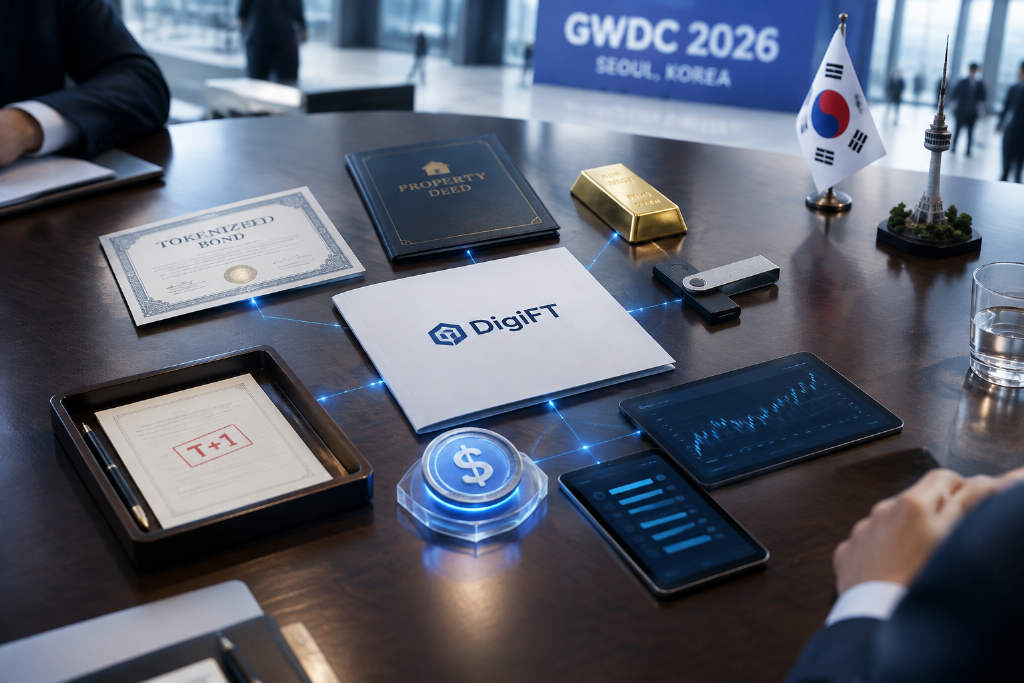
DigiFT Chief Growth Officer Ryan said at a panel during GWDC 2026 Korea that the real-world asset, or RWA, market is still in the early stages when it comes to secondary trading. She broke the sector into four stages: tokenization, distribution, secondary markets, and use cases. In her view, tokenization is only a technical task, while distribution is a regulated activity, and the secondary market remains underdeveloped because the primary market is still being built out. Ryan also argued that moving traditional assets onto blockchain rails by itself does not change their settlement structure. If an asset settles on T+1 in traditional finance, it remains T+1 after being put on-chain. She said instant trading and composability require an on-chain secondary market paired with stablecoins. On institutional adoption, Ryan said large firms need clear legal opinions before allocating capital to DeFi protocols, unless the protocol itself holds a license. She added that DigiFT, founded in 2021, entered Singapore’s fintech regulatory sandbox and obtained a license about two years later. According to Ryan, regulators tend to start with small pilot programs, and responding to public consultation papers is also an important way to engage.
At GWDC 2026 Korea, held on Sept. 29-30, 2026 at Seoul’s aT Center, DigiFT Chief Growth Officer Ryan said the real-world asset market is still at a very early stage in secondary trading.
The event was hosted by Web3Labs, with Techub News, HypaiLabs, and TokenPost serving as co-organizers.
Four stages in RWA development
Speaking during a panel discussion, Ryan divided the RWA market into four stages: tokenization, distribution, secondary markets, and use cases. She said tokenization is a technical task, while distribution falls under regulated activity. Secondary trading, she said, remains very early because the primary market is still being built.
Putting assets on-chain does not remove T+1
Ryan said simply moving traditional assets onto blockchain infrastructure does not change their existing settlement cycle. If an asset is T+1 before tokenization, it remains T+1 after it is brought on-chain.
In her view, only an on-chain secondary market paired with stablecoins can enable instant buying and selling and move the market toward composability.
Institutions need legal clarity to enter DeFi
Ryan also said large institutions need clear legal opinions before putting capital into DeFi protocols, unless the protocol itself is licensed.
DigiFT’s regulatory path in Singapore
On working with regulators, Ryan said DigiFT was founded in 2021 and entered Singapore’s fintech regulatory sandbox. The company obtained its license about two years later.
She added that regulators tend to prefer starting with small-scale pilot programs, and that responding to public consultation documents is an important part of regulatory communication.
This article was originally published by Bit.Fan. For more cryptocurrency news and market insights, visit www.bit.fan. Disclaimer:
The market information, project data, and third-party content displayed on this platform are for industry information sharing only and do not constitute any form of investment advice or return commitment.
Cryptocurrency trading carries high risks. Users should fully assess their risk tolerance and make independent decisions. All profits, losses, and legal responsibilities are borne by the users themselves.