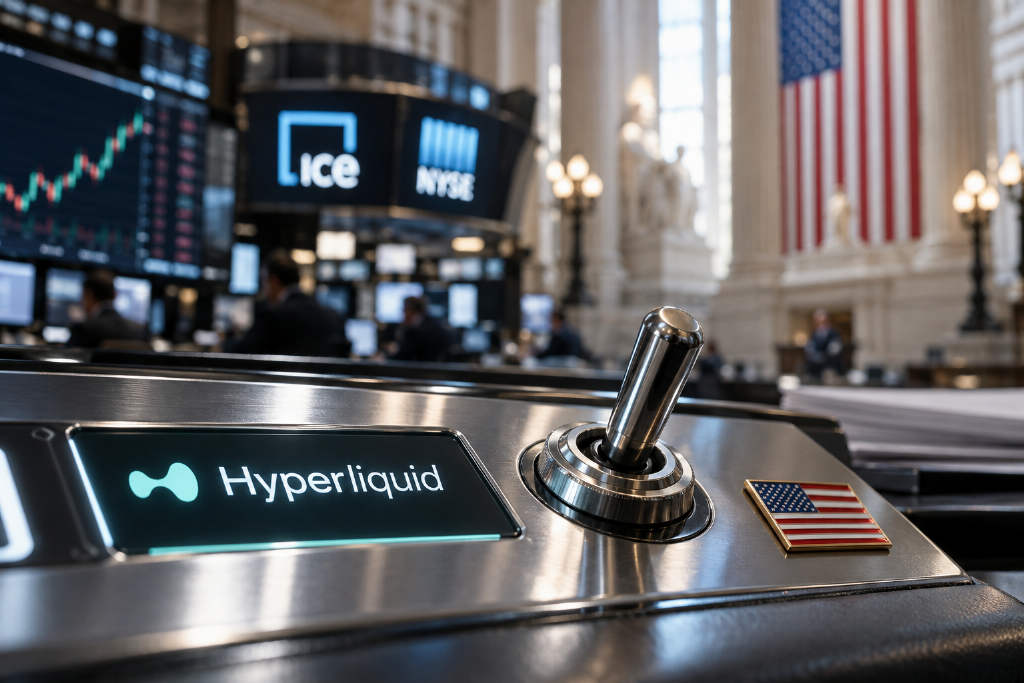
Don Wilson said he has raised a series of questions about Hyperliquid after the parent company of the New York Stock Exchange moved to bring the platform into the U.S. market. His concerns focus on whether on-chain perpetual futures offer meaningful advantages in this setting, whether real-time transparency around positions and trades should be treated as a benefit, whether a fee-priority mechanism would comply with core Commodity Futures Trading Commission principles, and whether offshore and onshore order book liquidity can be combined.
Wilson said on-chain trading can reduce friction in a trustless environment without identity verification, and atomic settlement can let buyers receive purchased assets in real time. But he argued that this second benefit does not apply to perpetual contracts because a perpetual is not itself an asset. He also asked whether Stan Druckenmiller would view positions and executions being traceable in real time as an advantage.
The comments came after Intercontinental Exchange, or ICE, and trade[XYZ] said they plan to use Hyperliquid as infrastructure, subject to regulatory approval, to launch a perpetuals market for U.S. traders covering crypto assets, equities, commodities, foreign exchange and other real-world assets, with ICE operating the regulated market and clearing framework.
Don Wilson said he has questions about Hyperliquid after the parent company of the New York Stock Exchange pushed to bring the platform into the U.S. market, focusing on how on-chain perpetuals would fit with market structure and regulation.
He said the issues include the claimed advantages of on-chain perpetual contracts, the transparency of positions and executions, whether a fee-priority mechanism is consistent with core Commodity Futures Trading Commission, or CFTC, principles, and whether offshore and onshore order book liquidity can be merged.
Questions over transparency and product design
Wilson said on-chain trading can reduce friction in a trustless environment without identity verification, and atomic transactions can allow buyers to receive purchased assets in real time. He added that this second benefit does not apply to perpetual contracts because perpetuals are not assets themselves.
He also asked whether Stan Druckenmiller would regard positions and executions being traceable in real time as an advantage.
ICE and trade[XYZ] had already outlined a U.S. plan
Earlier, Intercontinental Exchange (ICE) and trade[XYZ] said they plan to use Hyperliquid as infrastructure, subject to regulatory approval, to deploy a perpetuals market for U.S. traders covering crypto assets, equities, commodities, foreign exchange and other real-world assets.
Under the plan, ICE would operate the regulated market and clearing framework.
This article was originally published by Bit.Fan. For more cryptocurrency news and market insights, visit www.bit.fan. Disclaimer:
The market information, project data, and third-party content displayed on this platform are for industry information sharing only and do not constitute any form of investment advice or return commitment.
Cryptocurrency trading carries high risks. Users should fully assess their risk tolerance and make independent decisions. All profits, losses, and legal responsibilities are borne by the users themselves.