
A recent DOPA card draw dispute on Threads has widened into a larger debate over trust and transparency in the trading card market.
In its report, BlockTempo says the incident began when the cap on the number of draws for a certain card pool was set incorrectly, letting some players draw repeatedly within a short period. After the platform detected the issue, it froze accounts, stopped shipments, and restored user accounts to the state before the 11th draw of that pack. The rollback happened even after players had finished drawing, seen the results, and received the cards in their accounts.
The article says a one-off system bug does not by itself prove malicious intent. Still, the discussion on Threads pushed a more basic question into view: if an error causes players to win more than they should, the platform can detect it in the backend, freeze accounts, and reverse results. If an error causes players to lose more than they should, how would players know, and how could anyone outside the platform verify it?
Three black boxes players cannot see
According to the report, players usually see the draw animation, prize images, and account balances. Platforms, by contrast, control the full database, card pool settings, and backend administrative permissions. That information gap may go unnoticed until a platform says a result no longer counts.
BlockTempo argues that even if a platform publishes the total number of available draws and the payout rate, that only gives players a way to estimate initial odds. It does not give them a way to verify what is happening in real time. The report breaks the problem into three layers.
- Probability black box: the odds at the moment a pool opens are not necessarily the odds at the moment a player draws. If the top prize has already been taken, the chance of winning it may already be 0%, while players have no way to know.
- Inventory black box: a high-priced card shown on screen may look available, but players cannot tell whether it has actually been stocked or whether it is still in the pool.
- Finality black box: once a draw result has been written into an account, it is unclear whether it can still be changed and who has the authority to change it. The DOPA case made that question concrete: after the animation ends, a winning result appears on screen, and the card enters an account, when is the transaction actually final?
The report adds that many Oripa platforms are run by overseas entities while directly serving players in Taiwan. When disputes happen, the cost of cross-border claims can be much higher than disputes involving local merchants.
Xiaoyang Card Shop and the opacity of pre-orders
BlockTempo says opacity is not limited to online card draws. In August 2026, Xiaoyang Card Shop suspended operations without warning. A self-help group surpassed 4,500 members in a short period, and when city inspectors arrived, the doors were locked. The case has been reported to police, while related legal responsibility remains unclear.
The impact, the report says, was not limited to ordinary purchases. It also involved pre-orders, consignment, and grading submissions handled on behalf of customers.
Without assigning blame in the case itself, the article says the incident exposed the black box behind pre-order transactions: consumers have already paid, but the goods still sit somewhere in the future. Players generally do not know how much stock a seller actually ordered from upstream suppliers, how pre-order funds are managed, or what the seller's inventory and cash flow look like at that moment.
BlockTempo links the DOPA dispute and the Xiaoyang shutdown as two different cases pointing to the same problem. In online card draws, customers cannot see how results are generated. In pre-order transactions, they cannot see where the goods and the money are. In both cases, consumers are left relying on trust in the platform.
Live breaking as a way to move trust into view
The report says a genuinely transparent platform should be able to answer a series of basic questions: has the top prize actually been stocked, is it still in the pool, how many prizes remain, what are the real odds right now, and can a result still be altered after it is produced?
That distinction matters. A platform telling users something is not the same as users being able to verify it themselves. The most direct way to make verification possible, the report argues, is to let the result happen in front of users rather than inside a backend database that only the platform can see.
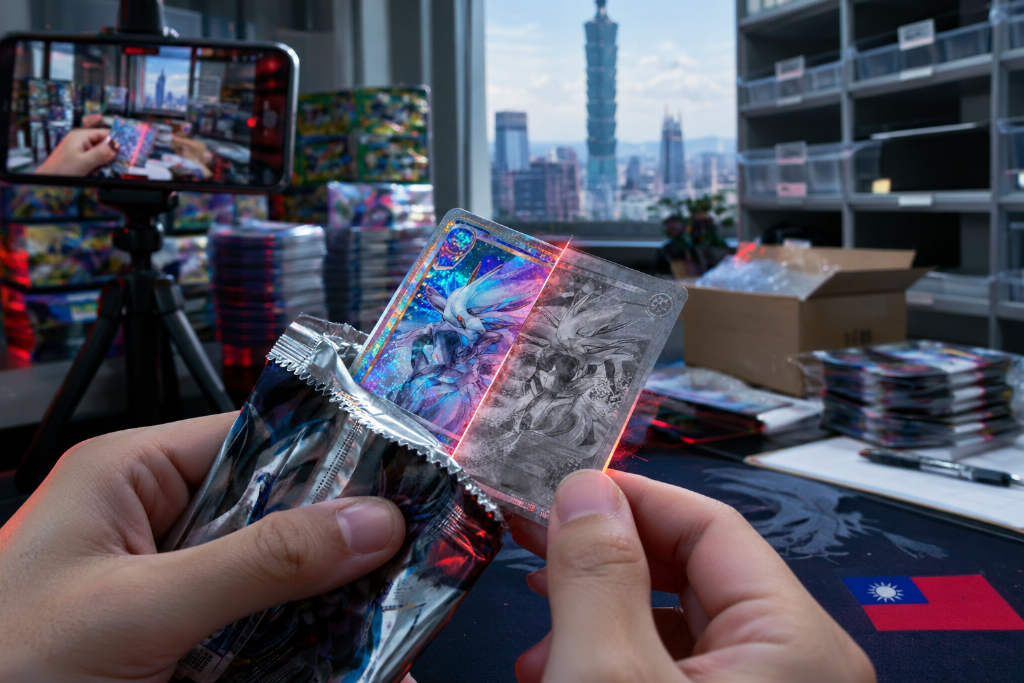
That is where live breaking comes in. Products are opened on camera, the outcome is visible on the spot, and viewers witness the process at the same time. Part of the trust cost that would otherwise remain hidden in the backend is shifted into public view.
Even so, the article does not describe live breaking as a perfect fix. Viewers still cannot confirm everything with 100% certainty. But when sealed products appear on camera and many people are watching at once, unusual behavior is easier to spot immediately instead of becoming a matter of conflicting claims after the fact.
Taiwan team prepares unravel
Citing market information, the report says some Taiwan-based teams are already trying to turn that logic into products, including a platform in preparation called unravel.
BlockTempo says competition among TCG platforms used to center on headline figures such as 300% payout rates, minimum guarantees, and limited-time boosts. As transaction sizes keep growing, though, players may be looking for something else: certainty.
The report ends on a simple point. Publishing numbers is only a starting line. What users actually care about may be whether those numbers are updated over time and whether they can be tracked and checked. As spending on card draws rises, players may no longer be satisfied with an attractive win-rate figure alone. Before paying, they want to know what they are actually buying.