
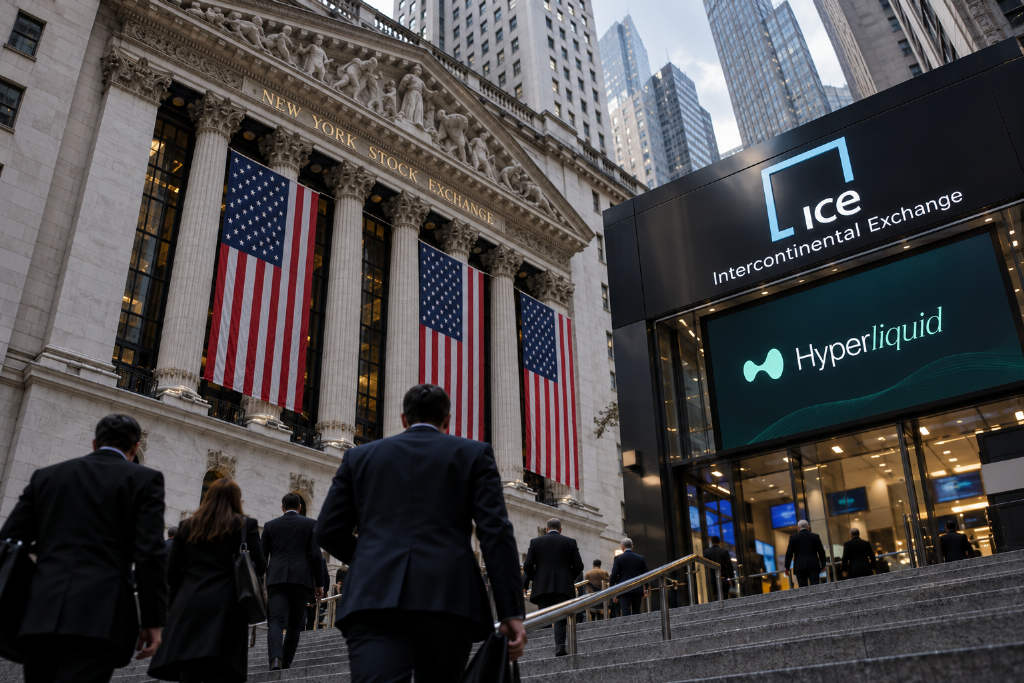
DRW founder and CEO Don Wilson has publicly raised a set of questions about efforts by the New York Stock Exchange parent company to bring decentralized perpetual futures platform Hyperliquid into the U.S. market.
Wilson said CFTC Chair Selig and the Trump administration should be thanked for making this kind of experiment possible. He added that whether such a structure is useful can only be determined by the market.
Wilson questions the case for on-chain perpetuals on regulated venues
Wilson asked what benefit there is to trading perpetual contracts on-chain through a regulated exchange.
In his view, the main advantages of on-chain trading are lower friction in a trustless environment without identity checks, and the ability to receive purchased assets in real time through atomic transactions. He argued that the second point does not apply here because a perpetual contract is not itself an asset.
Transparency and priority fees were central concerns
Wilson also named Stan Druckenmiller and asked whether he is aware that positions and executions on Hyperliquid can be tracked in real time, and whether he sees that as an advantage.
He also pointed to Hyperliquid’s priority fee mechanism, which allows participants to pay either to see information earlier or to move their orders forward in the queue, and asked whether that is consistent with the CFTC’s core principles.
Liquidity fragmentation and matching efficiency remain open questions
Wilson also asked whether liquidity from offshore and onshore order books can be merged. If not, he questioned whether listing perpetual contracts on a regulated exchange with a traditional centralized order book would be better than taking on the inefficiencies that come with on-chain matching.
Earlier, Intercontinental Exchange (ICE) and trade[XYZ] said they plan to use Hyperliquid as infrastructure, subject to regulatory approval, to launch a perpetuals market for U.S. traders covering crypto assets, stocks, commodities, foreign exchange and other physical assets. ICE would operate the regulated market and clearing structure.


