
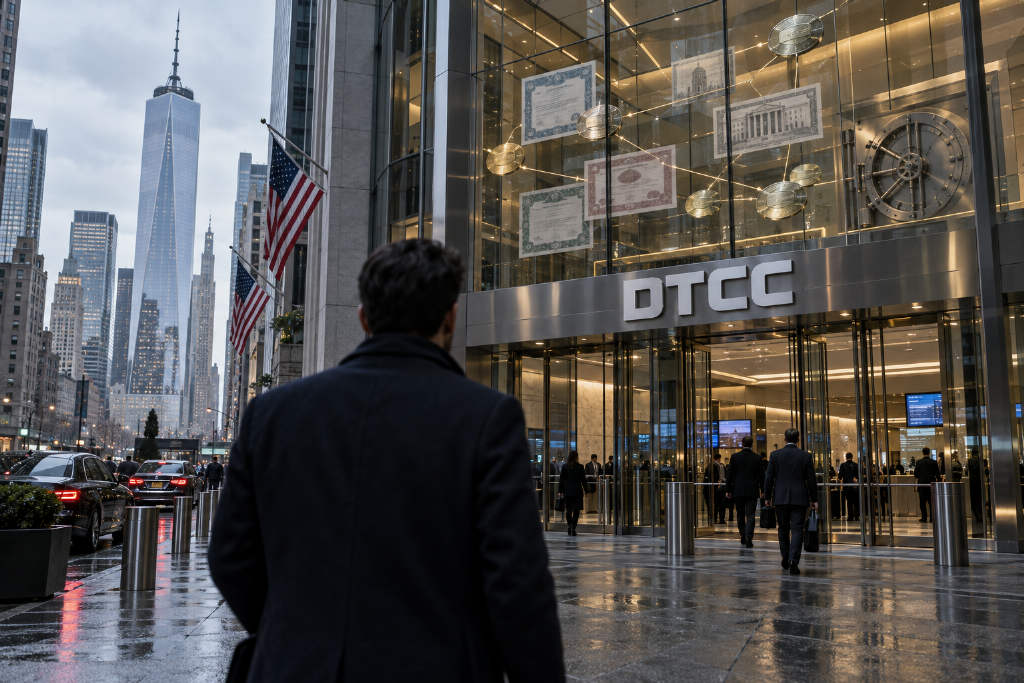
The Depository Trust & Clearing Corporation (DTCC) went live Wednesday with a tokenization service for traditional securities, moving a slice of U.S. stocks, exchange-traded funds and Treasuries onto blockchain infrastructure.
The service is available on Canton Network and DTCC’s private Besu blockchain. At launch, it supports select large-cap stocks from the Russell 1000 index, ETFs, and U.S. Treasury bills, notes and bonds. DTCC’s product website lists 34 eligible securities, representing about $30 trillion in market value, a DTCC spokesperson told CoinDesk.
A move into the core of U.S. market plumbing
The launch carries weight because DTCC sits at the center of U.S. securities market operations. Through its subsidiaries, the company handles clearing, settlement and custody for a large share of the country’s stock and bond trading. More than $114 trillion in securities are held at its depository.
DTCC said the new setup allows tokenized securities to move between registered wallets 24/7 while keeping existing shareholder protections in place. Its road map also includes onchain settlement and the use of tokenized securities as collateral.
The tokens are backed one-for-one by securities held at DTCC subsidiary Depository Trust Company (DTC), and they can move between registered wallets around the clock.
That structure could pull tokenized assets into mainstream market infrastructure instead of leaving them in a separate market running alongside the traditional system.
Tokenization is designed to make financial assets easier to transfer, settle and post as collateral. Banks and asset managers have spent years testing blockchain-based securities. Connecting those assets to systems that already support trillions of dollars in transactions could bring the technology into routine market operations.
Citi analysts projected that tokenized securities will become a $5.5 trillion market by 2030 as more financial institutions adopt blockchain technology.
Twenty firms have signed on
“Today marks the culmination of years of work to bring tokenized securities into a regulated framework supported by trusted market infrastructure,” said Frank La Salla, DTCC’s president and CEO.
“By extending DTC’s resiliency, governance and operational standards into digital markets, we are establishing the foundation for responsible institutional adoption at scale.”
Twenty participants have signed agreements to access the service, including Bank of America, Barclays, Citi, Fidelity Investments, JPMorgan, Morgan Stanley, Citadel Securities, State Street and UBS. DTCC said more firms will join over time.
Eligible firms can convert securities into tokens during business hours, with DTCC targeting processing times of 15 minutes or less. Once tokenized, the assets can move between registered blockchain wallets around the clock, subject to compliance restrictions.
Official ownership records remain with DTC even as tokens move between registered wallets. That separates the service from synthetic stock tokens that track share prices without granting ownership of the underlying securities. DTCC’s tokens represent securities already held in custody and preserve their existing rights.
The rollout follows a demonstration earlier this year and plans announced in May.
Next steps and regulatory basis
In addition to Canton and private Besu, DTCC plans to add Stellar and stablecoin issuer Circle Internet’s Arc blockchain next year. The company also plans broader corporate-action support and tools for settling transactions with digital cash.
It also intends to add tools that let tokenized securities be used as collateral.
The service builds on a no-action letter issued by the U.S. Securities and Exchange Commission in December, which allowed DTCC to tokenize a defined set of securities.
Other market operators are building similar rails
DTCC is not alone in pushing tokenized securities infrastructure. Nasdaq and the New York Stock Exchange are developing trading infrastructure for tokenized securities. Intercontinental Exchange, the parent company of NYSE, is also set to operate a blockchain-based trading venue with crypto exchange OKX under the SEC’s innovation exemption.



