

Fertilizer markets are moving ahead of grain prices as expectations build for a strong to super El Niño in late 2026, even though the historical record does not support an automatic, across-the-board decline in staple crop output.

In an article written by Wanzhou for Wallstreetcn and published by MarsBit, the analysis says weather disruptions are already affecting major agricultural regions including Southeast Asia, India, Europe, and southern China. Still, the immediate market response has shown up more clearly in fertilizers than in food prices. Urea is being supported by export expectations and elevated overseas prices, phosphate fertilizers by resource, sulfur, and shipping constraints, and potash by tightening supply.
El Niño is intensifying, but the first agricultural effect is structural, not universal
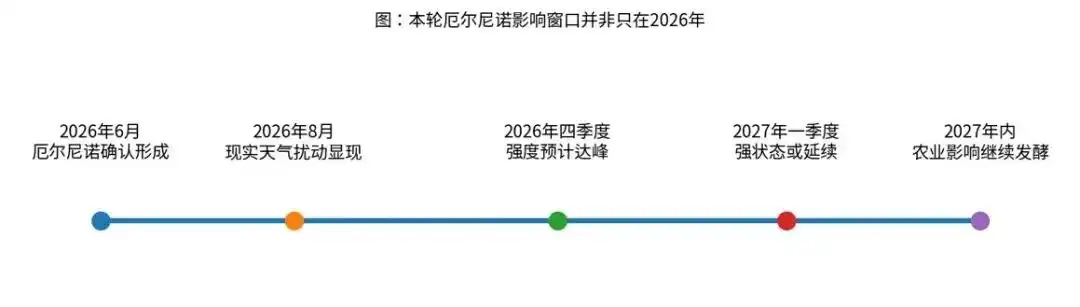
The article says El Niño in 2026 has moved beyond meteorological forecasts and into real-world impact. Since June, sea surface temperatures in the central and eastern equatorial Pacific have continued to rise, lifting market expectations that conditions could strengthen into a strong to super El Niño in the fourth quarter. The main impact window is likely to fall in the autumn and winter of 2026 and extend into early 2027.
Weak monsoons in India, below-normal rainfall in parts of Southeast Asia, high temperatures in Europe, and heavy rainfall in southern China have already appeared. Climate risk, the article says, is beginning to move from ocean-temperature indicators into crop production.
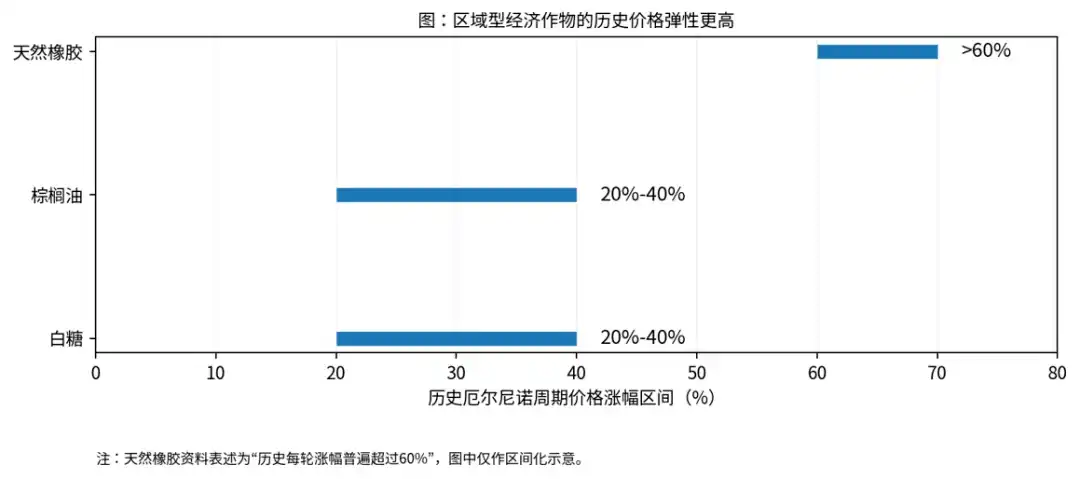
That does not mean a global food shortage is inevitable. The report points to three buffers between a super El Niño and a broad grain crisis: crop distribution, inventories, and policy. Historical data show that products heavily concentrated in specific regions and highly sensitive to moisture conditions, such as natural rubber, palm oil, and cocoa, are more likely to face lasting supply shocks. By contrast, globally planted crops such as soybeans and corn have cross-regional substitution, and some parts of South America could even see output gains if rainfall improves. In China, corn and wheat have relatively high self-sufficiency rates, and prices are also shaped by policy, inventories, and domestic supply-demand adjustments.
That makes the current setup look more like a round of structural agricultural inflation. Weather-sensitive crops are picking up risk premiums first, while staple grains still need confirmation from yield, inventory, and trade data. The distinction matters because it weakens the simple narrative that El Niño drives a food-price spike, which then pulls fertilizer prices higher.
Food prices have not broadly surged, but fertilizers have entered their own cycle
Urea: the story shifts from domestic demand to export absorption
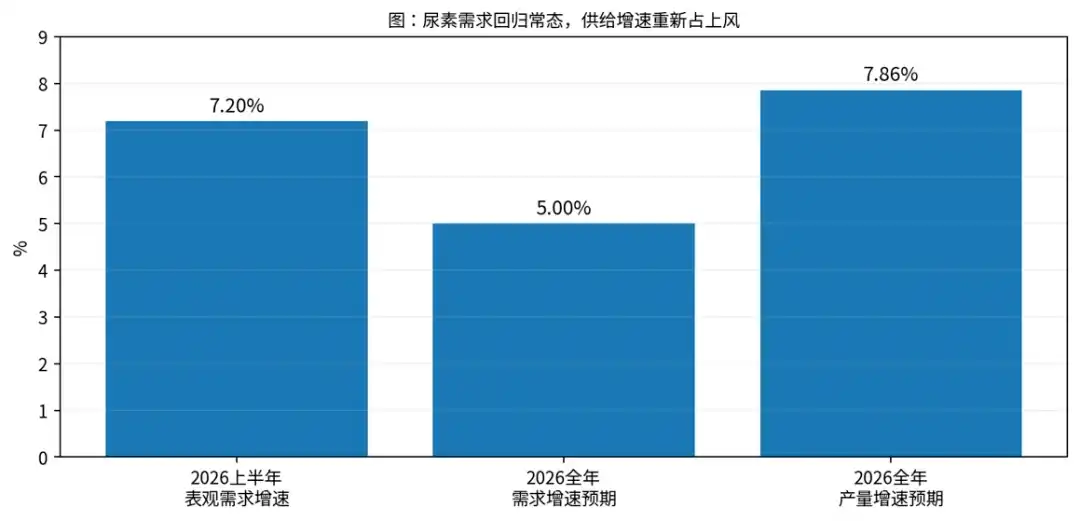
Urea best captures that mismatch. In the first half of 2026, apparent demand rose about 7.2%, and growth reached 7.8% in January through April. After accounting for hidden inventories, actual demand growth may at one point have been 8% to 10%. During the spring planting season, producer inventories fell to about 570,000 tons by mid-May. A relative pricing advantage versus phosphate and potash fertilizers, along with improving grain-price expectations, encouraged fertilizer application at the farm level.
Conditions begin to reverse in the second half. Agricultural demand enters a seasonal lull, production of high-nitrogen compound fertilizer had already been brought forward, and industrial demand is not expected to add much flexibility. At the same time, around 5.11 million tons per year of urea capacity is still expected to come online in the second half. Full-year capacity additions are estimated at roughly 6.45 million tons per year, while total annual output is projected at around 78.10 million tons, up 7.86% year on year.
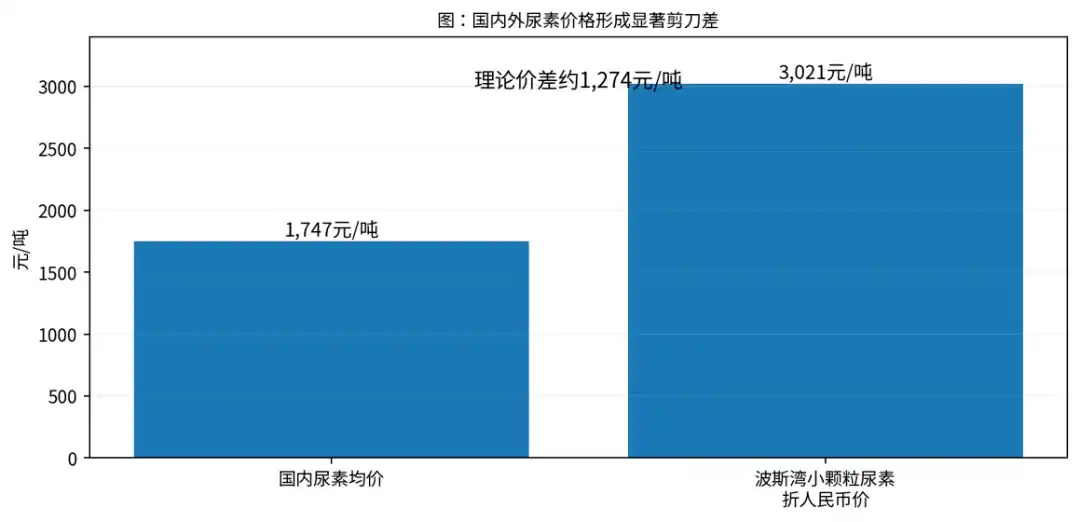
That leaves exports as the central variable. By late July, domestic urea output was about 215,600 tons per day, and producer inventories had climbed to roughly the 76th percentile of the past three years. Over the same period, small-granule urea in the Persian Gulf was around $445 per ton, equivalent to about RMB 3,021 per ton, while the domestic average price was about RMB 1,747 per ton. The theoretical spread was more than RMB 1,200 per ton, suggesting significant room for exports on paper.
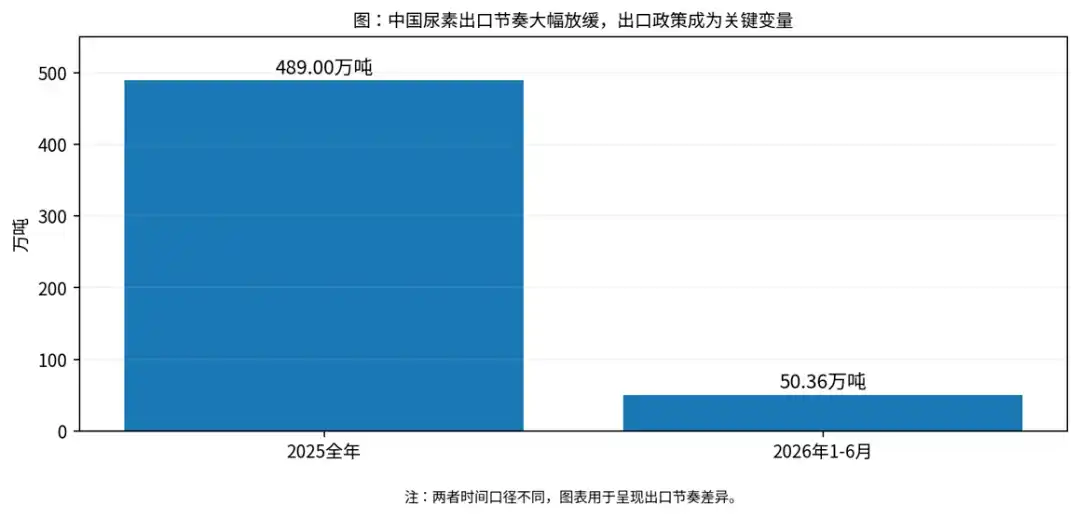
But the article stresses that price spreads do not automatically turn into profits. China exported 4.89 million tons of urea in 2025, but only 503,600 tons in the first half of 2026. Export quotas, guidance prices, Indian tender volumes, and the real capacity of overseas markets to absorb cargoes will decide whether the urea rally is a short-lived pulse or a more durable repair.
Fertilizers are moving from a pure supply story to a three-part framework of resources, trade, and weather
Phosphates: entering a rare supply-led cycle
The medium-term setup looks firmer in phosphates than in urea. Tightness in overseas phosphate markets is no longer just about cost inflation. Vietnam’s Vinachem and Lithuania’s Lifosa are planning phosphate output cuts because of sulfur shortages. At the same time, shipping risks in the Red Sea and the broader Middle East have reduced effective supply. If diammonium phosphate from Yanbu in Saudi Arabia has to reroute around Africa on its way to India, freight costs rise by about $50 per ton versus the traditional route.
Even if traffic through the Strait of Hormuz normalizes, reduced operating rates caused by raw-material shortages cannot be fixed immediately. The market, the article says, is starting to move from cost-based pricing to supply-based pricing.
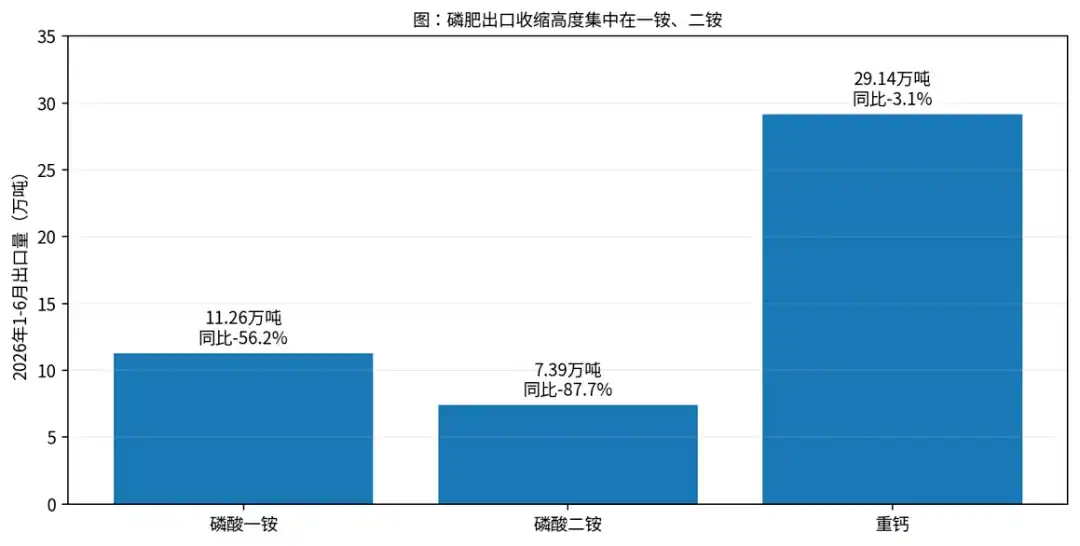
China remains central to the global phosphate supply chain. In the first half of 2026, China exported only 112,600 tons of monoammonium phosphate and 73,900 tons of diammonium phosphate, down 56.2% and 87.7% from a year earlier. Exports of calcium superphosphate reached 291,400 tons, down just 3.1%.
The export contraction was mainly tied to domestic supply-security policy. With spring planting over and winter stockpiling not yet under way, domestic demand is in a seasonal trough. That leaves changes at the margin in export policy as one of the clearest earnings catalysts.
The article highlights a price-gap logic it says may be underappreciated: overseas markets are short of product, China has capacity, but exports are restricted. If smaller products such as calcium superphosphate, which are less sensitive from a domestic supply-security standpoint, gain export flexibility first, integrated producers with phosphate rock resources, sulfuric acid security, and overseas distribution channels could see profit elasticity well above that of ordinary manufacturers. In that sense, phosphates carry both agricultural and resource-commodity characteristics.
Potash: weak spot conditions can coexist with a firmer medium-term resource cycle
Potash is presented as a more straightforward supply-constraint story. Maintenance at Uralkali in the third quarter is expected to cut granular potassium chloride output by 300,000 to 400,000 tons, while Belarusian Potash Company is expected to produce 500,000 tons less in the second half than a year earlier. Together, the disruptions amount to roughly 800,000 to 900,000 tons.
Global potash resources are highly concentrated. New mine development takes a long time, and changes in ore grades and maintenance cycles at existing mines can directly affect marginal global supply.
At the same time, China’s domestic potassium chloride market in July was still marked by strong supply and weak demand. High-priced cargoes were difficult to move, and holders were cutting prices to reduce inventory.
The article argues that there is no contradiction between soft spot pricing in the short term and tightening international supply in the medium term. The first reflects seasonal weakness and inventories. The second sets the price center for a resource commodity. If El Niño goes on to lift prices for higher-value crops such as palm oil and sugar, potash demand could prove more responsive than demand tied directly to staple grains.
El Niño may matter more for 2027 demand than for the current rally
The direct contribution of El Niño to the current fertilizer upswing is limited, according to the piece, but it could materially change the distribution of demand in 2027. Fertilizer demand is linked to planted area, yield targets, and farm profitability. When crop prices rise, the potential return from applying an additional unit of fertilizer rises as well. Extreme weather can also sharpen the incentive to protect yields.
That creates a transmission chain running from agricultural product prices to planting returns, then to fertilizer application willingness, and finally to channel restocking. The article also warns about a two-way feedback loop: higher fertilizer and energy prices raise planting costs; if farmers cut fertilizer use, yields may come under pressure; if grain prices then rise, fertilizer demand can recover.
The move into a second phase would require a more demanding mix of conditions: persistent extreme weather, falling grain inventories, high energy costs, and tight fertilizer supply at the same time. Only then, the analysis says, would the current supply-driven move have a chance to turn into a true supply-demand resonance.
Food security is reshaping the industry’s strategic position
The piece argues that reading this cycle only through El Niño risks overstating weather as the short-term explanation for fertilizer prices. The more important medium-term shift is that food security is redefining the industrial character of fertilizers.
For policymakers, fertilizer is both a cost input for agricultural products and an essential input for maintaining stable yields. The objective is not high fertilizer prices. It is controllable access to key resources, stable domestic supply, and dynamic adjustment between local supply security and overseas exports.
The sharp contraction in phosphate exports in the first half of 2026 and the constrained pace of urea exports already reflect that policy ordering.
From that view, the article breaks the investment logic into three layers. Food security sets the industry’s strategic status and the policy floor. Global resource availability and supply structure determine the earnings center. El Niño and agricultural price gains shape upside elasticity.
Each fertilizer sits in a different place within that framework. Phosphates and potash have a stronger resource-security character, while urea depends more on the domestic capacity cycle and export adjustment.
The three major fertilizer groups are diverging
Phosphates: strategic resources first, export elasticity next
Among the three major straight fertilizers, the article sees the most complete medium-term case in phosphates. Under a food-security framework, the resource value of phosphates matters more than a simple rise in fertilizer prices.
Development cycles for upstream phosphate rock are long, while new mining rights, safety and environmental requirements, and resource controls create constraints. Overseas phosphate markets are also dealing with sulfur shortages, production cuts, and Middle East shipping disruptions. Meanwhile, China’s first-half 2026 exports of monoammonium phosphate and diammonium phosphate fell to 112,600 tons and 73,900 tons, down 56.2% and 87.7%, showing that domestic supply security clearly took priority over exports.
This creates what the article describes as a double constraint. China needs enough domestic phosphate supply and reasonable prices, which means exports cannot be fully market-driven. But China is also a major global supplier, so if overseas shortages persist, price gaps between domestic and foreign markets can keep widening. Any marginal policy easing could then release substantial profit elasticity.
With spring planting over and winter stockpiling yet to begin, domestic phosphate demand has entered a seasonal low, and supply-security pressure is lower than it was in spring. Compared with core supply-security products such as MAP and DAP, smaller segments such as calcium superphosphate, where domestic consumption accounts for a lower share, may be more likely to show export elasticity first.
Over a longer horizon, the article says the value of phosphate producers can no longer be measured only by fertilizer price multiplied by sales volume. Companies with phosphate rock resources, sulfuric acid and synthetic ammonia integration, phosphate fertilizer capacity, and extension into new-energy materials connect food security, resource security, and materials demand at the same time. Integrated resource players may show more stable earnings than ordinary cyclical companies.
Potash: one of the clearest food-security resource assets
The article goes further on potash, saying its food-security attribute is even more direct than phosphate. China can achieve strong self-sufficiency in urea, and it also has a relatively solid phosphate resource base. Potash salts are different. Global resources are highly concentrated, new mine development takes a long time, and domestic resource endowment is limited. For China, improving domestic potash security and expanding overseas potash resource exposure is itself part of the food-security system.
Recent supply-side changes reinforce that view. Uralkali’s third-quarter maintenance is expected to reduce granular potassium chloride output by 300,000 to 400,000 tons, and Belarusian Potash Company is expected to cut second-half output by 500,000 tons year on year. In a market with concentrated global supply, a reduction of roughly 800,000 to 900,000 tons can have a meaningful effect on marginal pricing.
Domestic inventories still weigh on the short-term market during the seasonal lull, and higher-priced cargoes have been hard to move. But the article sees no conflict between that and the medium-term resource logic. The floor under potash prices is set more by global supply concentration and resource scarcity, while the upside depends on crop-market conditions.
If El Niño lifts prices for palm oil, sugar, rubber, and even some grains, better returns for higher-value crops could improve farmers’ ability and willingness to pay for potash.
The article summarizes potash as an asset where food security provides the long-term logic, resource constraints provide the price floor, and agricultural prosperity provides the upside option. Resource volume, low costs, and the ability to deliver new capacity are presented as the key indicators.
Urea: strong supply-security role, but exports decide near-term upside
Urea is also a core material for food security, but its logic differs sharply from phosphates and potash. China’s coal-chemical base gives urea a strong domestic supply guarantee. Its strategic value therefore lies more in stabilizing local supply and adjusting participation in the global market than in resource scarcity.
Demand was firm in the first half of 2026, with apparent demand up about 7.2% and January-April growth at 7.8%. After hidden inventories are included, actual growth may have reached 8% to 10%. But the article notes that part of this strength came from front-loaded spring planting demand, urea’s price advantage versus phosphate and potash fertilizers, melamine exports, and some disguised export flows.
The second half presents the opposite pressure. Dongzheng Futures expects full-year urea demand growth to slow to about 5%, below the projected 7.86% increase in annual output.
That leaves exports as the real swing factor. International prices are well above domestic levels, and India continues to show solid import demand. If export quotas and actual shipment flows increase, they could relieve domestic oversupply and allow China’s coal-based urea producers on the left side of the global cost curve to benefit from higher overseas pricing.
Still, the article says food security means export policy must always balance corporate profit, international market conditions, and domestic supply guarantees. Export potential cannot be equated mechanically with the theoretical price spread.
That is why the piece sees urea more as a high-beta product than the steadiest medium-term allocation among the three major fertilizer groups.
What the market is watching next
The article concludes that food security, rather than El Niño alone, may become the more durable medium-term trading theme for the fertilizer industry over the next few years.
It strengthens the strategic value of upstream resources such as phosphate rock and potash salt, while making domestic supply guarantees, export policy, and industrial integration more important variables for corporate earnings. In 2026, the market is first trading resource constraints, geopolitical conflict, overseas supply, and domestic-foreign price gaps. El Niño matters more in determining whether demand can take over in 2027.
If agricultural prices spend the next six months increasingly reflecting weather-related output risks, the sector could move into a second round of logic changes. Phosphates could shift from a resources-and-exports story to simultaneous tightness in supply and demand. Potash could move from a resource cycle into resonance with farm economics. Urea would still need demand improvement to offset incoming new capacity.
In that framework, food security provides the valuation base, resource constraints set the earnings center, and El Niño together with grain prices shape the upside elasticity.