
Banks are making up a bigger portion of the European Union’s MiCA-registered crypto services market, according to Cointelegraph’s analysis of registration data from the European Securities and Markets Authority (ESMA).
The number of banks on the EU MiCA crypto service provider list rose from about 40 on June 26 to about 80 on Sept. 16. Their share of the list increased from roughly 17% to nearly 23%, putting banks close to one-quarter of the total.
CASP registrations climbed, while non-bank share narrowed
During the same period, the total number of registered crypto-asset service providers (CASPs) increased from 243 to 349.
At the same time, non-bank providers saw their share fall from about 84% to 77%, reducing their relative portion of the market.
Germany led the latest wave of bank entries
Cointelegraph said Germany was the main force behind the latest expansion in bank participation. Several cooperative and commercial banks newly appeared on ESMA’s MiCA register, including Volksbank, Raiffeisenbank and VR Bank institutions.
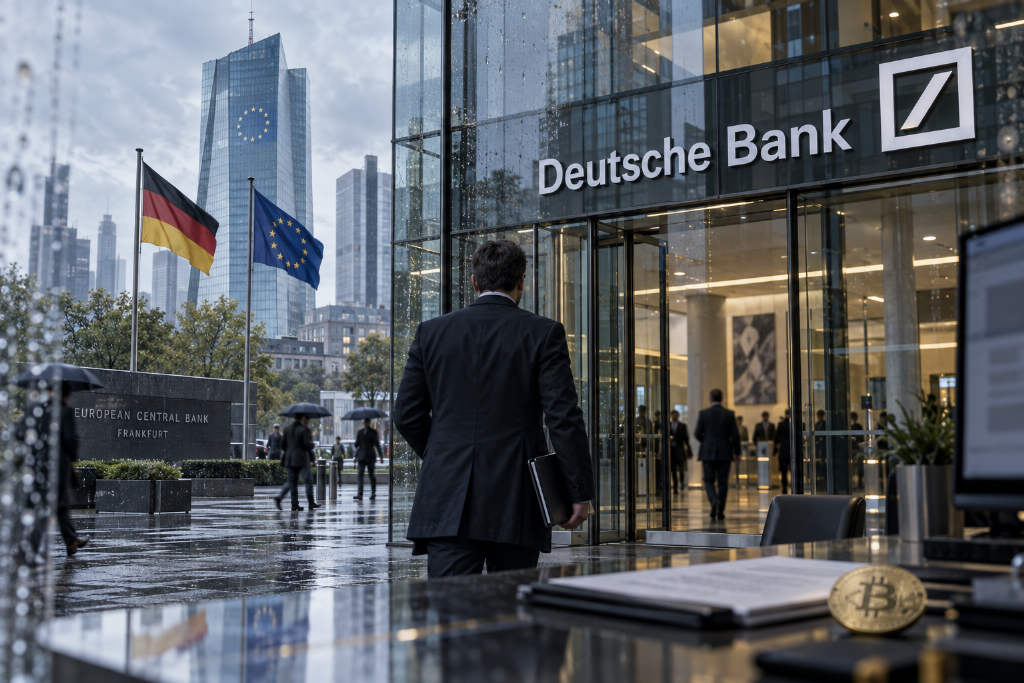
Deutsche Bank targets October approval
Germany’s largest bank, Deutsche Bank, also said on Wednesday that it plans to roll out digital asset custody services for institutional and corporate clients in Europe.
A spokesperson for the bank told Cointelegraph that it expects to receive regulatory approval under MiCA in October.
Banks can use MiCA’s notification route
Unlike crypto companies that need to apply for CASP authorization, banks can provide crypto-asset services through the notification procedure set out in Article 60 of MiCA.
Under that process, a bank only needs to submit the required information to its national regulator at least 40 working days before first offering the service, allowing it to bypass the standard CASP authorization process.