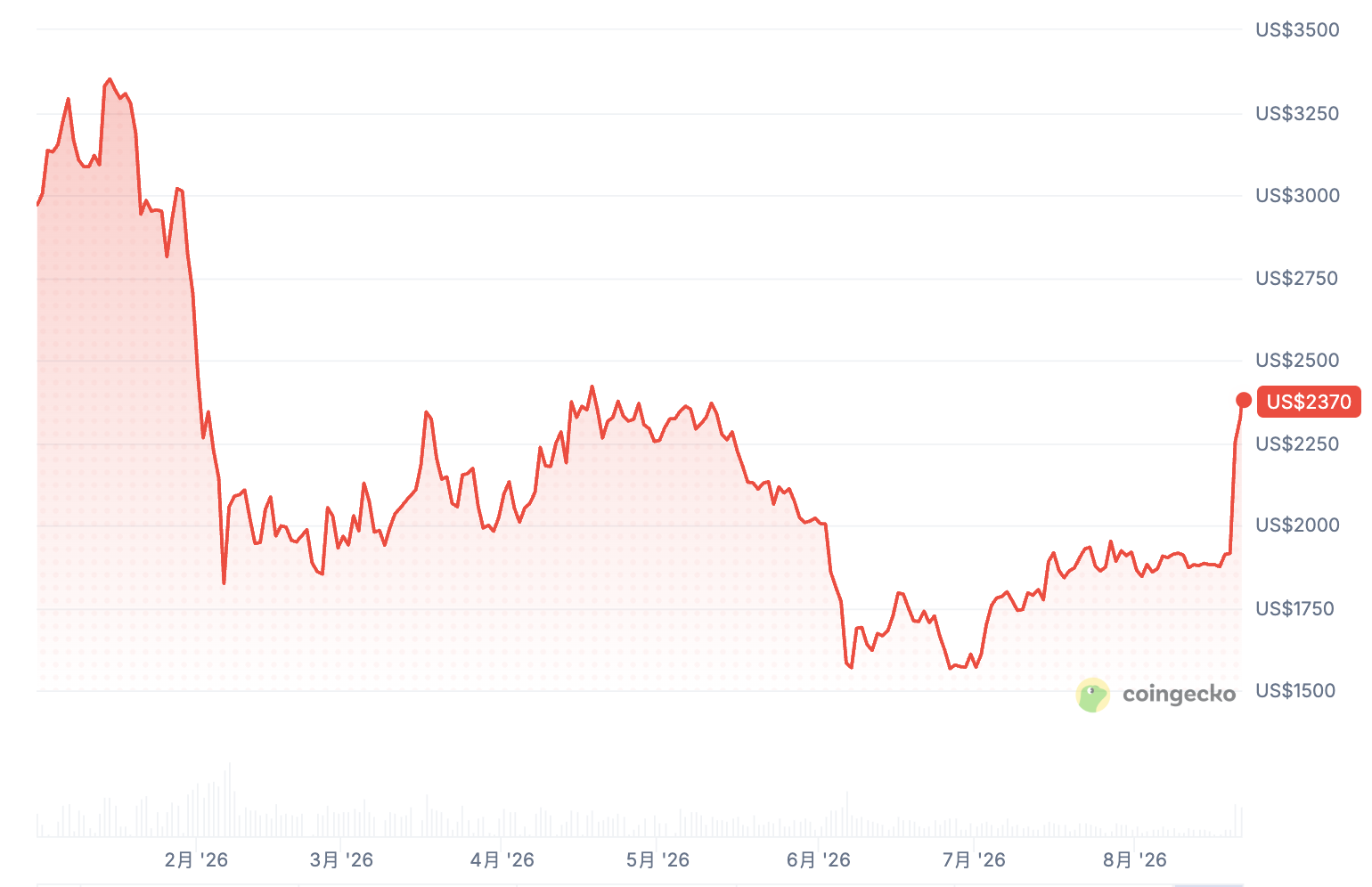
Ethereum is back above $2,300 for the first time in more than three months. CoinGecko data showed ETH trading near $2,354 on August 21, back at the level last seen in early May.
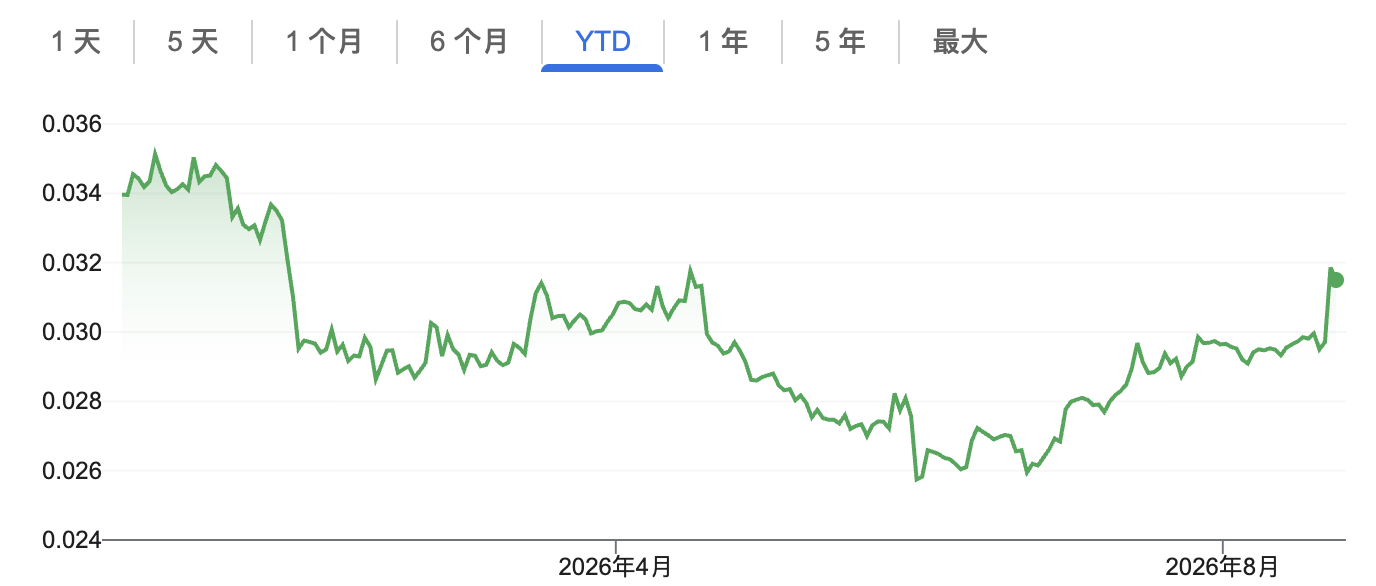
ETH jumped about 25% in a week. That put it among the top gainers in the top 100 crypto assets and well ahead of Bitcoin over the same stretch. The ETH/BTC ratio has snapped a long downtrend too, rebounding to around 0.031, roughly where it sat in April.
That surge shoved Ethereum closer to the front ranks of global assets by market value. 8 Market data puts Ethereum’s market cap at about $284.3 billion, ahead of Dell and good for No. 72 worldwide. Just a few months back, the asset had slipped out of the top 100 global assets as prices kept falling.
Short sellers got caught. Badly. CoinGlass data shows more than $1.33 billion in ETH futures liquidations since August 19, with shorts making up 88.4% of the total. That forced buying gave the rally another shove.
Trader Doctor Profit said Ethereum has fully broken through a key resistance zone in the bear market and has, for the first time since the current bear cycle began, climbed back above what he calls the “golden line,” the weekly EMA50. He described it as an important technical signal and told shorts to “fasten your seatbelt.”
BitMine chairman Tom Lee said the rise in ETH/BTC suggests the market is beginning to focus on real-world adoption for tokenization and AI agent applications, which he thinks will help Ethereum. He pointed to earlier bull-market drivers for ETH/BTC, including the 2017-2018 ICO wave, the 2020-2021 NFT wave and the 2025 stablecoin wave, and argued that this cycle will be powered by Wall Street tokenization onchain and large-scale blockchain use by AI agents. And, he added, easier financial conditions should help crypto markets too.
BitMine itself has caught a bit of a break. As of August 16, the largest institutional holder of ETH owned 5,815,164 ETH at an average cost of $3,366. As ETH bounced, its unrealized loss shrank from more than $8.5 billion to $5.8 billion.
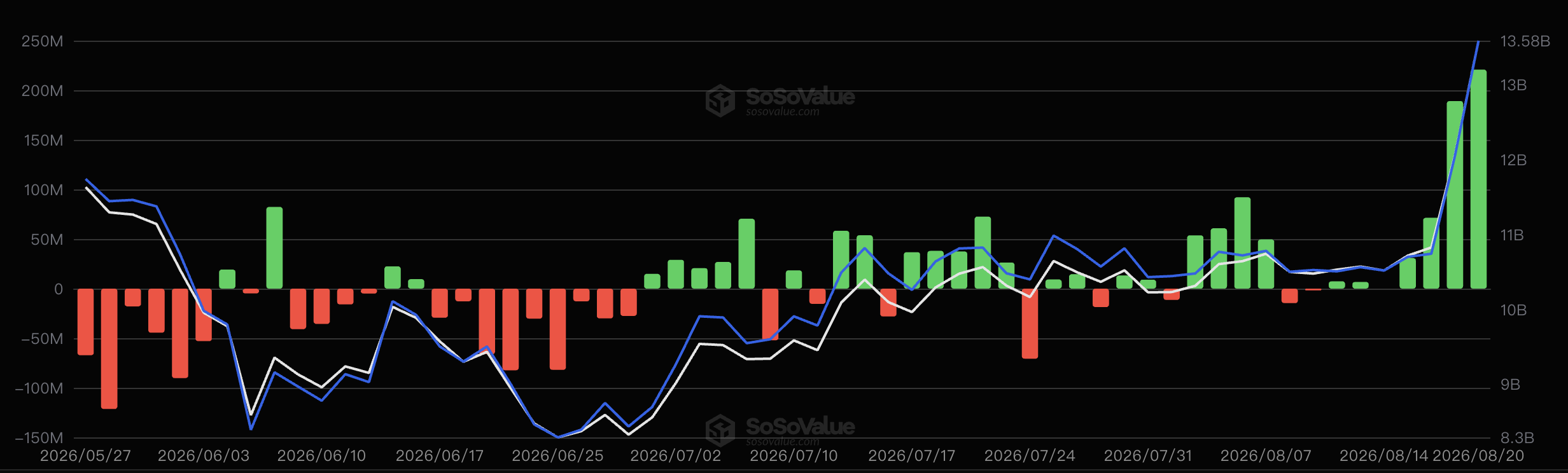
Spot ETH ETFs are flashing a firmer signal as well. Sosovalue data shows U.S. spot ETH ETFs have posted net inflows for four straight trading days, with more than $510 million added this week. On August 20 alone, net inflows topped $220 million, the highest since October last year. BlackRock’s ETHA stayed the main source of demand, bringing in a single-day inflow of $173 million.
And in recent weeks, spot ETH ETFs have done better than spot Bitcoin ETFs on flows. A recent DWF Labs report said ETH ETFs saw net outflows equal to 4.65% of fund assets in June, versus 8.09% for BTC ETFs. In July, ETH ETFs flipped positive with inflows equal to 3.19% of assets, while BTC ETFs managed only 0.34%.
Institutional exposure has been climbing too. DWF Labs said Wall Street banks increased ETH exposure sharply in the second quarter, faster than their Bitcoin exposure. Morgan Stanley’s BTC exposure rose 3.7% quarter over quarter, while its ETH exposure climbed 18.6%. JPMorgan’s BTC exposure increased 12.2%, while ETH exposure surged 67.3%.
13F filings show more institutions are piling into ETH ETFs too. Bank of America’s holdings of ETHA rose from about 67,500 shares to nearly 1.98 million shares, an increase of roughly 29 times, with a second-quarter-end reported value of about $23.6 million. Italy’s largest bank slashed its holdings of BlackRock’s Bitcoin ETF IBIT while roughly doubling its position in BlackRock’s spot ether trust. Spain’s Santander also disclosed holdings in BlackRock’s Bitcoin and Ethereum ETFs for the first time in the second quarter.
ETF issuers, for their part, are trying to make these products more appealing. BlackRock’s ETHA plans a 1-for-3 reverse split on October 6, while Fidelity has filed to add staking to its ETH ETF, FETH.
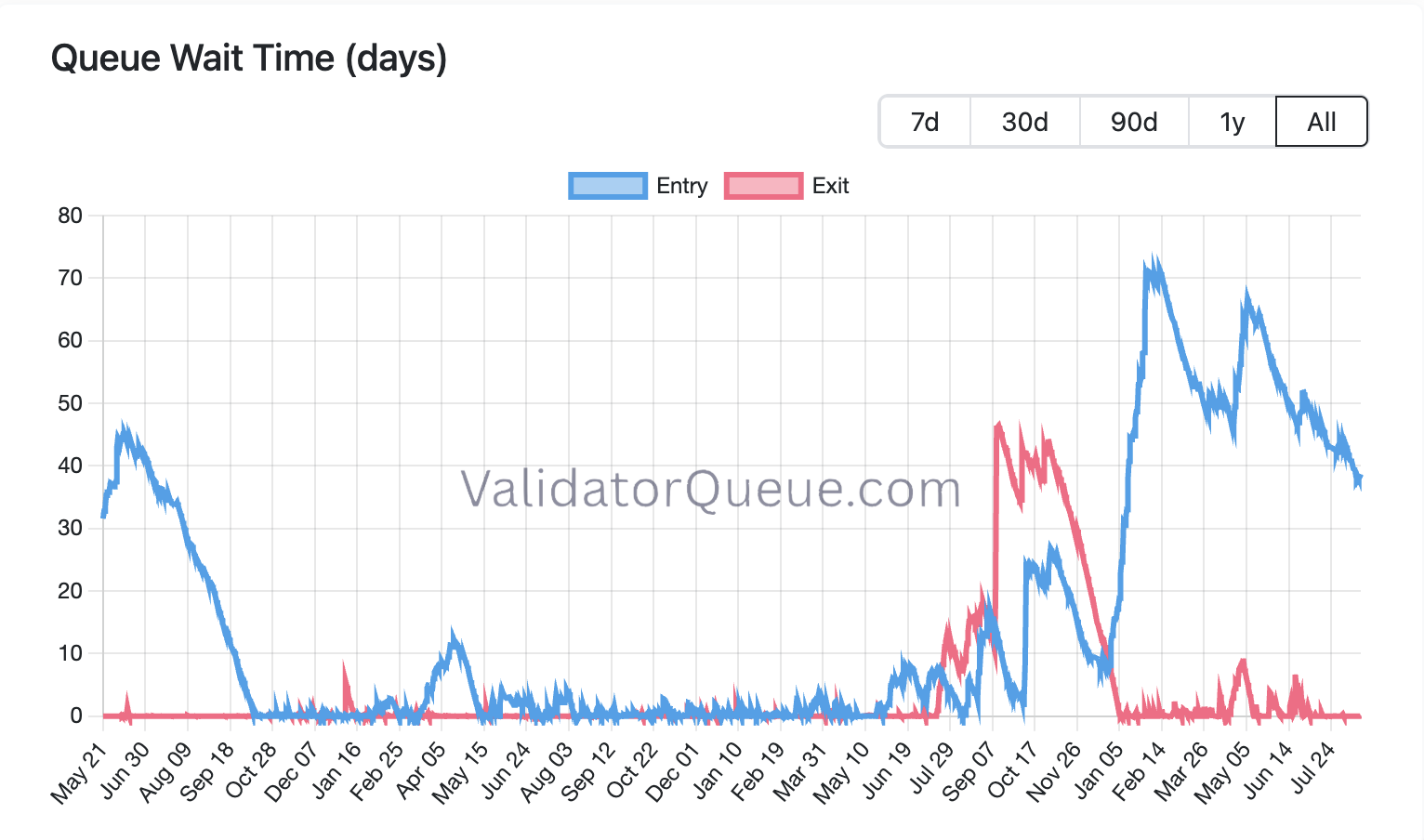
Staking keeps rising even though ETH’s price was weak in recent months. ValidatorQueue data shows more than 41.1 million ETH are now staked, equal to nearly 33.7% of the total supply. The exit queue is close to zero. Meanwhile, about 2.21 million ETH are still waiting to enter staking, with an estimated wait time of more than 38 days.
Onchain data points to a longer-term holding pattern too. Santiment said wallets holding more than 1,000 ETH reduced their combined balance by about 1.7 million ETH between May 20 and August 20, or 2.9% of that cohort’s holdings. During the same period, the share held by wallets with 1 to 10 ETH rose from 4.38% to 4.52%, with 65 up days and 27 down days.
But that does not automatically mean the ETH was sold. Santiment said only about 300,000 of the outflow could be traced to smaller wallets, while most of the rest may have moved into staking or contract addresses. Exchange balances also dropped from about 7.07 million ETH to 6.54 million ETH.
Rising staking levels are also feeding an argument over rewards. Ethereum researchers Justin Drake and Jerome de Tychey recently proposed EIP-8363, which would gradually cut and eventually eliminate consensus-layer issuance rewards once the staking rate reaches 50% of total supply. The proposal has drawn pushback from the community.
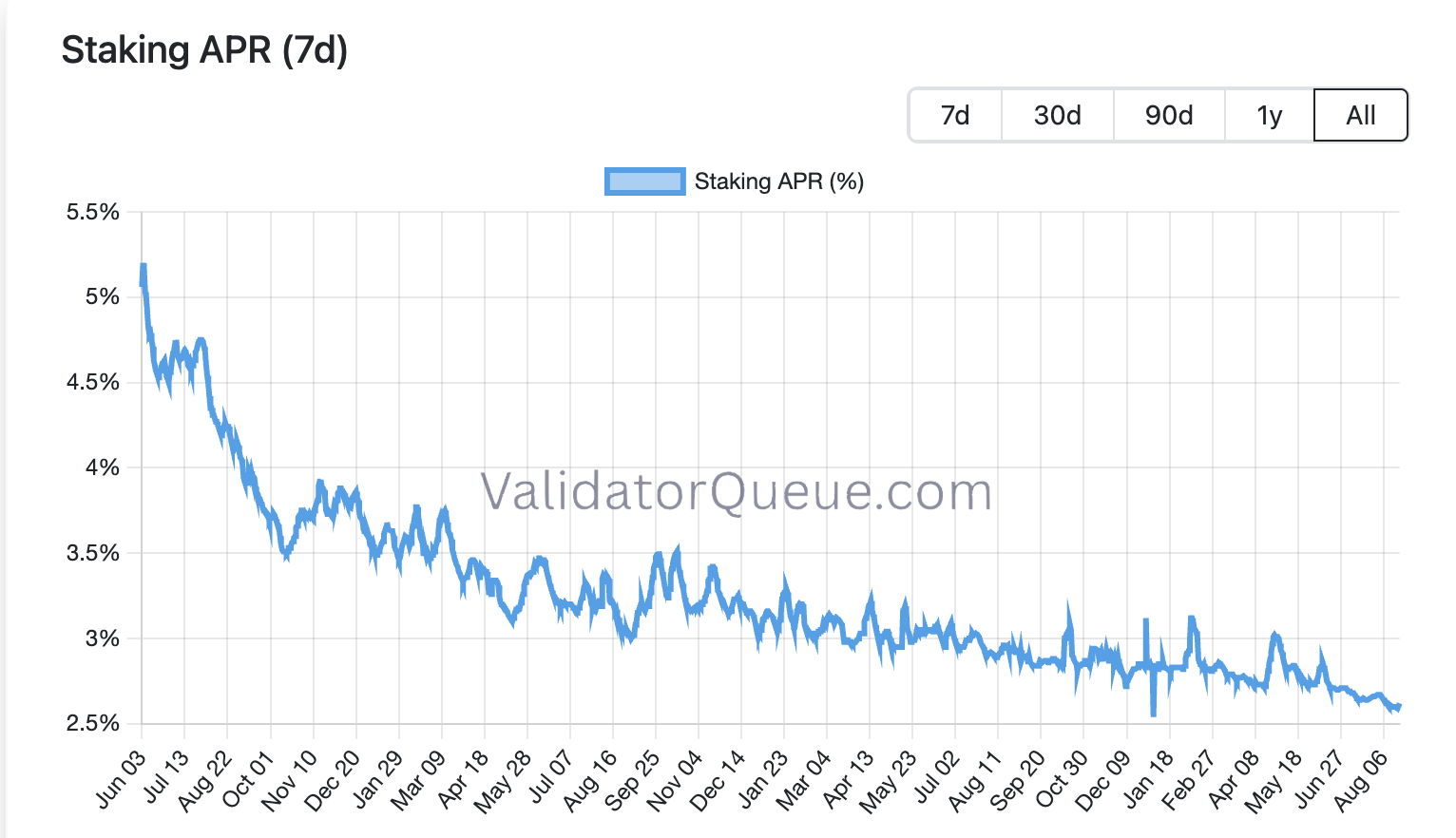
At the same time, staking yields are slipping. Over the past three months, ETH staking yield fell from a peak of 2.86% to 2.59%, well below the roughly 5.2% high seen three years ago. If yields keep sliding, the asset could look less attractive to new capital.
Ethereum’s next major upgrade, Glamsterdam, is planned for the fourth quarter of 2026. EIP-8061 is being considered for inclusion. The proposal would remove the validator exit cap and speed up exit processing by about four times, improving staking flexibility and liquidity management. For institutional investors, that could also mean lower liquidity risk.
For now, the rebound is getting backing from sentiment, flows and fundamentals. Whether Ethereum can return to a stronger uptrend will hinge on future fund flows, institutional positioning and how the staking ecosystem evolves.