
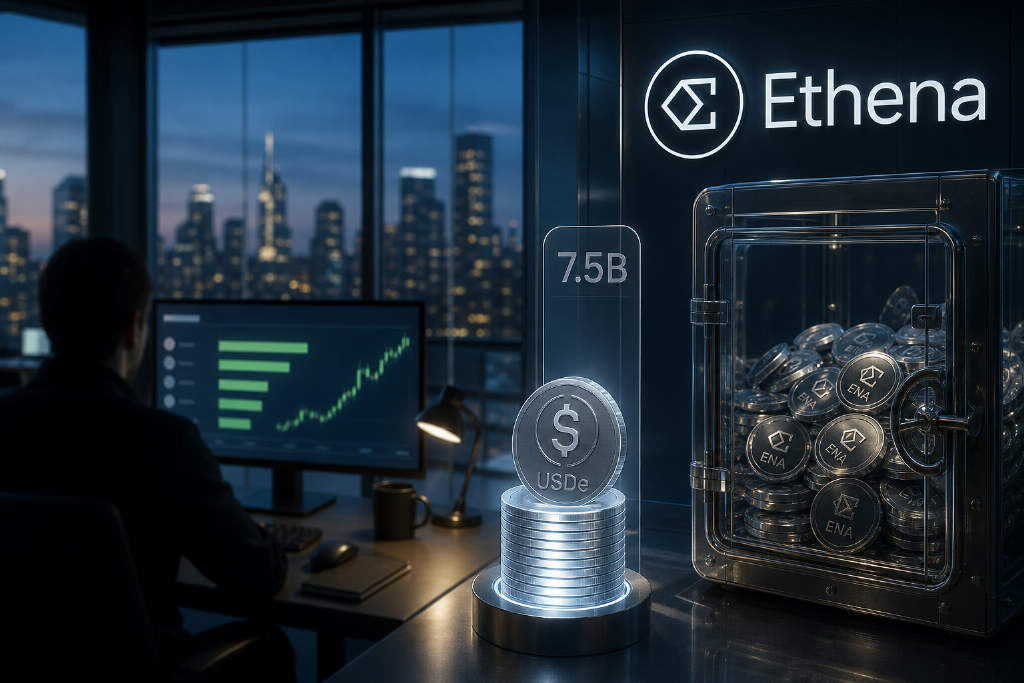
Ethena’s proposed token buyback has attracted attention, but the program would not start right away. Under the plan, the fee switch turns on only after the supply of USDe, the protocol’s synthetic dollar, grows to $7.5 billion from its current level.
Unchained reported that crypto projects have begun sending value back to tokenholders more directly, including through buybacks funded by real revenue and votes to reduce new token supply. Ethena’s proposal last week was followed by a move of as much as 27% in ENA over the next two days. In the same stretch, Solana validators voted to cut the supply of new SOL, while Hyperliquid was described as already using nearly all of its trading fees to buy back its own token automatically each day.
Buybacks are not new in crypto. The report pointed to Binance, which had been burning BNB with one-fifth of its quarterly profits years ago. What changed, according to Unchained, is that returning value to tokenholders no longer looked legally radioactive in the U.S., and these programs became common in about a month.
Still, the structures are not the same. Some are rule-based, written into code or a fixed schedule, automatic and easy to verify. Others rely on discretionary decisions made by a foundation under its own terms. Unchained said the plan that moved the market the most last week had not actually bought anything yet, because Ethena’s buyback does not begin until USDe expands another 78% from here.
What the proposal says
According to the governance post, Ethena would activate a fee switch that routes part of protocol revenue into ENA purchases. Ethena operates USDe, a $4.22 billion synthetic dollar that generates yield through the basis trade: holding an asset, shorting its perpetual futures contract, and collecting the funding paid by longs.
The proposal uses a step-by-step structure. The milestone table in the governance post shows that the share of protocol revenue directed to buybacks starts at 5% once USDe supply reaches $7.5 billion, then rises to 25% if supply reaches $25 billion. Using the post’s own illustrative math, that would amount to roughly $22.5 million a year in buying at the first milestone and $240 million if supply reaches $20 billion.
The figure that spread most widely last week was 95%: the share of the Foundation’s revenue take that would go to ENA purchases after the first milestone is reached. But Unchained said the more important number is the actual take rate, and the governance post presented it in two ways that did not reconcile. The milestone table described a share of overall protocol revenue, starting at 5%, while the text below it said 95% of the net revenue paid to the Foundation by Ethena’s three business lines would be used.
Vote status and token reaction
Unchained contrasted the plan with a traditional equity buyback, which usually comes with board authorization, securities filings, and liability. Ethena’s version, by comparison, is being advanced through a governance post and a community vote.
The vote is live on Snapshot and is set to close on Sept. 2 at 13:59 UTC. As of Tuesday evening, it showed 17.8 million ENA in favor, none against, across 87 votes.
ENA was trading near $0.158 at the time cited in the report. That was below its peak on the day the proposal was published, but still about 77% higher over the past 30 days.
