
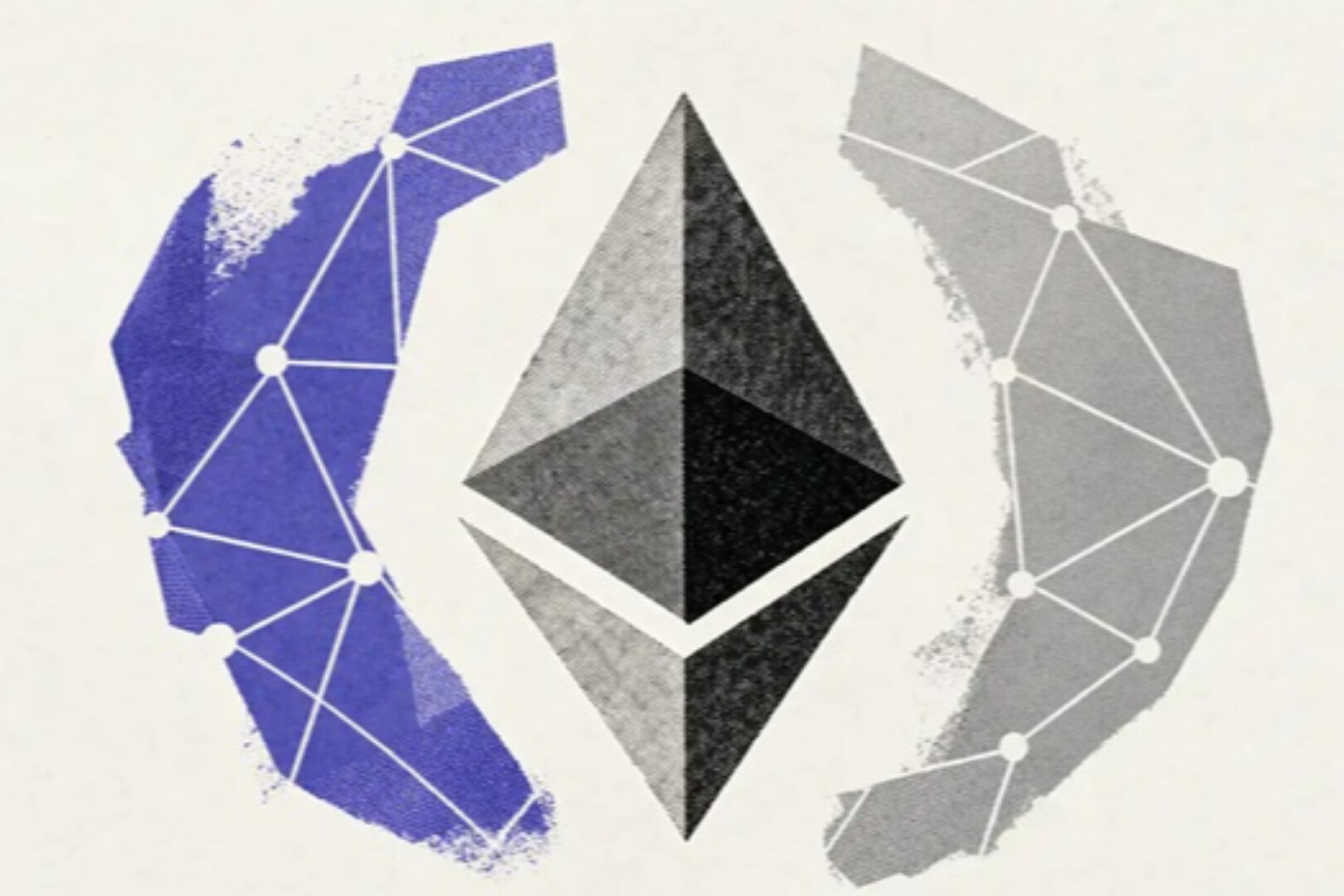
In May, influential Ethereum community member David Hoffman publicly sold all his ETH, expressing strong dissatisfaction with the current management of the Ethereum ecosystem. This gesture seemingly catalyzed change within the community — just a month later, the new organizational structure he anticipated was formally unveiled.

The Birth of Ethlabs: An Independent Lab by Five Former EF Members
On the evening of June 22, five former Ethereum Foundation members — Ansgar Dietrichs, Barnabé Monnot, Caspar Schwarz-Schilling, Josh Rudolf, and Julian Ma — jointly announced the launch of Ethlabs, an independent non-profit R&D laboratory. The lab currently accepts donations in ETH, stablecoins, and ERC-20 tokens. According to its website, Ethlabs is dedicated to making Ethereum the settlement layer for the global economy, positioning itself as a non-profit research institution for the Ethereum ecosystem and ETH.

Ethereum's Unique Position: Credible Neutrality and Settlement Base
Ethlabs argues that global finance is undergoing a similar inflection point to the internet — as value, assets, and markets become fully digitized, the world urgently needs a shared settlement infrastructure. Ethereum offers three key advantages: credible neutrality achieved through a decade of stable operation with minimal counterparty risk; ETH as a programmable store of value with deep on-chain liquidity after ten years of distribution; and rich developer and DeFi resources forming an open market and collaboration system for everyone.

Ethlabs positions itself as a bridge between frontier developers and the underlying protocol, translating real needs from users, applications, wallets, Layer 2 networks, infrastructure teams, institutions, and core developers into protocol upgrades, common standards, supporting infrastructure, and deployable products. As they put it, "We engage with all parties to transform genuine demands into protocol optimizations, industry standards, and delivered products."
Core Team: Top Researchers in Ethereum Protocol
Ansgar Dietrichs and Barnabé Monnot are among the most cited researchers in Ethereum protocol research over the past decade. Dietrichs has long been involved in Proposer-Builder Separation (PBS) research, while Monnot is known for MEV (Maximal Extractable Value) studies and cryptoeconomic mechanism design through the Ethereum Foundation's "Robust Incentives Group." Caspar Schwarz-Schilling, Josh Rudolf, and Julian Ma bring deep expertise in economic modeling, consensus research, and applied cryptography, respectively.

Investors and Community Support: Treasury Firms and Industry Leaders Step In
Disclosed backers include Bitmine, Sharplink, and Consensys founder Joe Lubin. Bitmine is the largest corporate ETH treasury holder, with over 5.67 million ETH, and runs its own validator infrastructure, launching the self-developed MAVAN validator network in March. In May, Sharplink partnered with Galaxy to launch a $125 million DeFi fund, the "Galaxy SharpLink Onchain Yield Fund," focusing on on-chain lending and liquidity provision. Joe Lubin contributes as a core investor personally. David Hoffman has also publicly stated his support for Ethlabs' journey.
Other institutional backers include SNZ, Octant, Anchorage Digital, and investor Konstantin Lomashuk. Community supporters include Uniswap's Hayden Adams, Base's Jesse Pollak, Etherealize's Danny Ryan, Ethereum Foundation's Justin Drake and Tim Beiko, Dragonfly's Haseeb Qureshi, and around 50 other donors.
Relationship with the Ethereum Foundation: Collaboration, Not Competition
According to Aerugo, a spin-off project should meet certain criteria: Is the work core to the EF mission? Would the EF do it internally if capable? Is there no more suitable host? Can the external team execute without increasing control risk, private value extraction, or opacity? Ethlabs and the EF clearly overlap in core research areas like eliminating MEV, which Aerugo calls "the next critical battlefront in the cypherpunk war."

For now, Ethlabs' emergence does not necessarily imply direct competition. It more likely represents Ethereum's evolution from a "single coordination model" to a "multi-R&D entity collaboration model." Ethlabs emphasizes that it operates independently, viewing Ethereum as a public project belonging to all builders and itself as just one node in the ecosystem's governance network. However, as overlaps in talent, funding, and technical direction increase, future tensions remain possible.

Overall, Ethlabs is an organizational evolution in Ethereum's maturation process. The key question is not whether it will replace the Ethereum Foundation, but whether multiple R&D organizations can collaborate to drive Ethereum toward becoming a more competitive global on-chain settlement infrastructure.