
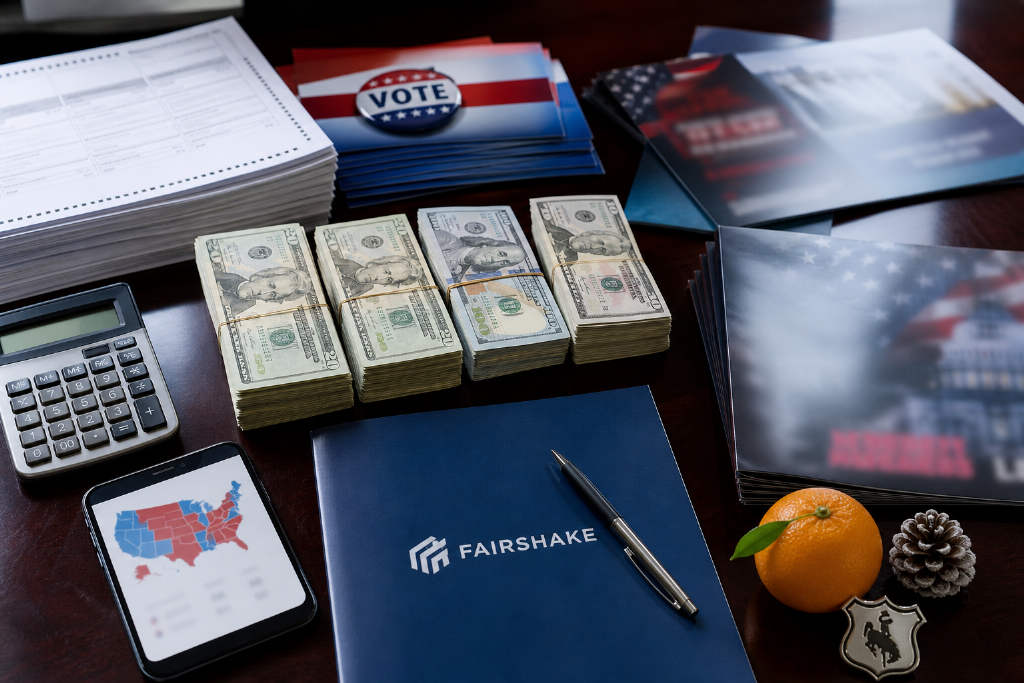
Crypto-backed political action committee Fairshake and its affiliated groups won most of the primary contests they invested in on Tuesday, though a high-profile Florida race broke the pattern after more than $2 million in negative ads failed to stop the targeted candidate.

Four of the five candidates supported by media funded through Fairshake-aligned PACs either won their primaries or advanced, a result that may offer an early read on the crypto industry’s influence heading into the 2026 US midterm elections.
About $3.6 million spent across three states
On Tuesday, candidates backed by Fairshake affiliates Protect Progress and Defend American Jobs recorded wins in races across Alaska, Florida and Wyoming. Combined, the PACs spent about $3.6 million on House and Senate contests in those three states.
In Florida’s 23rd congressional district, Democrat Lois Frankel won her primary after Protect Progress spent more than $150,000 on supportive media. Cointelegraph later updated the report to clarify that Frankel won the Democratic primary, not reelection.
Defend American Jobs also spent a combined $1.5 million on ads supporting Republican Nick Begich in Alaska’s at-large congressional district, Republican candidate Sydney Gruters in Florida’s 16th congressional district and Representative Harriet Hageman for the US Senate in Wyoming. Gruters and Hageman won their primaries, while Begich is expected to advance in Alaska.
All four candidates are likely to face challengers in the November 2026 midterms.
Florida’s 24th district was the exception
One race moved the other way. In Florida’s 24th congressional district, Democrat Oliver Gilbert won despite being the target of more than $2 million in negative ads funded by Protect Progress.
Gilbert defeated Shevrin Jones and Kendrick Meek with 34.4% of the vote. The contest drew attention because it directly raised questions about how much influence the crypto industry could exert in a Democratic primary.
Ad campaign drew criticism
According to an Aug. 12 report from the Miami Herald, Gilbert said 「[Donald] Trump’s tech billionaire buddies」 were behind 「the crypto con artists trying to buy a Democratic primary」 through the Protect Progress ads.
The Miami Herald said the ads used fake headlines made to look like they came from the newspaper and misrepresented Gilbert’s policy positions. A spokesperson for the PAC said 「the underlying facts in our ad are true.」
Fairshake’s political spending keeps growing
Fairshake reported a $193 million war chest as of January. During the 2024 election cycle, the PAC funded more than $130 million in ads backing candidates it viewed as pro-crypto and opposing those who criticized the industry or voted against its interests.
As of June, the committee had spent more than $82 million on races ahead of the 2026 midterms.
Gilbert did not mention the crypto industry or the ads in his Tuesday night acceptance speech. After the three-state primary results and other candidate wins in 2026, Fairshake spokesperson Geoff Vetter said the PAC was 「just getting started building the largest pro-crypto Congress in history.」
Next Congress could shape crypto legislation
The US Senate and House of Representatives are both in recess until September. At that point, the Senate is expected to take up a cloture motion on the Digital Asset Market Clarity Act, or CLARITY Act, a bill expected to create a comprehensive regulatory framework for digital assets.
The House passed the legislation in July 2025 with bipartisan support in a 294-134 vote. Still, many Senate Democrats have been pressing for stronger ethics provisions tied to the Trump family’s crypto investments.
After the 2026 elections, control of Congress could shift from a Republican majority to a Democratic majority depending on the outcome of key races that PACs such as Fairshake may influence. If the current session does not act on the CLARITY Act before 2027, lawmakers elected in November could either move the bill forward or block legislation affecting the crypto industry.