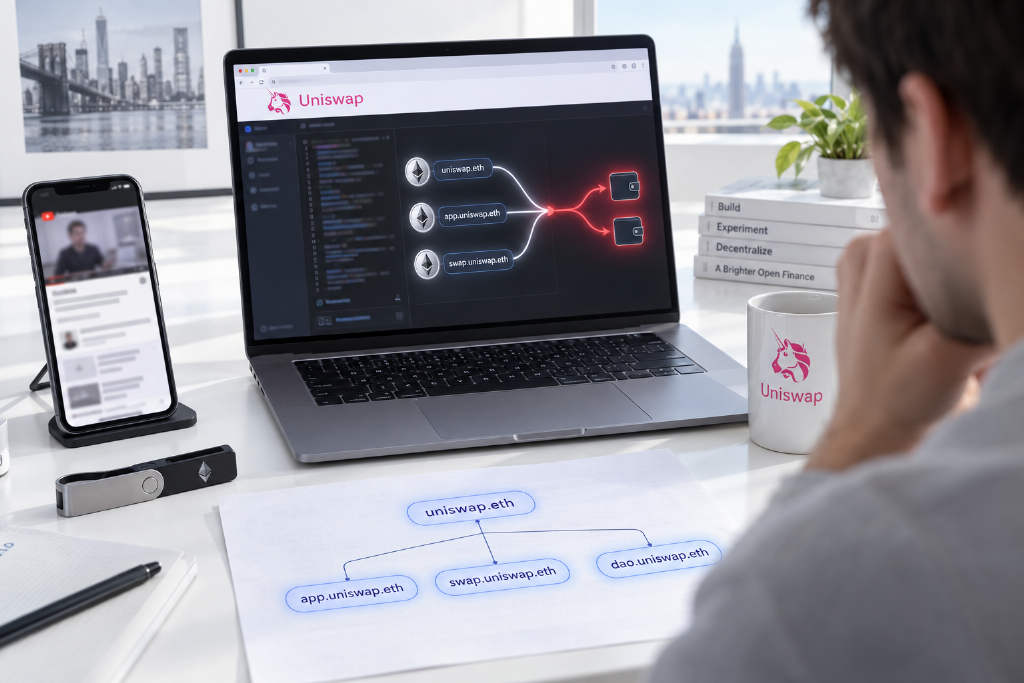
On-chain investigator Specter said an arbitrage bot scam has led to losses of more than $500,000. The attackers reportedly used YouTube videos to distribute supposed tutorials and code, then directed victims to compile and deploy contracts through a fake Remix development interface. To make the setup look legitimate, they registered ENS names containing "Uniswap" and used those addresses to imitate inbound transfers tied to real DeFi activity. That gave victims the impression that the deployed bot was generating profits through Uniswap. Once victims sent their own funds into the contract, the assets were drained by the attackers. Specter added that the operators appear to still be active and continue to hold a sizable share of the stolen funds across two addresses.
Odaily reported that on-chain investigator Specter has identified an arbitrage bot scam that has stolen more than $500,000 in assets.
According to Specter, the attackers shared supposed arbitrage bot tutorials and code through YouTube videos, then directed victims to compile and deploy contracts through a fake Remix development interface.
The attackers also registered ENS names containing "Uniswap" and used the related addresses to pose as the source of inbound transfers from legitimate DeFi activity. That made victims believe the deployed arbitrage bot was generating profits through Uniswap. After victims injected their own funds into the contract, the assets were transferred out by the attackers.
Specter said the attackers appear to still be active and currently hold a sizable portion of the stolen funds in two addresses.
This article was originally published by Bit.Fan. For more cryptocurrency news and market insights, visit www.bit.fan. Disclaimer:
The market information, project data, and third-party content displayed on this platform are for industry information sharing only and do not constitute any form of investment advice or return commitment.
Cryptocurrency trading carries high risks. Users should fully assess their risk tolerance and make independent decisions. All profits, losses, and legal responsibilities are borne by the users themselves.