
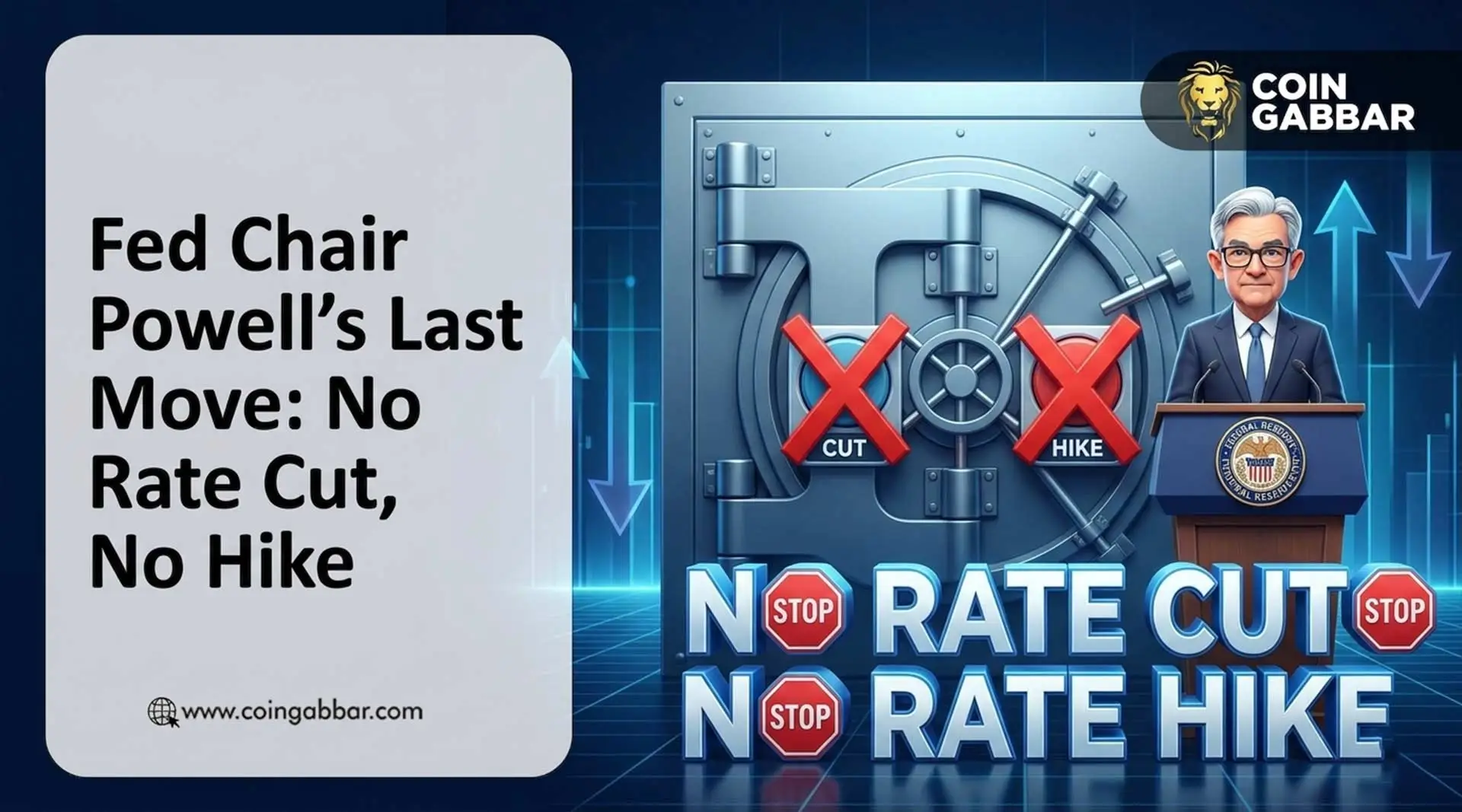
The U.S. Federal Reserve held its benchmark interest rate steady at 3.75% on April 29, 2026, matching market expectations. Yet the decision masked a rare internal rift: four Federal Open Market Committee (FOMC) members dissented, the highest number since 1992. Chair Jerome Powell also confirmed this was his final press conference as Fed chair, injecting fresh uncertainty into an already fragile economic landscape.
Rates Unchanged, but Divisions Deepen
The central bank kept the federal funds rate target range at 3.5%-3.75%. Officials said the current rate helps balance price stability and maximum employment. But the consensus unraveled behind the scenes: one member voted for a cut, while three opposed any signal of easing. The split reflects a fierce debate about whether to act against stubborn inflation or risk slowing the economy further.
The Fed emphasized that future moves depend entirely on incoming data. There is no preset path. Policymakers will watch inflation trends, labor market conditions, and global developments — particularly the impact of rising energy costs tied to geopolitical tensions in the Middle East.
Inflation Stubborn, Jobs Mixed
Headline inflation stood at 3.5% annually, while core inflation (excluding food and energy) was 3.2%, both well above the Fed's 2% target. Rising oil prices, driven by Middle East tensions, have pushed short-term inflation expectations higher, though long-term expectations remain stable.
The labor market sent mixed signals. The unemployment rate held at 4.3%, and job growth slowed, partly due to lower labor force participation and reduced immigration. Economic activity continued to expand at a moderate pace, with resilient consumer spending and solid business investment, but the housing sector remained weak.
Powell's Farewell: Last Press Conference as Chair
Jerome Powell confirmed that this was his final press conference as Federal Reserve Chair. His term ends on May 15, 2026, though he may remain on the Board of Governors until January 2028.
Powell also addressed an ongoing institutional investigation, saying he would not step away until the matter reaches full transparency and resolution. He stressed the importance of public trust in the central bank, expressing confidence in the Fed's ability to maintain stable prices, a strong job market, and a reliable financial system.
Interest rate decisions directly affect loan costs, mortgage rates, and savings returns. For investors — including those in crypto markets — Fed moves often drive volatility. A steady rate today does not guarantee a smooth path ahead, especially with deepening internal divisions and a leadership transition approaching.