
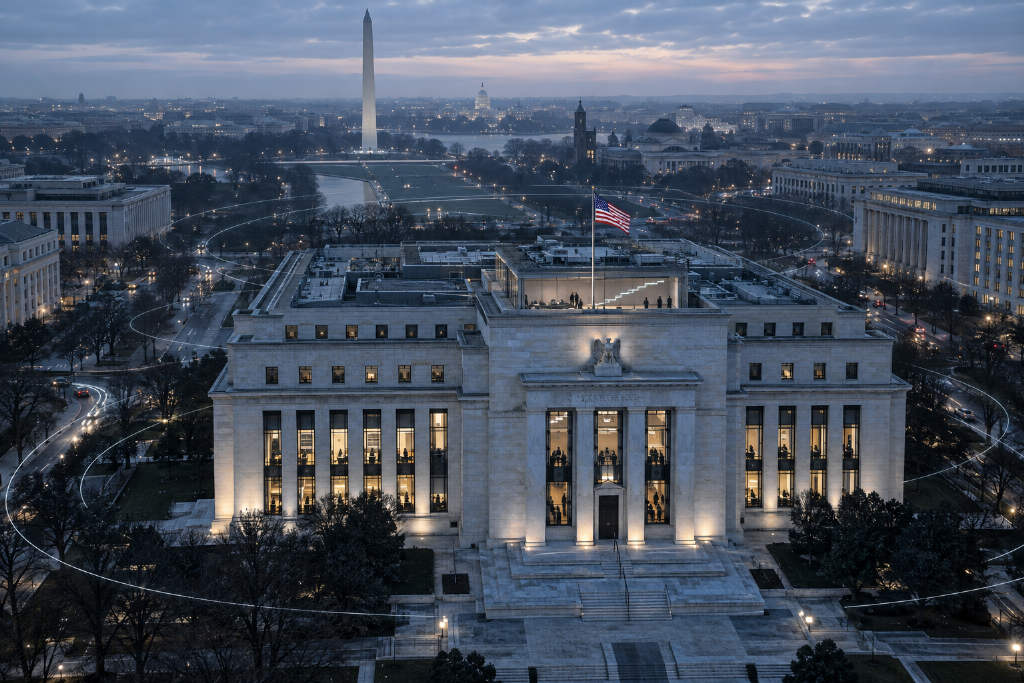
The Federal Reserve’s September meeting minutes will be released at 2 a.m. Beijing time on Thursday. The document is attracting more attention than usual because it may show why the Fed delivered a 25-basis-point rate increase in September and how officials assessed whether monetary policy had become tight enough.
The bigger question is whether the minutes will hint at how many more rate hikes officials are still considering. At the press conference after the September decision, Fed Chair Kevin Warsh said he found it difficult to describe overall financial conditions as "restrictive." That comment left a key issue hanging over the market: if current policy has only removed one layer of accommodation, more tightening may still be on the table.
Which indicators the Fed may be watching
It remains unclear which financial-conditions measures the Fed is using to decide whether policy is sufficiently tight, and it is also hard to tell how much of the earlier easing has been offset by the recent rise in market interest rates.
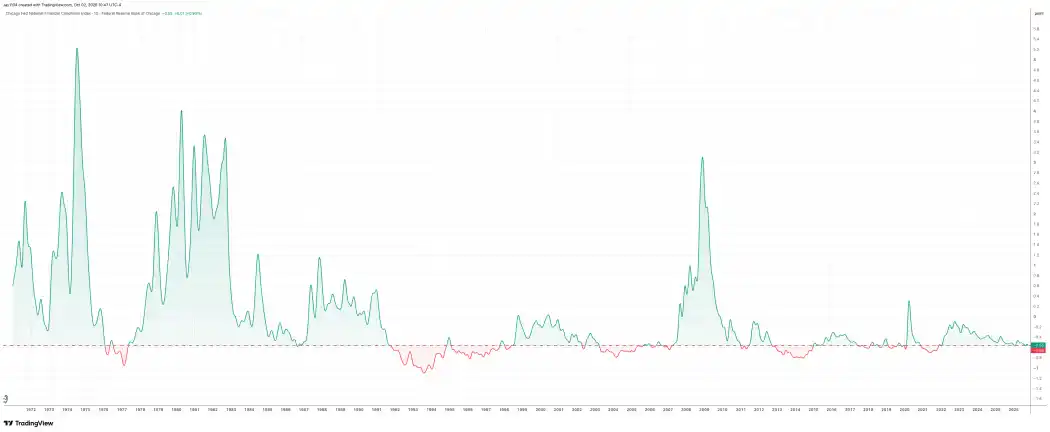
The Chicago Fed National Financial Conditions Index shows that U.S. financial conditions have continued to ease since hitting a peak in the autumn of 2022. The index is not at the loosest level in history, but it still sits on the easier side of its historical range.
Other gauges send a similar message. The option-adjusted spread on the ICE BofA U.S. High Yield Index remains narrow, with only a small number of periods in history showing even tighter levels.
Michael Kramer, founder of Mott Capital Management, wrote that if the Fed is in fact paying attention to those indicators, the current financial backdrop may still not qualify as clearly restrictive policy. In his view, that helps explain why the September rate increase may have been the beginning rather than a one-time policy adjustment.
Real rates are still well below 2006 levels
Inflation is another key part of the question.
U.S. August personal consumption expenditures, or PCE, data were released after the September meeting, so they would not have been part of the information set behind the minutes. Even so, the report included annual revisions from the Bureau of Economic Analysis and back revisions to data going back to 2021, adding new context for judging the current inflation environment.
The revised figures showed headline PCE rose 3.4% year over year in August and core PCE increased 3.0%, both unchanged from July. Aside from a brief stretch in 2024 and 2025, headline PCE has not fallen below 2.5% since early 2021, and it has not reached the Fed’s 2% target.
That leaves the question of whether further tightening is needed very much alive.
The effective federal funds rate is currently about 3.9%. Measured against headline PCE, the real federal funds rate is only around 50 basis points. Using core PCE, it is still only about 90 basis points.
That is a clear gap from the period when Warsh first served as a Fed governor in 2006. In the middle of 2006, headline PCE inflation was running at roughly 3.3% to 3.5%, broadly similar to current readings. At that time, however, the real federal funds rate was about 1.5% to 2.0%. By October 2006, as inflation eased, the real rate had risen further to 3.6%.
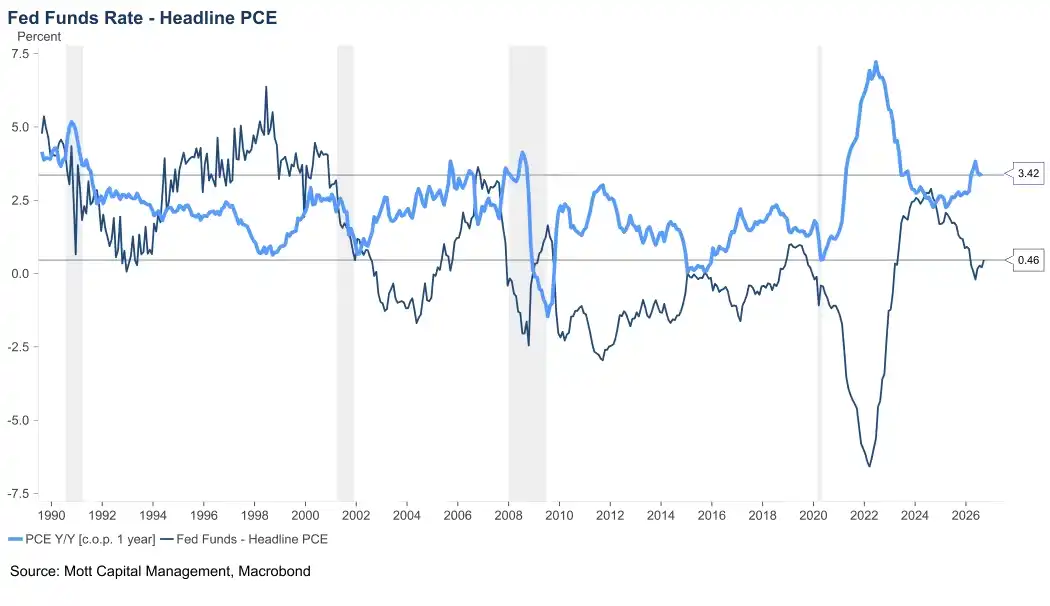
Put another way, at a similar inflation level, the current real rate is still more than 300 basis points below the level seen in the middle of Warsh’s 2006 tenure.
What the minutes may reveal
Kramer said the most important part of this week’s FOMC minutes may not be the already settled question of why the Fed raised rates by 25 basis points in September. The more useful signal could come from how officials discussed financial conditions, real rates and the pace at which inflation is cooling.
The minutes may also show how quickly the Fed wants inflation to return to its 2% target and whether officials think the current stance is restrictive enough.
That said, the document may not provide a definitive answer. It could be limited in scope, focused mostly on the discussion that took place at the September meeting, and short on explicit forward guidance.
Kramer said that if the minutes show how Fed officials debated the degree of policy accommodation still left in the system, they could help markets judge whether the September move was a one-off adjustment or the starting point of a new tightening cycle.