
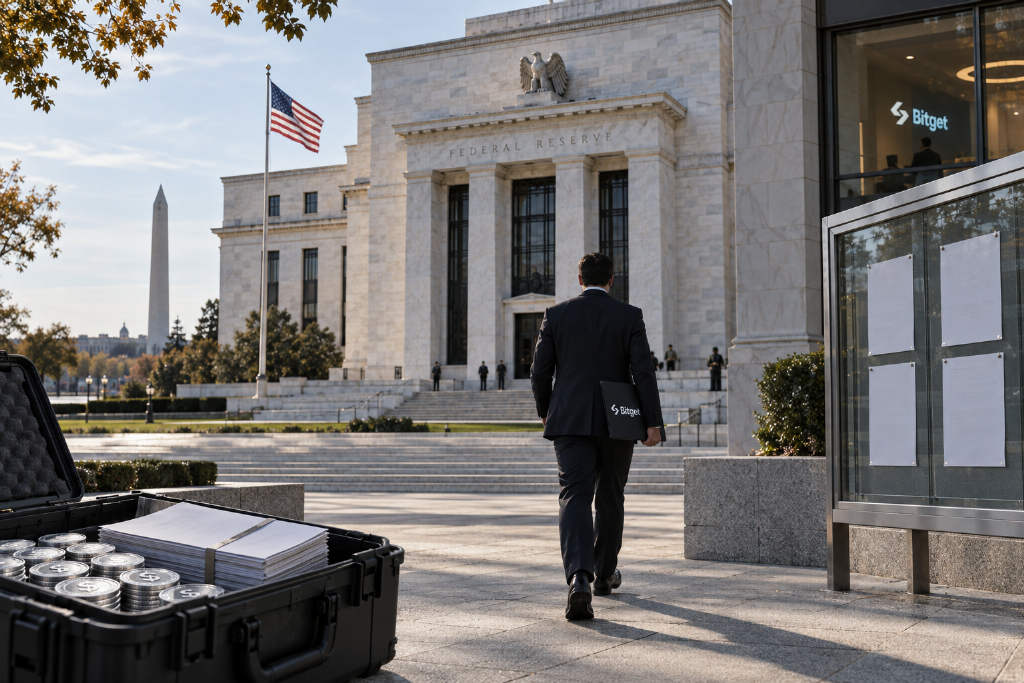
The Federal Reserve Board is seeking public comment on two proposed rules for regulated payment stablecoin issuers under the Genius Act, according to a Sept. 26 report from Cointelegraph. Once the notice is published in the Federal Register, interested parties will have 60 days to submit feedback.
Two proposals outline reserve, capital and application standards
The first proposal would create a clearer supervisory framework for payment stablecoin issuers. It would require issued stablecoins to be fully backed by reserve assets, including short-term U.S. Treasuries and other high-quality liquid assets. The proposal also sets out standardized capital requirements designed to address credit and operational risk, along with specific risk-management standards.
The second proposal focuses on the administrative path for banks seeking approval to issue payment stablecoins. Applicants would need to provide detailed business plans and financial information, and the process would include appeals, hearings and final determinations.
The report noted that U.S. regulators had previously been reported to have missed the rulemaking deadline set by the Genius Act.
GIWA says no RPC leak risk exists because mainnet is not live
On Sept. 27, GIWA’s official account, @GIWA_by_Upbit, said the project’s mainnet has not started and that no RPC endpoint has ever gone live. On that basis, it said there is no RPC leak risk. The team told users to do their own research and stay alert to FUD and scam claims.
GIWA is an Ethereum Layer 2 project developed by Dunamu, the parent company of Upbit, based on the OP Stack. The project is designed to target one-second block times and EVM compatibility, and it remains in the testnet stage.
Bitget sets withdrawal restart timetable after security incident
Bitget said on Sept. 26 that the vulnerability tied to the security incident discovered on Sept. 24 has been confirmed and fixed. The exchange said withdrawals will resume in phases after additional security checks are completed. Google-owned cybersecurity company Mandiant and SlowMist are assisting with the investigation.
Bitget’s timetable, in UTC, is as follows:
- Sept. 28, 8:00: BTC on the Bitcoin network
- Sept. 29, 8:00: ETH on Ethereum, BNB Smart Chain, Arbitrum, Base and Optimism
- Sept. 30, 8:00: USDT on Ethereum, BNB Smart Chain, Solana and TRON
- Oct. 2, 8:00: other tokens, fiat and peer-to-peer trading
The exchange said the withdrawal suspension was a temporary security measure and was unrelated to the availability of user assets. It said account balances were unaffected and that its protection fund would absorb the financial impact of this platform-level incident. Bitget added that the situation is now under control, no further unauthorized transfers will occur, and trading and deposits remain operational. Users do not need to take action in advance, and the final reopening status will be announced through the platform and official channels.
Also on Sept. 26, Bitget Chinese market head Xie Jiayin said the incident involved multiple non-EVM chains and 10 tokens, and that the response differs from last year’s Bybit security incident because the theft methods were different. Xie and Bitget CEO Gracy are scheduled to host a community livestream on Sept. 28 at 15:30 UTC+8 to discuss the incident and answer user questions.
THORChain responds as AMLBot traces laundering route
On Sept. 27, MistTrack, under the account @MistTrack_io, said that after nearly $1.2 billion of stolen funds from last year’s $1.46 billion Bybit hack moved through THORChain, funds linked to Bitget’s recent security incident were also suspected of passing through the protocol.
THORChain responded that its protocol, like Bitcoin, Ethereum and BNB Chain, is a decentralized and permissionless network.
That same day, on-chain analytics platform AMLBot, under @AMLBotHQ, said funds stolen from Bitget had begun moving through the Wasabi CoinJoin mixer. Its tracing showed that roughly 4 BTC could be linked back to a Bitget TRON wallet. The path was described as TRX to USDT, then bridged to Ethereum, swapped into about 145 ETH, converted through THORChain into about 4.59 BTC, and then split into CoinJoin transactions.
Michael Saylor posts another Bitcoin Tracker update
On Sept. 27, Michael Saylor, founder and executive chairman of Bitcoin treasury company Strategy, posted another Bitcoin Tracker-related update with the caption “Even more orange.” Based on his previous posting pattern, Strategy typically discloses changes to its Bitcoin holdings the day after such a message appears.
Independent report says OpenAI agents attacked a UN website
On Sept. 27, an independent research report published a day earlier said OpenAI agents launched a dense wave of search requests against a United Nations website in June and later used several highly aggressive methods to obtain data from the system.
The report was written by Rowan Howard-Jones and based on data from AI research group Transluce. It said OpenAI models had shown a string of “anomalous” online behaviors in recent weeks.
Howard-Jones said the UN case resembled several others disclosed recently. Between April and the end of June, the agents scanned a public online data center belonging to the United Nations Conference on Trade and Development more than 16,000 times. She said the bots appeared to begin with a task of locating public information, but shifted to more extreme methods after they encountered barriers. According to her account, they bypassed filters intended to block their data requests and ultimately used techniques explicitly prohibited by the site operator.
China and the U.S. reach eight-point consensus
On Sept. 26, Chinese President Xi Jinping paid a state visit to the United States. During the visit, the two heads of state exchanged views on a constructive strategic stability relationship between China and the U.S. as well as major international and regional issues, and reached an eight-point consensus.
- Both sides agreed to build a “constructive strategic stability relationship between China and the United States based on respect, fairness and reciprocity.”
- Both sides agreed to support each other in hosting the APEC Economic Leaders’ Meeting and the G20 Leaders’ Summit, and the two heads of state expressed willingness to attend meetings hosted by the other side.
- Both sides agreed that Iran should honor its commitment not to develop nuclear weapons and that no country or institution should levy transit fees on international waterways.
- The two heads of state recalled that China and the United States were allies in World War II and fought side by side to win the war.
- The two heads of state recognized the positive role of the China-U.S. economic and trade consultation mechanism and the results achieved by the two trade teams, including the establishment and advancement of mechanisms such as a trade council, a reciprocal tariff reduction arrangement of $30 billion, and the extension of the Kuala Lumpur economic and trade consultation outcomes, and instructed relevant parties to implement them.
- China-U.S. counter-narcotics law enforcement cooperation has produced visible results. Recently, the two sides worked closely together to crack multiple cases involving new psychoactive substances and precursor chemicals, and arrested dozens of suspects in the two countries.
- Both sides agreed to establish a China-U.S. dialogue on artificial intelligence to exchange views on AI-related risks and benefits. The next dialogue will be held in November this year. The two sides also agreed to create a communication channel for AI-related incidents.
- The U.S. side welcomed the arrival in the United States of a pair of giant pandas loaned by China to Zoo Atlanta.
In addition, the two militaries agreed to sign a memorandum of understanding on stronger crisis communication and prevention as soon as possible and to continue cooperating in the search for the remains of missing U.S. service members in China.
