
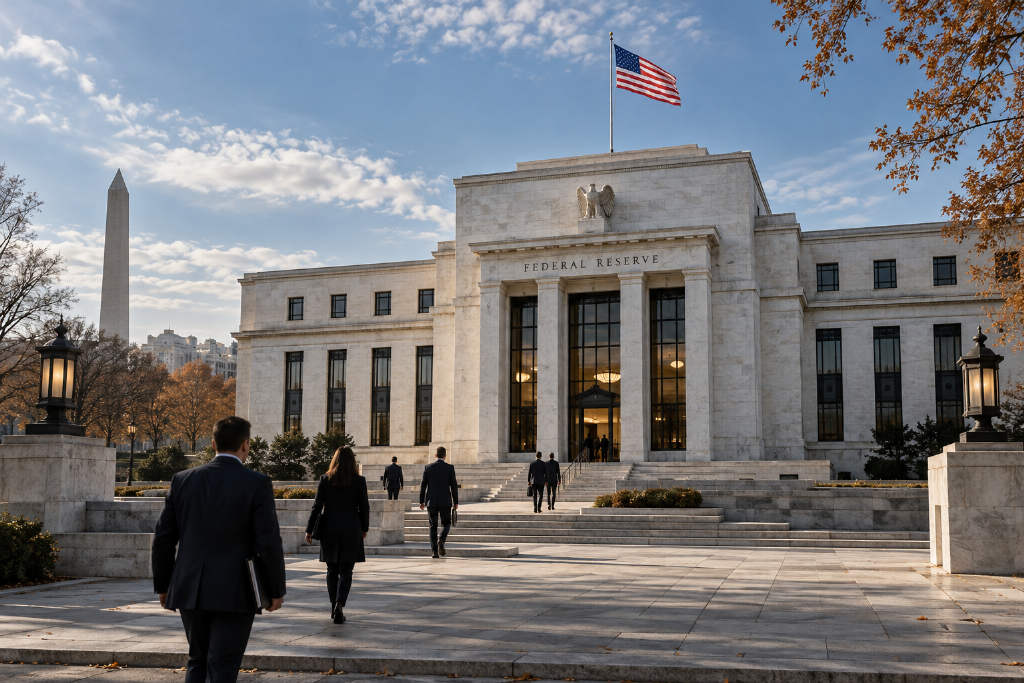
Federal Reserve minutes from the Sept. 15-16 Federal Open Market Committee meeting showed a hawkish consensus behind the latest rate increase, even though officials did not agree on the exact reason for moving.
According to the minutes released Wednesday, all 19 senior Fed officials supported raising the federal funds target range by 25 basis points to 3.75%-4.00%. It was the Fed’s first rate hike since July 2023.
The minutes said that 「most participants judged that a further increase in the target range for the federal funds rate later this year would likely be appropriate.」 At the same time, participants said they remained open-minded on each meeting, and that policy decisions at future meetings would depend on the latest information available at that time.
Most participants still see another hike this year
Nick Timiraos, often referred to as the Fed’s unofficial messenger, highlighted the same line from the minutes: 「Regarding the outlook for monetary policy beyond the current meeting, most participants judged that another increase in the target range for the federal funds rate later this year would likely be appropriate.」
After weaker-than-expected employment data following the meeting, along with signals from several officials that there was no need to rush into another increase, markets now expect the Fed to leave rates unchanged in October and raise again in December.
According to CME FedWatch, investors are pricing the probability of a 25-basis-point increase at the Oct. 27-28 meeting at below 20%, down sharply from about 70% in the days after the September decision. The U.S. consumer price index data due on Oct. 14 could become an important input for that pricing.
Two-year Treasury yield has moved lower
The two-year U.S. Treasury yield has fallen by more than 12 basis points over the past week and is now near 4.78%. As one of the maturities most sensitive to expectations for Fed policy, the drop in the two-year yield reflects a market view that the need for consecutive near-term tightening has eased.
Unanimous on the move, divided on the reasoning
The minutes showed that officials were united on the need for a September hike, but split on whether the move was mainly an insurance step or a response to broader inflation pressure.
「Many participants」 said the higher target range was justified on risk-management grounds and could provide insurance against inflation remaining above the 2% objective, especially if demand proved stronger than expected or supply conditions were hit again.
Another group of officials said a higher policy rate was necessary in its own right, with the goal of preventing recent shocks, including energy prices, from spreading to a broader set of goods and services prices. A small number of officials also said the increase was consistent with their view that the neutral rate had risen.
The minutes also showed that some officials believed the policy rate before the September increase was not sufficiently res