
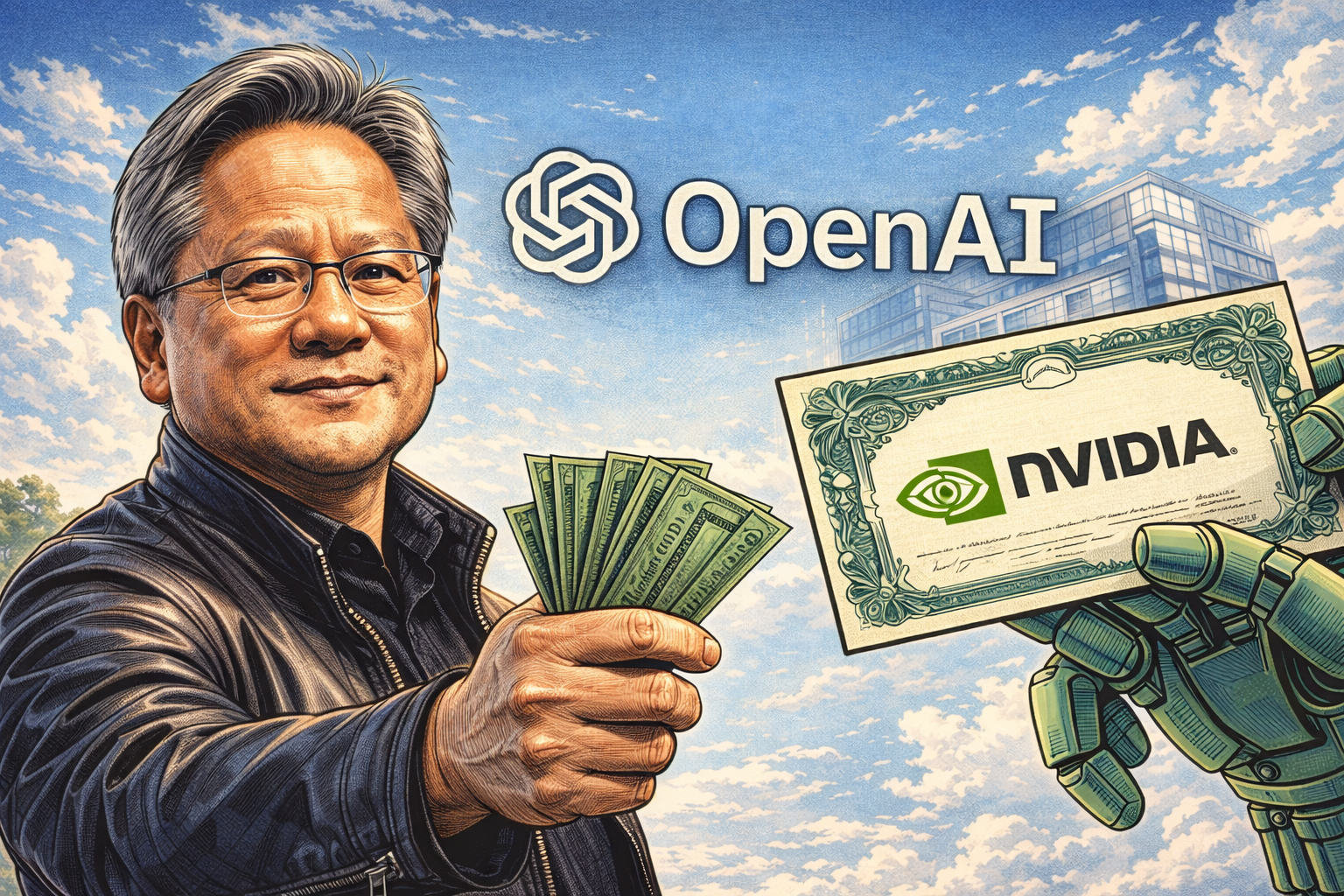
Nvidia is in the final stage of a $30 billion equity investment in OpenAI, according to the Financial Times, with the deal potentially closing as soon as this weekend. If completed, it would replace the $100 billion long-term partnership the two companies announced in September 2025, a plan that had called for the phased deployment of 10 gigawatts of Nvidia systems over several years but was later put on hold as confidence in the AI sector weakened.
A shift from supply agreement to equity ownership
The contrast between the two arrangements is not just about size. Last year’s headline figure was a multi-year commitment, while the current proposal centers on cash equity going directly into OpenAI. That would move Nvidia beyond the role of future infrastructure supplier and place it among OpenAI’s major shareholders.
The report said the investment would form part of a broader OpenAI fundraising round expected to exceed $100 billion. Participants are said to include Amazon, SoftBank, and Microsoft. Amazon could invest as much as $50 billion, while SoftBank’s share is reported at about $30 billion. OpenAI’s pre-money valuation is listed at $730 billion, with the post-money figure potentially rising above $850 billion.
Capital in, hardware orders out
What stands out in the structure is where the money may go next. People familiar with the matter said OpenAI is expected to channel a large portion of the new capital back into Nvidia hardware. In practice, that means a meaningful share of Nvidia’s $30 billion investment could return as spending on chips and computing systems.
This creates a tighter loop between financing and supply. OpenAI gets capital to expand compute capacity. Nvidia gains equity exposure while also reinforcing demand from one of the largest AI customers in the market. The tradeoff is clear as well: if AI commercialization falls short of expectations, Nvidia would face pressure not only through slower revenue growth but also through potential markdowns on its investment stake.
AI market sentiment has cooled
The report also said investor concerns about the health of the AI sector have grown this year. When Nvidia and OpenAI unveiled the $100 billion plan last September, market sentiment was still driven by the idea that AI spending would keep accelerating. Now the central question has shifted toward whether AI products can generate durable returns.
According to the article, the rise of open-source models such as DeepSeek, questions over enterprise AI spending efficiency, and the fast progress of China’s AI industry have all chipped away at confidence in the idea that Nvidia will keep a dominant grip on compute demand. Seen from that angle, the move from a $100 billion partnership framework to a $30 billion equity deal reflects a change in investor preference: less appetite for distant commitments, more focus on capital tied to near-term execution.