



Flex raised $70 million in a Series B1 financing on July 14, with Halo Fund leading the round. Based on the financing terms cited in the report, the company’s valuation reached about $1.2 billion, doubling from roughly $600 million in just seven months. The new capital is set to fund global expansion, especially the rollout of Flex Global.

The company has moved quickly through recent financings. In December 2025, Flex closed a $60 million Series B round led by Portage Ventures, with participation from Titanium Ventures, Wellington Management, Crosslink Capital, Spice, and Florida Funders, at a valuation of about $600 million. In July 2026, it returned with a $70 million Series B1 round led by Halo Fund, with Portage Ventures, Wellington, Crosslink Capital, 53 Stations, Titanium Ventures, Spice, and Florida Funders among the investors. After the round, total equity financing stood at about $180 million, while total debt financing was about $300 million.
Halo Fund, the lead investor in the latest round, was established in 2025 by Ryan Smith, the Qualtrics founder and owner of the NBA’s Utah Jazz and the NHL’s Utah Mammoth, together with Accel general partner Ryan Sweeney. The fund is headquartered in Sandy, Utah, and also has an office in Palo Alto, California. Its assets under management are about $1 billion.
A bet on owners of mid-sized businesses
Flex positions itself as an AI-native private bank for owners of mid-sized, high-net-worth businesses. Its target customers typically generate annual revenue of $3 million to $200 million and are concentrated in construction, wholesale, and import-export. Many of them operate across multiple entities, currencies, and jurisdictions, making cross-border treasury work part of normal business operations.
According to the report, there are about 350,000 such business owners in the United States, and they account for 40% of private-sector payroll. Globally, the comparable group numbers about 3 million. Flex’s argument is that traditional financial services split business banking from personal finance, forcing owners to manage more than 20 tools while dealing with layered fees and delayed settlement. Its platform is designed to pull those functions together in one place and make moving money feel closer to a local transaction.
Founder background and hiring plans
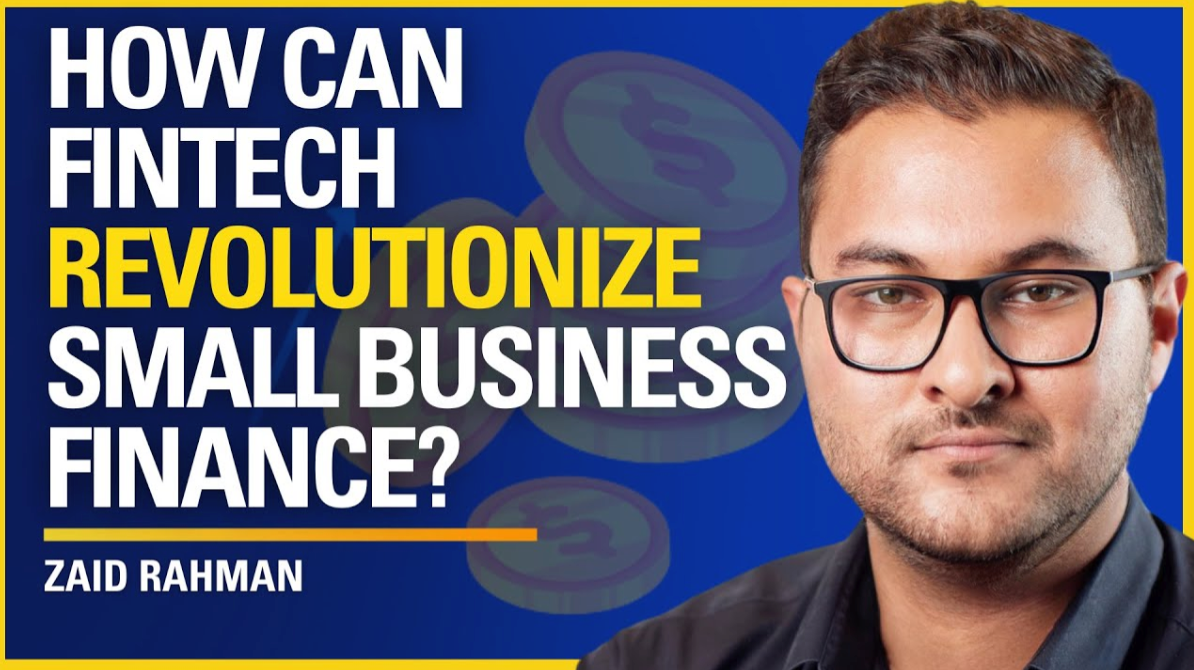
Founder Zaid Rahman left Columbia University to join the Thiel Fellowship and became a Thiel Fellow before building several companies, including Flex. The report notes that the fellowship was launched in 2011 by Peter Thiel, the PayPal co-founder, and selects about 20 people aged 18 to 22 each year, offering $100,000 over two years to support entrepreneurship or other innovation outside a traditional university track.
Before Flex, Rahman founded an education software company and an AI knowledge technology startup called Volley. The report said Volley had support tied to JPMorgan and Mark Zuckerberg and aimed to help computers understand knowledge more effectively. Rahman’s family background in the construction business also shaped the company’s direction, giving him direct exposure to the financial strain that mid-sized owners face when managing projects across countries, settling in multiple currencies, and dealing with money in transit.
Rahman has focused on Flex since 2020 and has emphasized what he calls a “Delta 4” product philosophy, aiming for an experience that is materially better than existing options. After the latest financing, the company plans to expand from 110 employees to more than 200 by year-end, with hiring centered on global compliance, AI engineering, and cross-border product roles. The report said resources from investors such as Halo Fund are also expected to support team growth and market access.
Product buildout from cards to Flex Global
The report lays out a step-by-step growth timeline. In 2022, the team completed its first product tests and early hiring. In 2023, it launched the Flex credit card, saw transaction volume quickly exceed $1 million, and acquired Ghost Financial; by that year, cumulative equity and debt financing had reached $120 million. In 2024, the company rolled out Flex Banking, global payments, and B2B payment capabilities. In 2025, transaction volume topped $1 billion, and Flex introduced bill pay and AP automation.

By July 2026, with the new round in place, Flex had begun accelerating the expansion of Flex Global into more than 170 countries. After the financing, the company said annualized revenue had grown 3x from the prior round, annualized gross payment volume had exceeded $10 billion, stablecoin transaction volume had passed $1 billion, and customers were using more than four products on average.
Stablecoins in the back end, AI at the decision layer
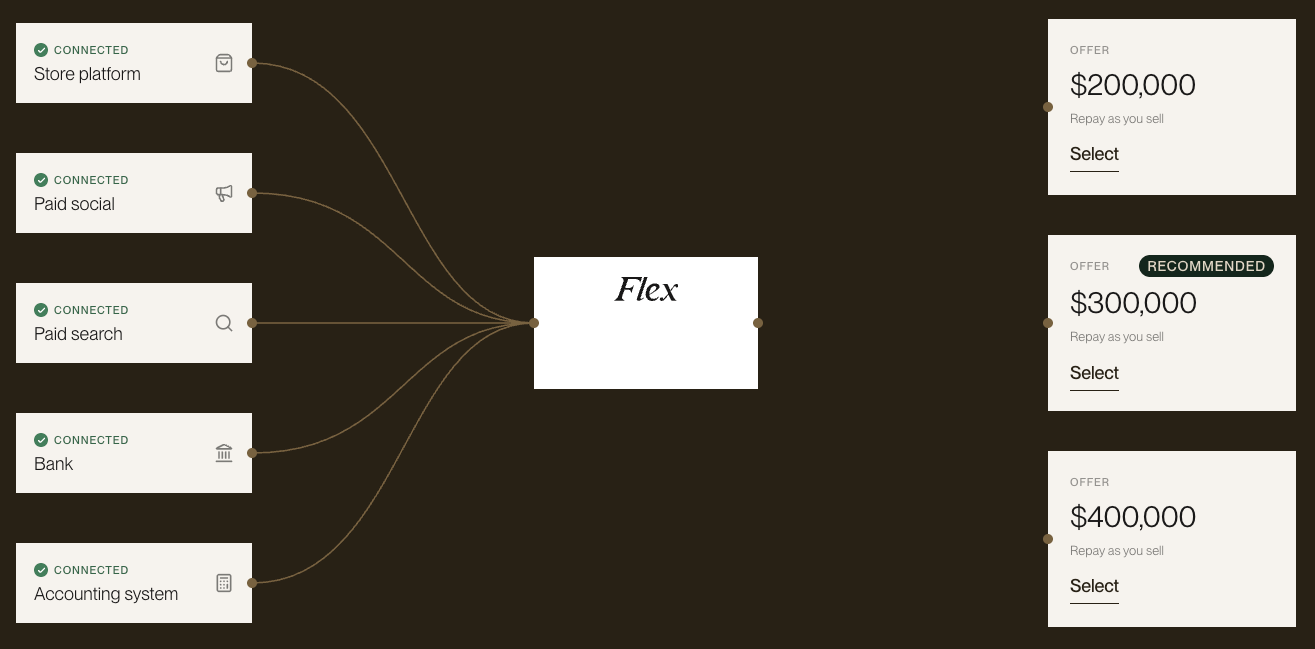
Flex describes its model as a full financial operating system. In the report’s framing, the system combines five pillars: private credit, business finance, personal finance, payments, and ERP systems, with AI agents handling automation in operations and decision-making.
At the center is Flex Global, which uses stablecoins as a back-end payment rail. Users do not need to manage wallets directly to get faster cross-border settlement. The platform supports stablecoin payments and wallet services in more than 100 countries, and transfers can settle in minutes. By comparison, the report said traditional SWIFT transfers or wires often take one to five business days and cost between 1% and 6%. The stablecoin rail brings costs to well below 1% and can lock in FX pricing in real time.
Multi-currency accounts are another key part of the product. Flex Global covers 76 countries and supports 32 currencies, including USD, RMB, INR, and MXN. Business owners can hold, send, and receive local currencies on the same platform while also accessing institutional-grade USD accounts. On top of that, Flex offers global card issuance that works across entities and geographies, and its private credit products have expanded to more than 20 countries. Those functions are brought together in one dashboard that connects vendor directories, approval flows, and data sources, reducing the need to bounce among separate systems.
AI is the main tool for speeding decisions. Flex says it can pull together and analyze financial statements, bank records, ERP data, and information from vertical software such as Procore in construction. With automated underwriting models, the company has cut a credit approval process that traditional banks can stretch to 90 days down to about two days. The report also said Flex’s own approval workflow previously took 40 to 50 days and has now been sharply reduced. In this setup, stablecoins stay in the background as infrastructure rather than a customer-facing feature; users mainly see the faster transfer speeds and simpler experience.
Use cases in construction, wholesale, and trade
The company’s use cases are rooted in everyday treasury and working-capital needs for mid-sized business owners. Customers moving money and resources across several countries often face friction under traditional systems. Flex Global is built to turn stablecoin rails and AI workflows into practical time and cost savings.
Construction is one of the clearest examples in the report. Payment cycles in that sector are often long. Flex’s Net-60 card gives businesses 60 days of interest-free float for materials and labor expenses, helping them manage cash flow while waiting on customer payments. The AI underwriting layer reviews financial statements, bank activity, ERP data, and records from tools such as Procore, shortening credit decisions from 40 to 50 days to about two days.
How Flex is positioned against Brex
Flex is often compared with Brex, the US fintech company known for corporate cards and spend management for technology startups. The distinction in the report is straightforward: Brex is more focused on startup clients, while Flex is built for owners of operating businesses with $3 million to $200 million in annual revenue. Their main need is not startup expense management but cross-border fund movement and unified financial control across jurisdictions. Flex Global is aimed directly at that gap.
The market backdrop also helps explain the company’s timing. The report said B2B stablecoin transaction volume grew 733% over the past year, reaching an annual payment scale of about $390 billion. Visa’s annualized stablecoin settlement run rate reached $7 billion in April 2026, up 50% from the previous period. On regulation, the report pointed to the US GENIUS Act and the European Union’s MiCA as frameworks for stablecoin issuance. Flex’s approach is to package that infrastructure into tools business owners can actually use, instead of asking them to deal with wallet complexity or technical details.

The company currently has no plans to issue a native token and has not published a tokenomics model. Its operating model relies on existing stablecoin infrastructure as a back-end rail for cross-border payments rather than a proprietary token-led ecosystem.
Risks and operating constraints as it scales
The report also highlights a set of balancing factors as Flex grows. Regulation is the first. Stablecoin rails depend on frameworks such as the GENIUS Act and MiCA, while global expansion requires work across licensing regimes, AML rules, and sanctions screening in multiple jurisdictions. Even if settlement speeds improve, the full process still involves FX handling, reconciliation, and reporting, and any regulatory change could affect rollout timing.
Credit is another area that requires care. Products such as Net-60 rely on AI-driven underwriting, and while approval times have been reduced, cash flow at mid-sized businesses can still be shaped by industry cycles. As a fintech company, Flex also depends on banking partners, making operational stability a central issue.
Even so, the path laid out in the report is clear: stablecoins serve as the payment rail in the background, AI compresses decision times, and multi-currency accounts plus a unified interface are meant to give construction, wholesale, and import-export businesses a single financial home.