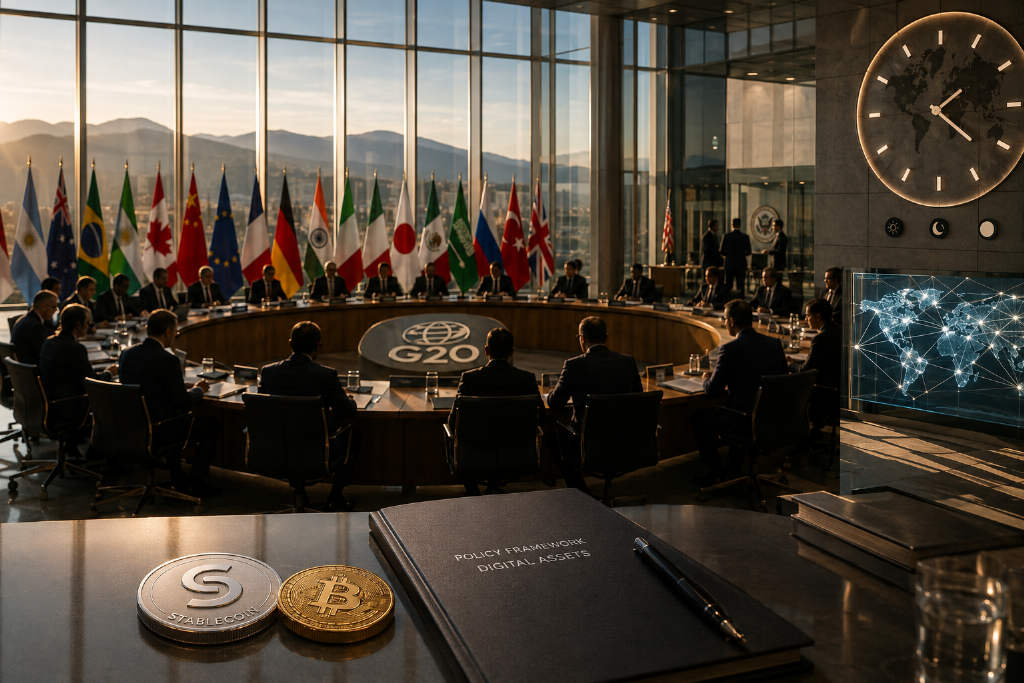
G20 finance ministers and central bank governors met in Asheville, supporting clearer regulatory paths for digital asset growth and placing digital assets on the U.S. 2026 presidency agenda. The meeting highlighted global stablecoins, cross-border payments, extended operating hours for large-value payment systems, and ISO 20022 adoption. The G20 urged FATF to prioritize jurisdictions with large virtual asset activities to strengthen AML enforcement. Only 1 out of 149 jurisdictions fully met FATF standards as of July.
G20 finance ministers and central bank governors gathered in Asheville, United States, from August 31 to September 1. They backed clearer regulatory routes for digital asset growth and put digital assets on the agenda for the U.S. presidency in 2026.
The G20 said digital financial innovation can help drive broad economic growth. And the group said the private sector has an important hand in pushing that innovation forward. It also flagged global stablecoins, cross-border payments, and longer operating hours for large-value payment systems as key topics, while backing adoption of the ISO 20022 data standard.
The G20 told the Financial Action Task Force (FATF) to give priority to jurisdictions with large virtual asset activity so anti-money laundering (AML) standards implementation gets stronger. The July snapshot was blunt. Out of 149 jurisdictions assessed by the FATF, only one fully met the relevant standards, 34% were largely compliant, 43% partially compliant, and 22% were non-compliant.
This article was originally published by Bit.Fan. For more cryptocurrency news and market insights, visit www.bit.fan. Disclaimer:
The market information, project data, and third-party content displayed on this platform are for industry information sharing only and do not constitute any form of investment advice or return commitment.
Cryptocurrency trading carries high risks. Users should fully assess their risk tolerance and make independent decisions. All profits, losses, and legal responsibilities are borne by the users themselves.