
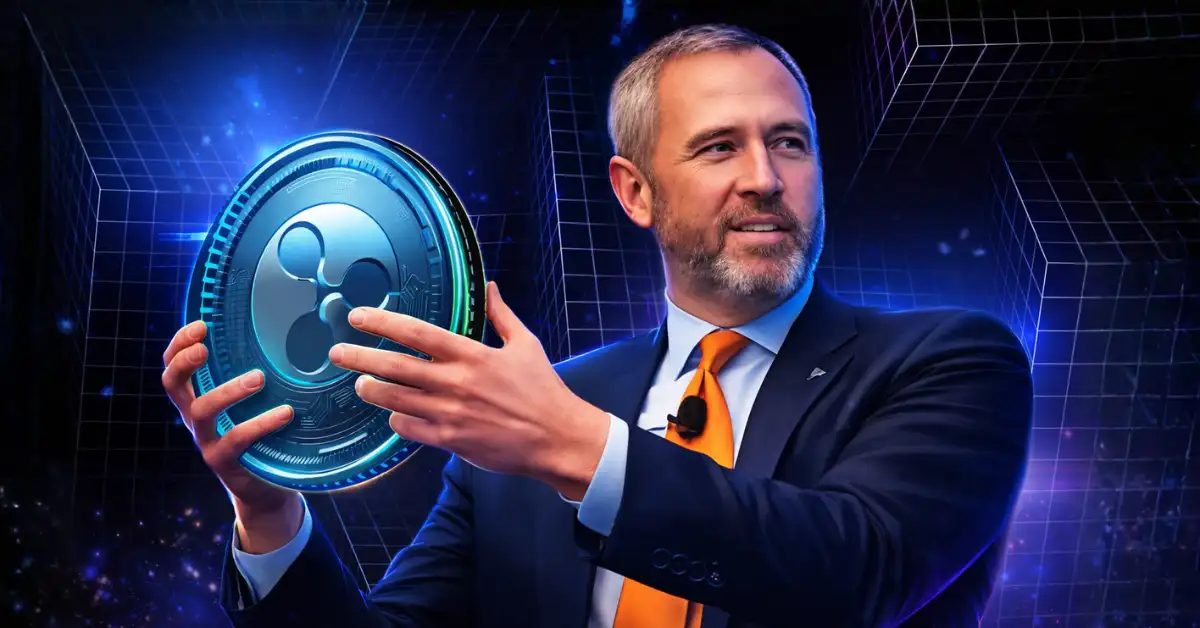
Ripple CEO Brad Garlinghouse has addressed one of the longest-running questions in the XRP community: whether owning XRP gives holders a direct financial stake in Ripple’s corporate success. His answer was careful. He said he hopes XRP holders feel they benefit from Ripple’s existence through the company’s work to drive activity, adoption, and utility across the XRP ecosystem.
No near-term commitment tied to a future IPO
Asked whether Ripple could do something special for XRP holders if the company eventually goes public, Garlinghouse said that scenario is possible. He also made clear that it is not something being planned in the immediate term. Based on his comments, there is currently no direct financial structure for XRP holders, including no dividend, no buyback program, and no confirmed IPO-related benefit.
He was more open about his personal motivation. Garlinghouse said he “loves the XRP family” and wants to do things that are good for the XRP community, describing that as a mission that drives him. The message was supportive, but it stopped short of any formal undertaking.
How Ripple evaluates acquisitions and investments
Garlinghouse said XRP sits at the center of Ripple’s strategic thinking. When the company studies an acquisition, one of the internal questions is whether that deal can catalyze activity in the XRP ecosystem. The same logic applies to outside investments: Ripple looks at whether those investments can expand XRP adoption in a broader sense.
He cited Evernorth, a digital asset treasury company backed by Ripple, as an example of that approach. In Ripple’s view, a strong treasury company focused on XRP can be positive for the XRP community, for Ripple shareholders, and for the wider ecosystem at the same time. That framing does not equate Ripple equity with XRP, but it does present the two as strategically linked.
Indirect alignment, not a direct payout model
The clearest takeaway from Garlinghouse’s remarks is the boundary he drew. Ripple is not promising a mechanism that turns corporate performance into direct cash benefits for XRP holders. What he described instead is an alignment of incentives: Ripple’s commercial activity is intended to make XRP more useful, more widely adopted, and more liquid, with token holders benefiting indirectly if that strategy succeeds.
That leaves the debate open. His comments provided direction, but not a concrete holder benefit structure. The possibility of future action was left on the table, while any near-term expectation was kept firmly in check.