
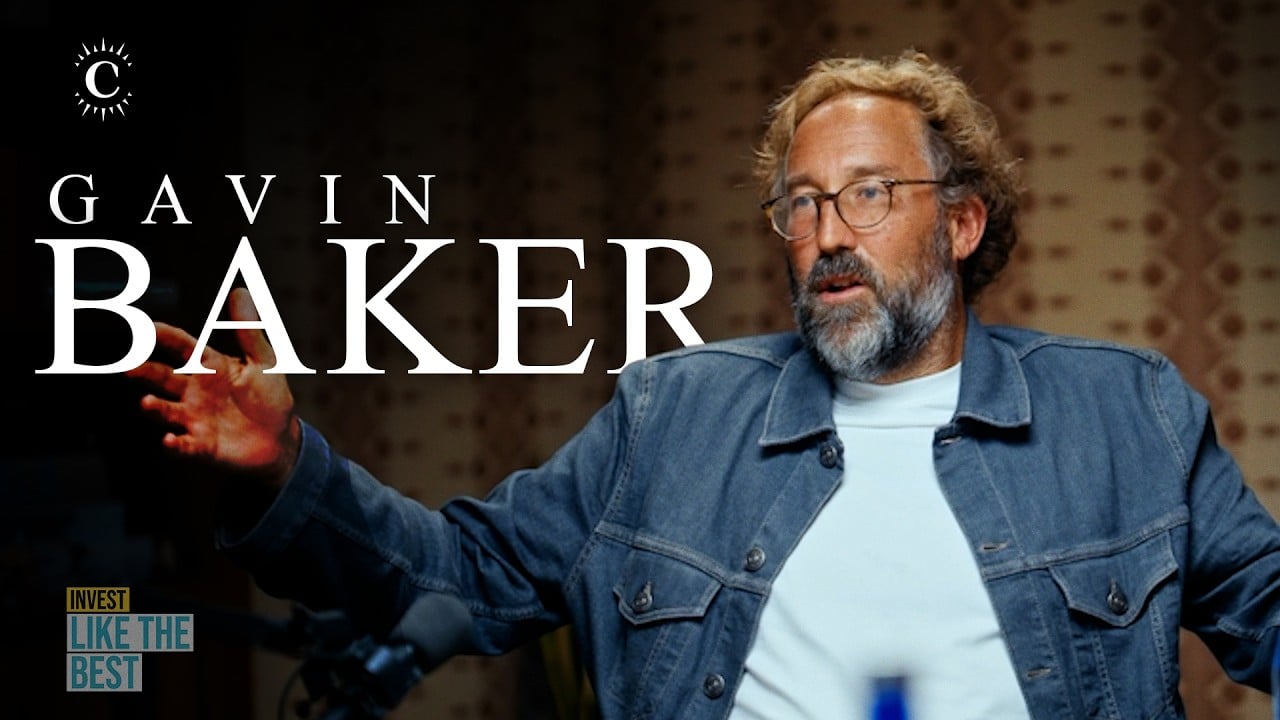
Gavin Baker, founder and chief investment officer of Atreides Management, said the July selloff in AI stocks did not line up with the underlying data. Speaking with Patrick O’Shaughnessy on Invest Like The Best, Baker said he had spent two months in Silicon Valley and had not heard "one negative quantitative datapoint." GPU availability, GPU rental prices, DRAM spot prices, and token growth were all still accelerating, he said.

The episode, published on Aug. 4, 2026 under the title "The AI Selloff Doesn’t Match the Data | Top AI Investor Explains," was later compiled and translated by TechFlowPost.
Baker also disclosed a direct economic interest in the names discussed. Atreides Management oversees about $5 billion in assets and holds large positions in NVIDIA, which he said the firm has owned for more than 20 years, along with Astera Labs, Micron, Cerebras, and other AI infrastructure names. Astera Labs accounts for about 10% of the fund, according to the program notes.
He called July “2022 compressed into one month”
Baker described July as "2022 compressed into one month." A large group of AI stocks fell 40% to 60% from their highs, yet he said the balance in the fundamentals was improving rather than deteriorating.
One reason for the disconnect, in his view, is that public market investors do not have visibility into the operating data of Anthropic and OpenAI. He said OpenAI was accelerating, Anthropic was growing strongly, and open-source inference clouds such as Fireworks, Baseten, Modal, and Together were commercializing inference demand. At the same time, open-source models including GLM 5.2, Kimi K3, and Nemotron were gaining traction.
Baker argued that a commonly cited chart showing semiconductor cash flow rising while hyperscaler free cash flow falls leaves out private company cash generation. OpenAI and Anthropic are absent from that picture, he said. He also said the market missed a key change in pricing expectations: even bullish investors in 2024 and 2025 generally expected GPU rental rates to decline slowly, while bearish investors expected a collapse. Very few, he said, expected older GPU prices to be moving higher in 2026.
He added that NVIDIA is now at its lowest forward price-to-earnings multiple of the past decade, which he sees as evidence that the market is heavily discounting the earnings power of AI companies.
How much credit does the AI buildout really need?
Asked about financing conditions over the next six months, Baker framed the issue as a classic capital-cycle question.
If supply and demand move out of balance, he said, things can unravel quickly, much as they did during the internet bubble. But if hyperscalers can fund this buildout through operating cash flow, tighter credit conditions become less threatening.
His math was straightforward. Consensus, he said, assumes hyperscalers monetize Blackwell and Rubin compute at Ampere rates, even though Ampere is two generations behind. On that basis, hyperscaler operating cash flow is roughly $1.3 trillion to $1.4 trillion. If those companies can monetize at a level below current Blackwell pricing but above Ampere pricing, the number gets closer to $2 trillion, reducing credit demand by about $700 billion.
As installed compute gets repriced and operating cash flow keeps accelerating, credit metrics improve and financing becomes easier, he said.
Still, he did not dismiss the warning signs in credit markets. Meta issued debt the previous week at pricing he considered weaker than expected. CDS spreads have widened across companies, and real yields are moving higher. Those are facts, he said. If debt is necessary to fund the whole AI build cycle, that would be a significant negative. If existing compute can be repriced at current spot rates, the system may not need much debt at all.
GPU spot prices are rising, not falling
Baker gave a specific market example from a conversation he had that same morning. A company had rented a cluster of several thousand Blackwell GPUs at around the mid-$2 range per GPU hour. Seven months later, the same company was hoping to renew a cluster of the same size and configuration using B200s for under $4 per GPU hour. That implies a 50% to 60% increase in seven months.
He also cited another inference cloud company that had said publicly on a podcast that it expected to pay 100% more for Blackwell when its contract rolled over. In Baker’s reading, that means hyperscalers are underreporting the revenue potential in their installed AI fleets.
He said several catalysts drove the July selloff. The first was Meta’s announcement that it would rent out compute. The market treated that as evidence of overcapacity and a possible reduction in capital expenditures. Baker rejected that interpretation. He said Meta saw that SpaceX had a large installed compute base and was selling trading-optimized clusters into the market at prices well above contract levels. Meta, he said, appears to be testing whether a small slice of capacity can generate a very high internal rate of return before raising more equity and stepping up capex.
In his telling, Meta’s capex telemetry did not weaken. If anything, it became more aggressive. He also pointed to Muse 1.1, which he described as the best model release in a long time.
The second market misread, he said, involved open-source models. Kimi K3 triggered anxiety around open source, while the Silicon Data token index flattened. Baker said that happened because open-source tokens were becoming a larger share of the mix, and the weighting methodology inside the index created a structural flattening. It did not signal weaker real demand.
His line was blunt: "A token is a token." Whether it comes from a frontier model or an open-source model, it still requires the same compute, memory, and electricity to produce. Open source takes margin from frontier models, he said, not demand from the infrastructure layer. A token that once carried a 90% gross margin may turn into a token with a 30% gross margin, but the number of GPU hours consumed can actually rise.
He made a similar point about NVIDIA chief executive Jensen Huang’s support for open source. If open source were bad for NVIDIA’s business, Baker said, Jensen would not make it one of his defining themes.
Claude as a market-wide interpreter
Baker said the way investors process information may now be adding to volatility.
He referred to Mike Mauboussin’s theory that a collapse in diversity can drive bubbles and crashes. In public markets today, he said, both retail and institutional investors feed nearly every piece of news into Claude, and sometimes into Claude Code or Claude Agent. Claude produces probabilistic interpretations, yet large groups of market participants are leaning on those outputs in similar ways.
"Claude is basically the Walter Cronkite of the stock market," Baker said. Investors trust the interpretation and trade on it, even though the model is not guaranteed to be right every time.
He pointed to a chart shared by an anonymous semiconductor account called TBU that showed Japanese capacitor stocks racing through what would normally be a three-year cycle in just six weeks. Prices doubled, tripled, quadrupled, and then collapsed before the underlying fundamentals had actually played out.
What could break the bullish case
When asked what would genuinely worry him, Baker identified several risks.
The first is a loss of acceleration in operating cash flow. He said that would depend heavily on the performance of Anthropic, OpenAI, Grok, Cursor, xAI, and the broader open-source ecosystem.
The second is a sustained and material decline in GPU spot prices. He said he has not heard anyone say they have too many GPUs. The tone, if anything, sounds more like a black market than a glut.
The third involves technical progress in continual learning and sample-efficient learning. If models move from training on 300 trillion tokens to training on 10 trillion tokens and then continue learning efficiently in the real world, training demand could hit a temporary air pocket. Even so, Baker said training is becoming a very small, though not zero, share of semiconductor demand, while inference is the much larger piece. SSI is expected to release a model in August, and several new labs are focusing on that direction, though he said it is still hard to know whether the impact on infrastructure demand would be positive or negative.
The game theory of memory LTAs
On LTAs, or long-term agreements, Baker said the industry needs to move away from squeezing short-term numbers and toward using LTAs to secure durability. Those agreements, as he described them, typically involve prepayments and set both floors and ceilings for pricing.
He reduced the strategic field to four scaled buyers that matter: Amazon’s Trainium, Google’s TPU, AMD, and NVIDIA, which he said is larger than the other three combined.
If a buyer in 2027 or 2028 is tempted to tear up an LTA to get a lower price, that may look rational in the short term. But if bargaining power swings back to memory suppliers over the following years, that buyer could lose allocation and damage the business more broadly.
He used Google as an example. If Google breaks an LTA, that likely happens in an oversupplied market with falling prices and shrinking capacity. Cyclical industries do not stay there forever. Once the market swings back to undersupply, memory makers may have little incentive to prioritize volumes for the party that broke the agreement.
Baker said the setup is different from earlier eras when Apple was the dominant purchaser and could effectively dictate terms. This time there are at least four major buyers competing, plus startups. If a customer breaks the pricing agreement, a supplier can respond by breaking the volume agreement and shifting allocation to a rival.
Baker’s view of NVIDIA’s new model
Baker said NVIDIA has introduced what he considers a very smart commercial structure, one he described as a form of credit enhancement paired with revenue sharing above a floor rate.
He said that structure could allow NVIDIA to build a very large cloud business quickly through royalties, while also easing cash flow mismatches across the AI infrastructure stack.
He stressed that this is not traditional vendor financing. NVIDIA is not directly lending money to GPU buyers. Instead, outside parties lend to buyers while NVIDIA participates through equity investment and credit enhancement. He said NVIDIA includes language in all of its equity investment agreements specifying that the money cannot be used to buy NVIDIA chips, even though capital is fungible in practice.
If he were the chief executive of SK Hynix, Baker said, he would do the same thing: provide upfront cash, participate in NVIDIA’s credit wrapper, and claim a share of recurring revenue. In his view, it is a natural extension of the LTA logic—trading short-term upside for durability and then taking a royalty on the recurring stream.
Under that framework, he said NVIDIA’s competitive edge is stronger than ever. If a buyer needs financing for chips, few assets are easier to finance than NVIDIA GPUs. He also said NVIDIA is executing well on land and power, while lifting revenue per gigawatt and strengthening its strategic position.
Regulation remains the biggest risk
For all of Baker’s optimism on AI infrastructure, he called regulation the clearest major risk.
He said that was one reason he went back to Silicon Valley after the July drawdown to stress-test his assumptions. Stocks had become cheaper and expected returns looked higher, but he did not want to ignore what he sees as the most important non-fundamental threat.
He pointed to New York, where a data center ban has already been introduced. In his view, the political environment has become "post-fact" and "post-logic," while the AI industry has done a poor job explaining itself. As a result, the dominant narrative in Washington and among many Americans is that data centers raise electricity bills, deplete water resources, and take away jobs.
Baker argued the reality is the opposite. The contracts signed by data center developers now include more than just donations for local police and fire departments. He said they fund hospitals, schools, new police stations, and new fire stations, while also lowering power costs for residents. Because of behind-the-meter agreements, he said electricity prices in nearby communities often fall after a data center arrives.
He added that these are not one-off jobs. Facilities need plumbers, electricians, and HVAC technicians for maintenance and upgrades. In his words, data centers are among the best things he has ever seen for blue-collar wages.
On water use, he said one academic book overstated data center water consumption by 10,000 times, or four orders of magnitude. Although the author has acknowledged the mistake multiple times, the narrative keeps circulating. Baker compared it with the old spinach-and-iron myth and used a line he returned to several times: the lie gets around the world before the truth gets its pants on.
He also referred to the annual meeting of the American Society of Clinical Oncology, saying the mood this year was that there had never been so many scientific breakthroughs at a single conference, with AI playing a major role in many of them. Those stories, he said, have not been told well enough to the public.
China’s DUV capability, software upside, and SRAM accelerators
On reports that China has DUV machines, Baker said two interpretations can both be true.
He compared DUV with a propeller plane and EUV with a jet turbine. China did not have the former before and now reportedly does, which he called a phase change. Even if that "jet engine" is 25 years behind the frontier, it still matters and should not be dismissed. At the same time, he said markets may be reacting too strongly. If the development affects ASML orders at all, the impact may not show up for another five years.
He said the rise of open-source models, combined with inference cloud providers such as Fireworks, creates a major opening for software companies. AI-native firms can fine-tune open-source models with RL and shift from relying mainly on one to three frontier models to a mix where frontier models account for only 30% to 60% of token consumption, with the rest handled by proprietary models. That gives companies their own data advantage and a stronger moat than simply wrapping ChatGPT.
Baker also floated another idea: cheaper tokens may make the best frontier tokens more valuable. If the market can cheaply run a 120-IQ open-source model, then a 160-IQ frontier model that directs those systems may be worth even more.
Another underappreciated area, he said, is SRAM accelerators. These chips are not constrained by HBM DRAM capacity, are usually built on older process nodes, and do not compete directly with the newest GPUs for supply. He broke inference into prefill and decode, with decode further divided into attention and feed-forward network functions. In the ideal setup, prefill runs on chips without HBM, attention runs on high-performance HBM-equipped chips, and feed-forward work runs on SRAM chips. No matter how the workload shifts across compute, HBM DRAM, and SRAM, splitting the problem this way can raise overall AI ROI, he said.
SpaceX, 8 gigawatts, and orbital computing
Baker said SpaceX is another company the market may not fully understand.
He said SpaceX fundamentals have improved since its IPO. With Grok 4.5, the Cursor acquisition, and what he described as clear acceleration at Cursor, SpaceX has connected more compute, faster and at lower cost, than anyone else over the past three years.
It entered the market at a time when spot prices were high, he said, yet the market absorbed the large amount of compute it brought online and "the freight train did not slow down."
Baker noted that a Substack writer had cited public reports saying SpaceX plans to bring on 8 gigawatts of compute. He said he never bets against Elon, but still called the figure astonishing. By his account, SpaceX is currently monetizing at roughly $50 billion per gigawatt, while consensus revenue for next year is $73 billion. Even without including Starlink V3, direct-to-cell, Grok 4.5, or Cursor, performance would come in far above market expectations if the company gets anywhere close to 8 gigawatts.
He also acknowledged the opposing view. Some New York hedge funds are short because they believe spot compute prices will fall 90% and the large amount of capacity SpaceX is adding will not generate enough revenue. Baker did not present that as impossible. He simply said Elon’s companies have spent years doing things many people considered implausible, and quoted a line he attributed to Musk: "We specialize in making the impossible late."
He said orbital computing is becoming more real by the day. Benchmark has invested in StarCloud, an orbital computing company that does not have SpaceX’s internal launch cost advantage. If Benchmark thought the idea was unserious, he said, the firm would not have invested.
The core argument
Baker’s central claim was that July’s sharp AI selloff did not match the industry data he encountered in Silicon Valley. Rising GPU spot and rental pricing, improving hyperscaler operating cash flow, and the view that open source shifts margin rather than infrastructure demand form the backbone of his bullish case for AI infrastructure.
He paired that with two clear warnings: higher real yields and tighter credit, and a regulatory and public-perception fight that the industry has not handled well. For a longtime NVIDIA holder who remains heavily exposed to AI infrastructure, the second risk still stands out as the one he does not think investors can ignore.