
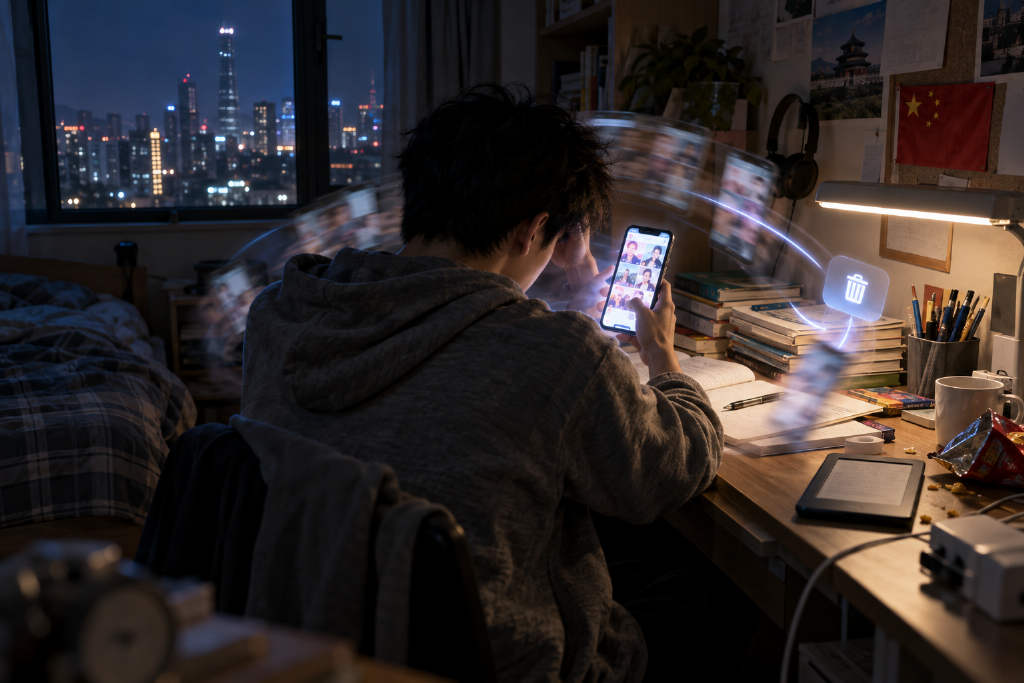
A feature republished by MarsBit from Biaowai Biaoli tracks a pattern several Gen Z users describe in similar terms: delete the AI short-drama app, reinstall it, then delete it again.
One of them, a graduate-school test taker identified as Mulan, said she picked up her phone intending to open a study app but tapped Hongguo instead. By the time she looked up, an entire afternoon had passed. She deleted the app again. It was the third time that month, and she already expected a fourth, a fifth and more to come.
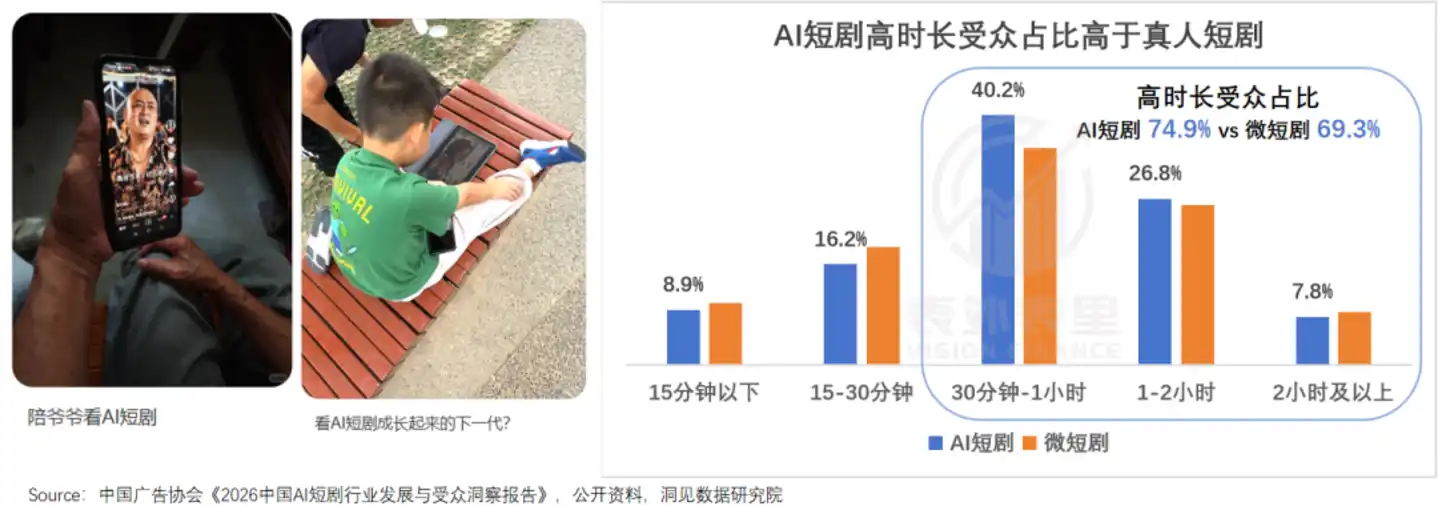
The report says AI short dramas have spread across everyday settings and age groups, from subway riders to family members at home. For many young viewers, the appeal lies in rapid-fire plot twists and instant emotional payoff. What follows after the screen goes dark, the story says, is often a stronger sense of emptiness.
She spent 1,000 yuan on an e-reader and still went back to short dramas
Xia Mo, a Gen Z student preparing to study abroad, said she spent 1,000 yuan on an e-reader to help herself stop watching AI short dramas. She also downloaded 30 works of world literature, hoping to force her attention back into place.
It did not work the way she expected. She said she could recognize every word on the page, but the text would not stay in her head. After two pages, her attention drifted and her hand would reach for her phone almost on its own.
Before getting hooked on AI short dramas in May, she said she could finish dense literary works and academic papers, sometimes reading 60 books in a semester. After that, the pattern changed. Novels lost their pull, celebrity fandom faded, and professional reading was pushed aside. She began watching AI short dramas from the moment she woke up, during meals, on the subway and late into the night, often until 1 a.m. or 2 a.m.
After more than a month of that routine, she said conversations with friends started to feel different. Others could talk about current events and gossip with ease, while she felt she had little to contribute beyond internet memes. With graduate study overseas approaching, she decided she could not keep going like that. She deleted the app and started carrying the e-reader when she went out.
But removing the app did not solve the problem. She had recently been busy with visa paperwork, notary procedures and document supplements. The day would leave her physically drained and mentally blank. Her time was chopped into small pieces, which made immersive reading difficult. In that state, she said, the thought would return: just 10 minutes of short drama today, reading can wait until tomorrow.
That was when she realized how well AI short dramas fit fragmented time. The storytelling is direct, she said, and within a minute viewers know who dislikes whom and who likes whom. Literature, by contrast, can run to hundreds of thousands of words and rely on metaphor and foreshadowing, demanding long stretches of concentration.
At bedtime, novels could keep her reading too long, and mid-length videos felt too limited. An AI short-drama season, she said, takes about an hour, which made it feel like an easy way to fill the night. The result was often the same: she would still be watching at 1 a.m. or 2 a.m.
One month after buying the e-reader, she said, it was gathering dust in a corner. In the same period, she had finished 10 seasons of AI short dramas.
For some viewers, the format has become a pressure valve
Another interviewee, who used the name Lonely Wolf and described herself as a Gen Z worker, said she often opens an AI short drama before she even gets through the door after work. In the elevator, she is already watching. At home, even when laundry and takeout boxes are waiting, she said she will throw herself onto the bed and keep scrolling.
She said her first period of heavy viewing followed a breakup. At the time, she was drawn to revenge-style stories about confronting unfaithful men, using the plot to reclaim the grievances she had swallowed in real life. She later pulled herself back through exercise and reading, but said slipping into the habit again was easy.
She works in a hospital, where patients crowd the day and the pace rarely lets up. On top of that come workplace relationships, pressure and anxiety. She said the stress has caused heavy hair loss. After night shifts, usually ending at 1 a.m. or 2 a.m., she turns to AI short dramas again. In those stories, she can become a reborn heroine taking revenge with the help of a system, or a doomsday survivor stockpiling supplies in a storm and saving the world.
If the plot starts moving fast enough, she said, real-life worries cannot catch up. That is why she often watches until after 5 a.m. It is not that she is not sleepy. She simply does not want to sleep, because those late-night hours feel like the only time that belongs to her.
She called AI short dramas a kind of "junk pleasure," but also said their wild premises and broad range of themes give her room to breathe. Without them, she said, she would probably spend the time on games or short videos anyway. Watching AI short dramas costs nothing, she added, and apart from affecting sleep, she does not see a particularly large downside.
She also shares recommendations with friends, discussing plot turns and mocking poorly written villains. That, she said, has actually broken some of the isolation in her life.
Her own line is simple: sleep well, eat properly, keep exercising, keep the home in order and continue making progress elsewhere. As long as those conditions are met, she can accept watching 3.8 hours a day. When a new series she follows goes live, she said, she might stay up until 2 a.m. at most. "AI short dramas are a tool that keeps me clear-headed," she said. "Maybe when life slowly gets better, I won't need them anymore."
Exam pressure pushed some students to delete the apps again and again
Fu Ye, a senior preparing for the civil service exam, said the closer the test date got, the more often she deleted short-drama apps. The first time came during finals week in June. She was sitting at her desk with notes in front of her, but all she could think about was whether the latest season of an AI short drama had been released.
She said the format is built to stop at the most suspenseful point, with the next season often arriving a little more than 10 days later. That made it hard to let go. She would tell herself she would watch only half and then start studying. After half, she would think there was only half left, and at double speed it would take just over 20 minutes.
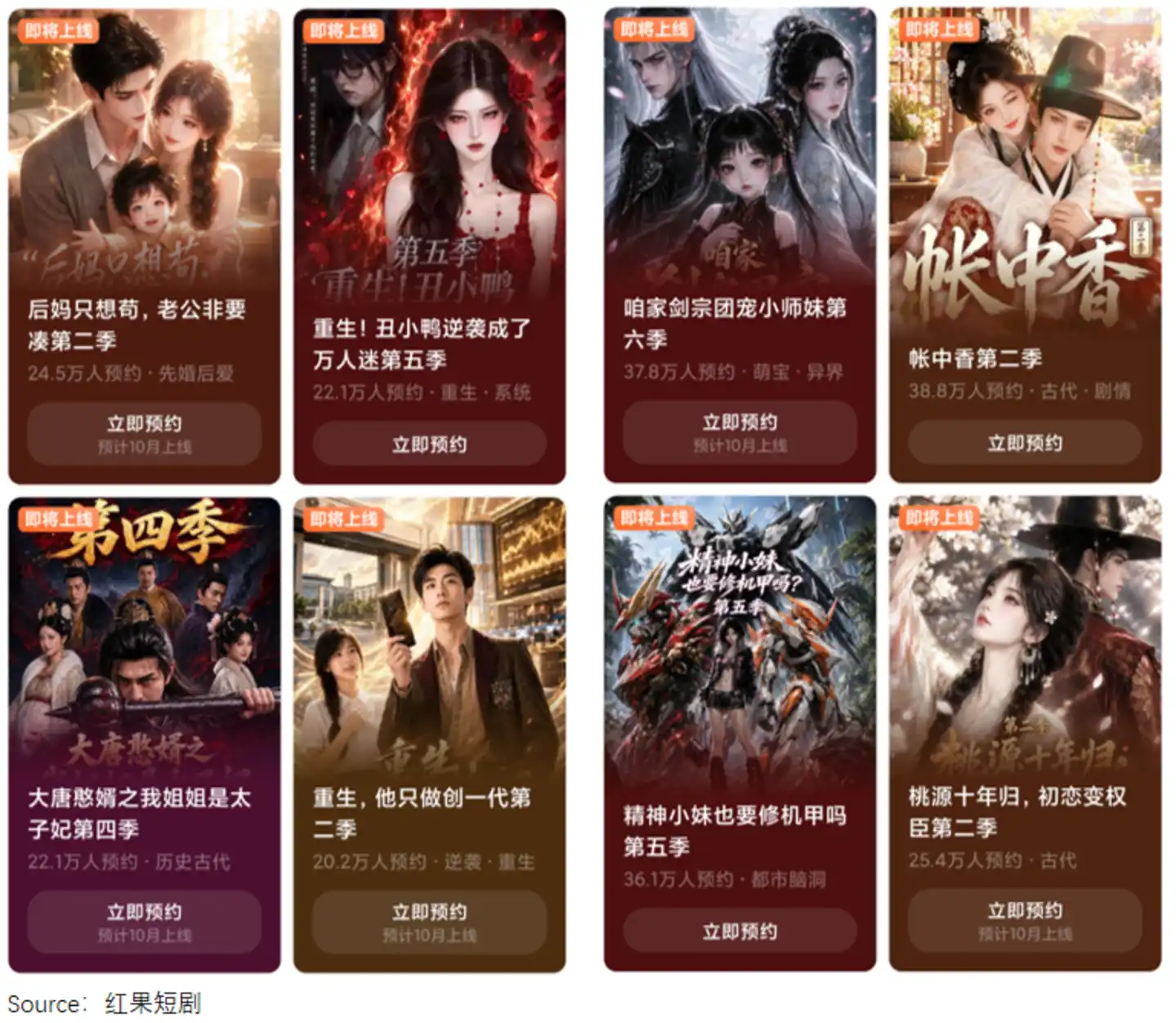
The cycle repeated until an exam was close enough that she forced herself to uninstall the app and finish memorizing what she needed. Once finals were over, she swung the other way. She said she spent nearly all day watching, aside from eating and sleeping, and at her peak could watch for eight hours in a single day.
During what she called the "golden summer" for civil service exam preparation, she still checked in at the library every day, but watched an average of three AI short dramas daily. The original plan was to study for two hours and relax with 20 minutes of short drama. In practice, that often stretched to 30 or 40 minutes, delaying tasks and disrupting her schedule. Material she had studied would blur after watching, forcing her to learn it again.
She said she deleted and re-downloaded the apps so many times that she no longer remembers the number. The real turning point came in September, after the new term began and she saw classmates far ahead in their preparation. By then, she also felt she had watched through most of the available themes over the summer. Apart from a few reserved titles she still looked forward to, many plots had become predictable.
That gave her enough urgency to cut back sharply. She did not try to quit completely. Instead, she changed the arrangement: after finishing a chapter or doing well on a mock paper, she would allow herself one long-awaited short drama as a reward. In her words, not every hour of life has to produce a return. Entertainment is fine, as long as it stays within limits. "AI short dramas are not some kind of beast," she said. "The real problem is not being able to control your own hand."
Others say they are still in control
Another senior preparing for the same exam, who used the name Qiufengke, rated his self-control at 8 out of 10. He said he usually watches AI short dramas at lunch and again after studying, from 6 p.m. until around 11:30 p.m. On weekends, he treats them as the final relaxation ritual of the day.
On average, he said, that means three or four series a day. For a well-known title such as Wanyao Tulu Zhuan, which runs for more than 10 seasons, he said he can finish eight seasons in a single day. Even so, he does not think of himself as addicted.
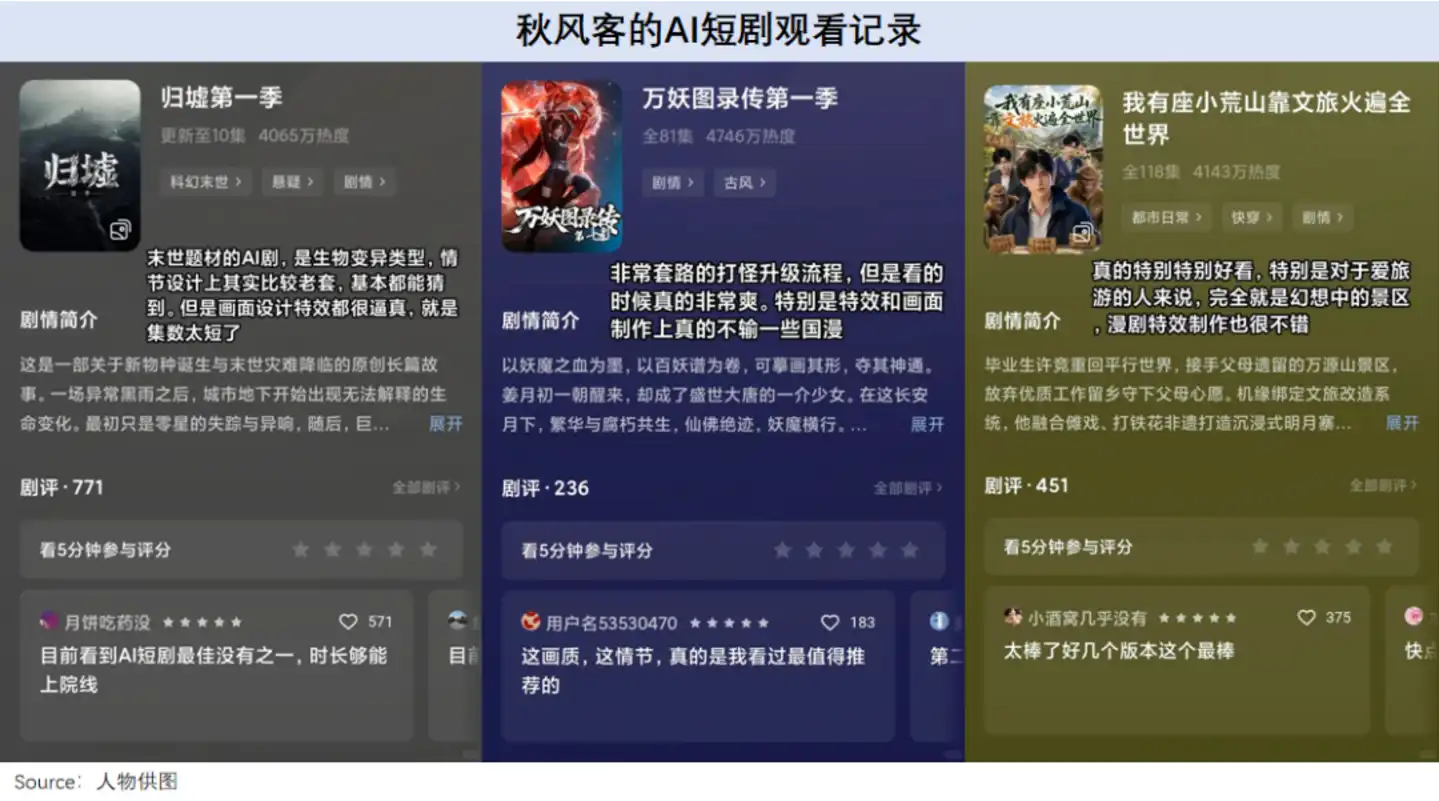
His reasoning is that he still needs entertainment during an intense study period. Web fiction can run for hundreds of chapters and strain the eyes. Games are less fun alone. Long-form dramas update too slowly. Live-action short dramas are easy to sample, but after dozens or hundreds of them, he said, the formulas start to repeat.
The first AI short drama that caught him was a post-apocalyptic science fiction story. He said the visuals felt realistic and the pacing was tight. What surprised him most was that this kind of subject could be turned into a short drama by AI. The novelty kept him watching.
From there, he said, AI short dramas gradually replaced other forms of fast entertainment. They first filled gaps left by live-action short dramas, then took time away from short-video scrolling, and eventually displaced gaming and movies as well. His roommates followed a similar path, and they now gather to talk about AI short dramas instead of novels, Douyin clips or games.
He sees the format as a new entertainment vehicle rather than an invasion of daily life. In his view, it has quietly replaced older forms of "mental fast food." He also said he is relatively optimistic about the category, arguing that it has created new business models and jobs, and that some well-made AI short dramas have broadened his knowledge and imagination.
Short-drama apps still dominate his phone usage, he said, but as long as they do not interfere with exam preparation or cause obvious harm, watching a few every day feels acceptable to him.
The report does not offer a single conclusion. Some interviewees keep uninstalling the apps. Some try to coexist with them. Some treat them as a temporary outlet in a stressful life. For these young viewers, AI short dramas are entertainment, but also a source of friction: something they want to stop, yet keep returning to the next time they tap the screen.