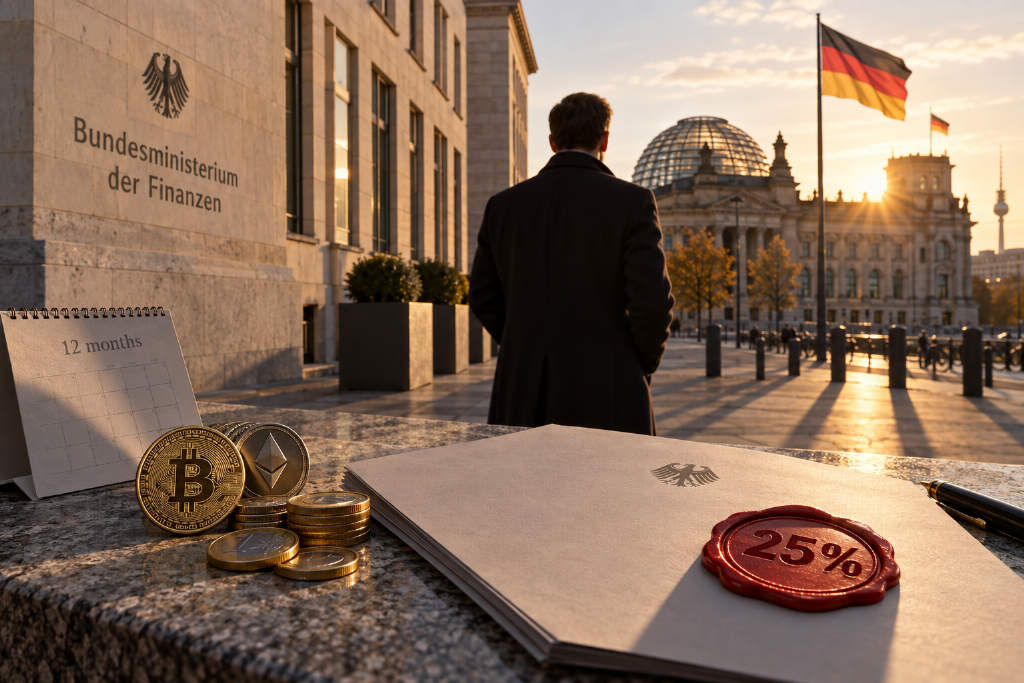
Germany’s Finance Ministry is drafting a tax overhaul that would bring crypto gains under a 25% capital gains tax starting in 2027, putting them on the same footing as stock profits. According to a legal draft obtained by Handelsblatt, the proposal would also scrap one of the country’s most favorable crypto tax rules: the current exemption for gains on assets sold after being held for more than 12 months. If adopted, profits would be taxed regardless of holding period.
The draft includes revenue estimates of about €160 million in 2028, rising to €350 million by 2030. Vice Chancellor and Finance Minister Lars Klingbeil argued in the document that crypto assets have increasingly become a form of private capital investment, and said it is unfair that earned income and capital gains are taxed while speculative crypto profits are largely exempt. The proposal remains at the draft stage, however. The report said the document was obtained by Handelsblatt and was first disclosed by Die Welt, with the scope, detailed rules, and effective date still subject to change during the legislative process.
Germany’s Finance Ministry is drafting a tax change that would apply a 25% capital gains tax to crypto profits from 2027, matching the rate used for stock gains. According to a legal draft obtained by Handelsblatt, the proposal would remove the current tax exemption for crypto assets sold after more than 12 months of holding.
One-year tax exemption would be removed
Germany’s current system has been relatively favorable to crypto holders. Under the existing rule, investors can sell crypto assets after holding them for more than 12 months and pay no tax on the profit. The draft would end that treatment and tax gains regardless of how long the asset was held.
For long-term holders, that would mark a clear shift. Under the current rule, waiting out the one-year period allows investors to exit tax-free. Under the draft, each realized gain would be taxed at 25%, in line with stock investment profits.
Revenue estimates in the draft
The draft includes tax revenue estimates of about €160 million in 2028 and €350 million in 2030.
Finance minister’s stated rationale
Vice Chancellor and Finance Minister Lars Klingbeil said in the draft that crypto assets have increasingly become a form of private capital investment. He wrote, 「Income earned through work and capital gains are taxed, while speculative profits from crypto assets are largely tax-free. That is not fair.」
Still at the draft stage
The document was obtained by Handelsblatt and was first disclosed by Die Welt. It has not completed the legislative process, and its final scope, detailed rules, and effective date could still change during further review.
This article was originally published by Bit.Fan. For more cryptocurrency news and market insights, visit www.bit.fan. Disclaimer:
The market information, project data, and third-party content displayed on this platform are for industry information sharing only and do not constitute any form of investment advice or return commitment.
Cryptocurrency trading carries high risks. Users should fully assess their risk tolerance and make independent decisions. All profits, losses, and legal responsibilities are borne by the users themselves.