

Bitcoin has fallen below the $75.6K cost basis of short-term holders and is trailing equities, while stablecoin supply, US spot Bitcoin ETFs and the Coinbase premium all point to capital leaving the market, Glassnode said. The decline has also cleared much of the long leverage near the price, and two large wallet cohorts have started buying.
The report said the September high was Bitcoin’s first higher high since its 2025 all-time high. The trend shift that began in August remains intact as long as the price stays above the $58.5K June low.
Recent buyers move into losses
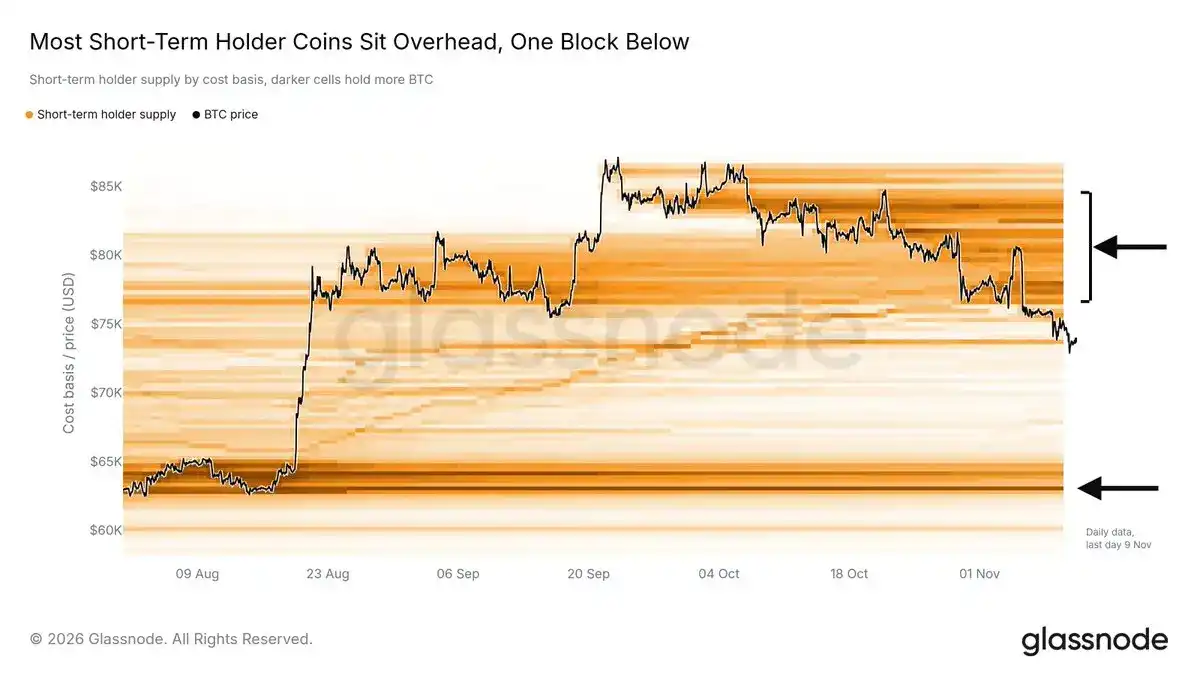
Glassnode previously identified the $73K–$76K range as a level to watch. Bitcoin has since slipped into that range and is trading near $74K, below the $75.6K short-term holder cost basis. The measure represents the average price paid by investors who bought Bitcoin during the past 155 days.
At the September high, almost all coins held by short-term holders were profitable. That share is now about 35%, while recent sellers have, on average, exited at a modest loss.
Cost-basis distribution shows where those coins were bought. Roughly two-thirds now sit above the current price, spread across three bands formed between August and October and reaching as high as $83.6K. Some holders in those bands may sell if a rebound brings them back to breakeven. Below the price, the only dense cost-basis block is between $62K and $66K, where coins were bought near the August low.
The broader structure has not yet failed. A recovery of the $77.5K True Market Mean would return about half of short-term holder coins to profit.
Bitcoin trails equities
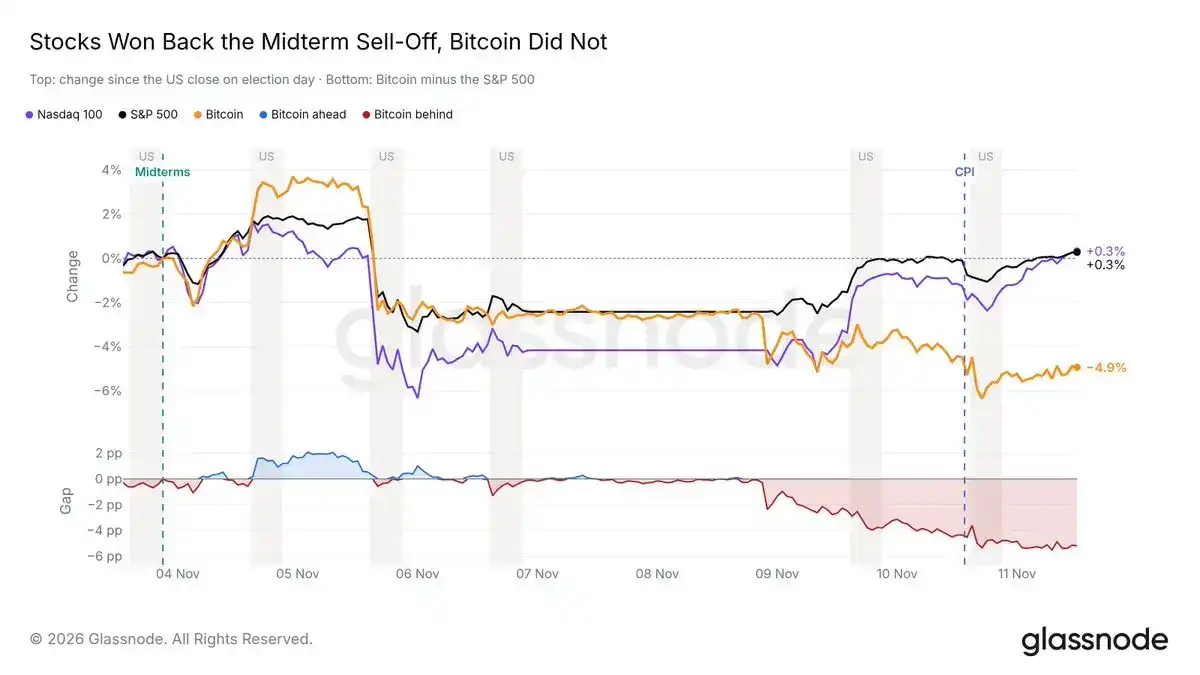
Glassnode said most of Bitcoin’s medium-term decline occurred before the vote. The sell-off that began on Nov. 5 hit stocks and Bitcoin at the same time, but their paths diverged from Nov. 9. The S&P 500 and Nasdaq 100 have recovered above their election-day closes, while Bitcoin fell again after the CPI release on Nov. 10 and remains down about 5%.
Bitcoin would move back in line with equities if it recaptured its election-day closing level of $77.8K.
Bond market prices in more rate hikes
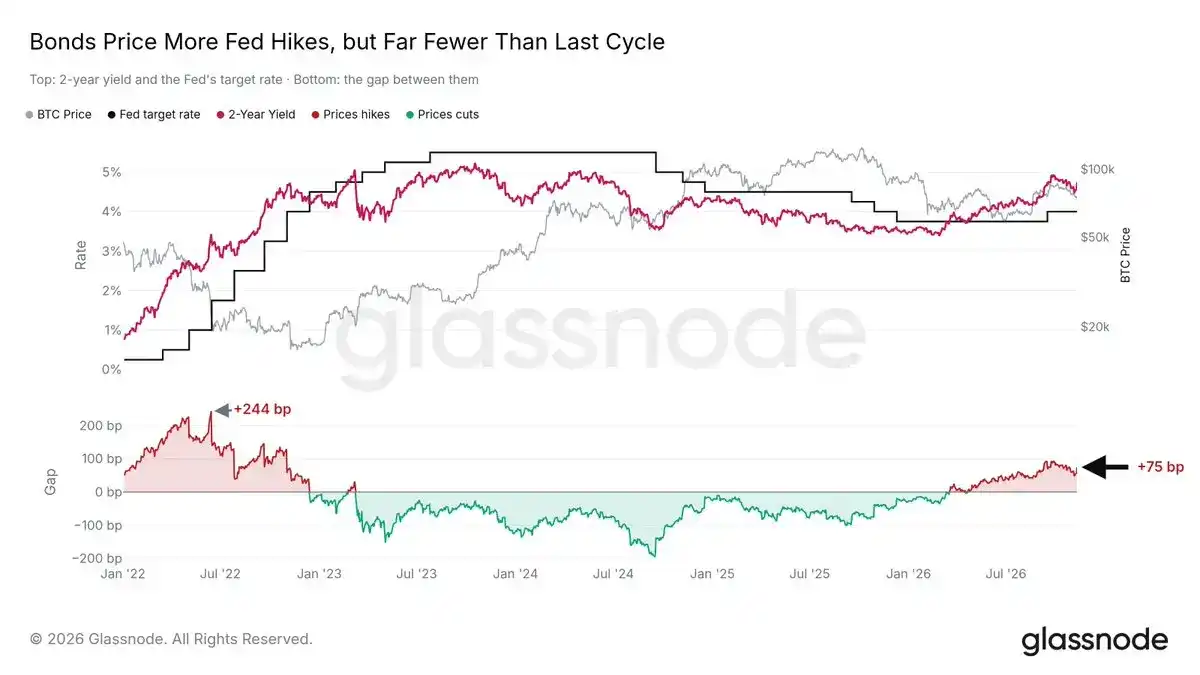
Interest rates have added to the pressure. The two-year Treasury yield reflects traders’ expectation for the average Federal Reserve policy rate over the next two years. It is currently 4.75%, or 75 basis points above the Fed’s current 4% rate, showing that the bond market is pricing in additional hikes.
The gap is still far smaller than the shock seen in 2022. In June 2022, the same gap reached as high as 244 basis points; today’s gap is about one-third of that level. It has also narrowed since late October. Higher rates remain a headwind for risk assets, but the bond market is not pricing a repeat of 2022.
Stablecoins, ETFs and US demand weaken
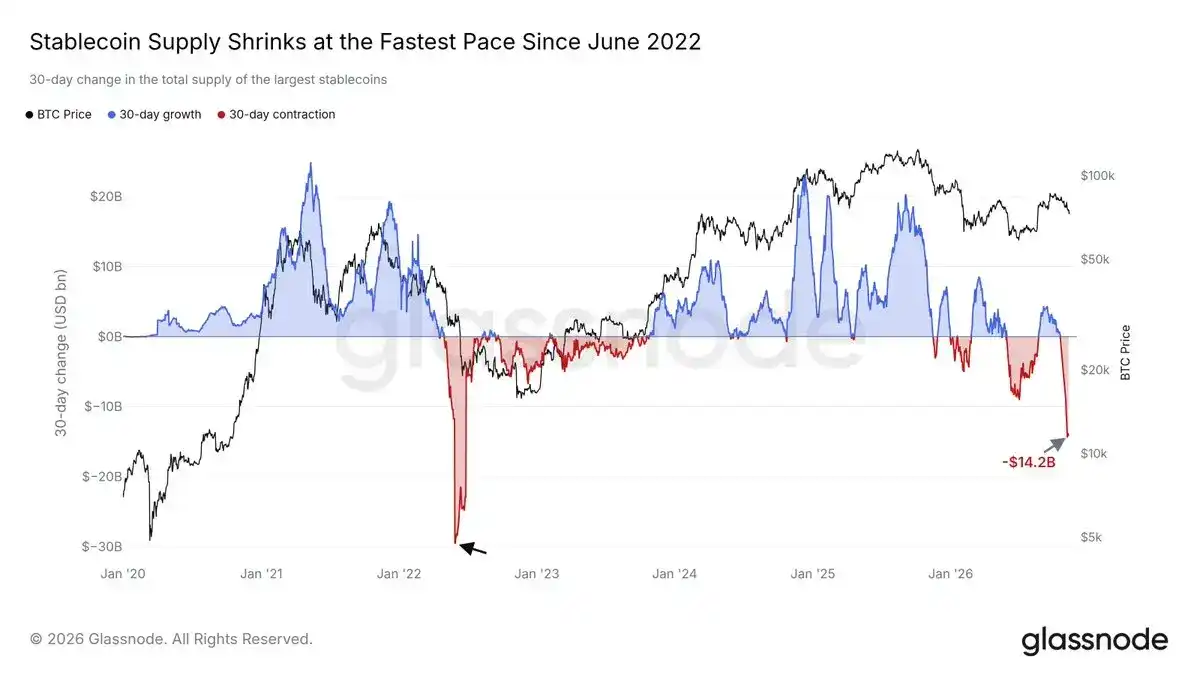
Stablecoins function as cash in crypto markets. Traders hold them on exchanges and on-chain before buying. Total stablecoin supply fell by $14.2 billion over the past 30 days, its fastest contraction since June 2022. A falling supply indicates that holders are redeeming stablecoins for dollars and taking that cash out of the market, leaving less capital to support a rebound. Tether is also trading slightly below $1. A return to growth in the 30-day change would be the first sign of new money entering.
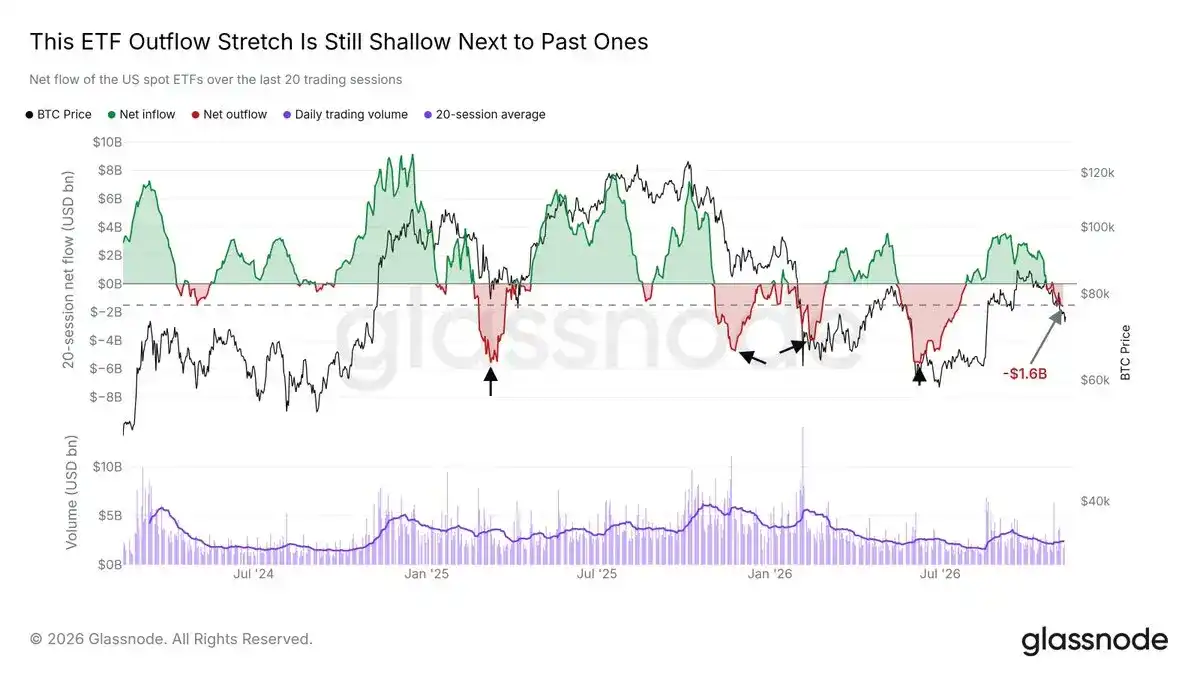
US spot Bitcoin ETFs have turned to redemptions. The funds recorded $1.6 billion in net outflows across the past 20 trading sessions, crossing the $1.5 billion threshold Glassnode uses to define an outflow period on Nov. 9. By the standards of previous outflow periods, this one remains shallow; most earlier periods were significantly deeper. In each case, inflows returned only after Bitcoin had made a low, meaning a recovery in flows would confirm a low only after the fact.
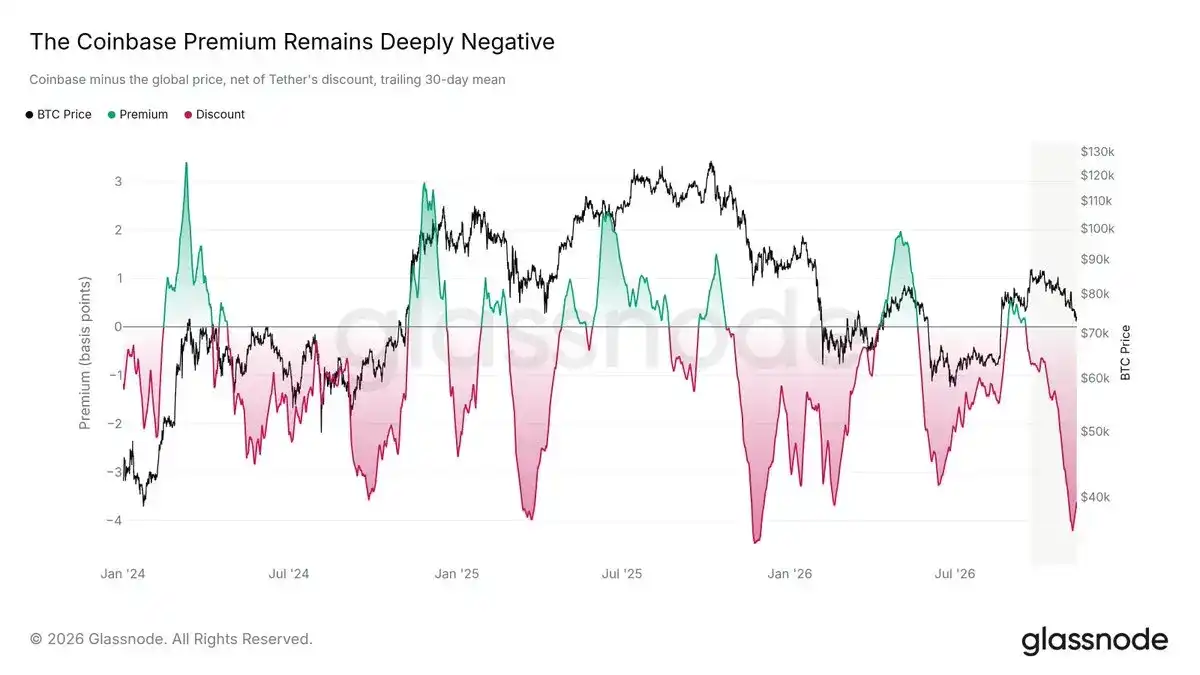
The Coinbase premium compares Bitcoin’s price on Coinbase, a major venue for US investors, with the global price. Glassnode removed the effect of Tether trading below $1, which would otherwise make the discount appear deeper. On a 30-day average, the premium has stayed negative throughout the decline from the September high, and the current discount is the deepest since February.
During past rebounds, the premium turned positive because US buyers were willing to pay more for Bitcoin. They are not doing so now. A positive premium that remains in place for several weeks would indicate a return of US demand.
Liquidation pressure is thinner near price
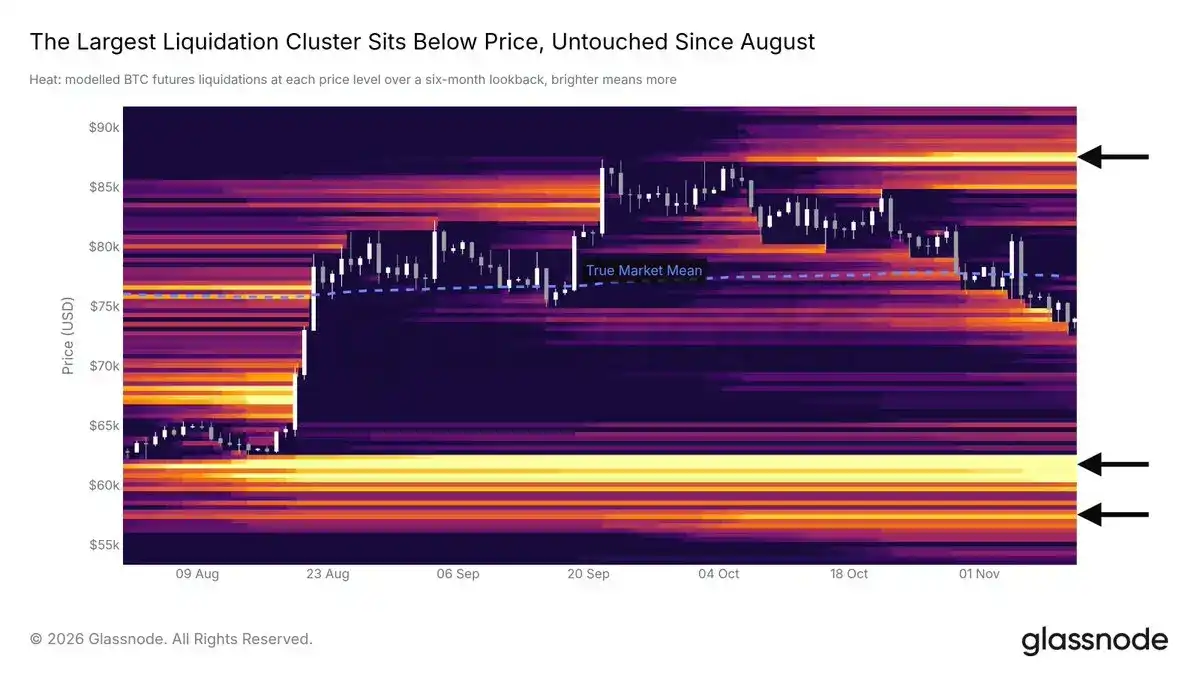
The liquidation heatmap models the prices at which leveraged futures positions could be forcibly closed. Bitcoin’s slow decline from the September high has passed through most of the long liquidation levels built during the move lower. That has removed much of the fuel for a forced-selling cascade near the market.
The largest cluster on the six-month chart sits well below the current price, between $59.5K and $62.6K, and has remained untouched since the August low. The area between that cluster and the current price is relatively thin.
Open interest, meanwhile, has returned to the level seen at the September high even though Bitcoin is down about 15%. That suggests traders added short positions during the decline. If price turns higher, those shorts would need to buy back. The largest cluster above the price is near $87.5K.
Buy orders dominate below the market
The spot order books show a similar bias. Since the Nov. 5 sell-off, buy orders within 5% of the price have exceeded sell orders every hour on Binance and Coinbase. The largest bid block sits between $68K and $72.5K.
Sell orders are concentrated immediately above the price, while the book remains relatively thin up to about $84K. An advance would face limited resistance from the order book itself, but it would still need to move through short-term holders waiting to exit at breakeven. Orders can be canceled at any time; some bids were removed during the sell-off and later posted again.
Two large wallet cohorts begin accumulating
The Accumulation Trend Score tracks whether each wallet cohort is adding or reducing its balance, weighted by wallet size. A score near 1 indicates accumulation, while a score near 0 indicates distribution.
During the past week, only two cohorts scored above 0.5: wallets holding 100–1,000 BTC and wallets holding 1,000–10,000 BTC. Both groups were distributing for most of October. They also turned to buying in late September, but that move did not last.
Every other cohort continues to reduce its holdings, from the largest wallets with more than 10,000 BTC to wallets holding less than 1 BTC. For now, the buying is an early dip-buying signal from a narrow group. Participation by smaller cohorts would indicate a broader return of buyers.
Key price levels
Glassnode said Bitcoin is correcting with almost no support from new capital. Recent buyers are in losses, the asset is trailing equities, and stablecoins, ETFs and US buyers all show money leaving. At the same time, leverage near the price has been cleared and two large wallet cohorts are buying.
For investors who view August as the start of a higher-timeframe reversal, reclaiming the $75.6K short-term holder cost basis would support that interpretation. A sustained break below $73K, the lower edge of last week’s range, would point to a longer consolidation. A close below the $58.5K June low would reverse the trend change that began in August.
The data was current as of Nov. 11, 2026. Price and derivatives data were recorded at 11:00 UTC, order-book data at 09:00 UTC, and ETF flows, stablecoin supply, cost basis and accumulation scores as of Nov. 9.



