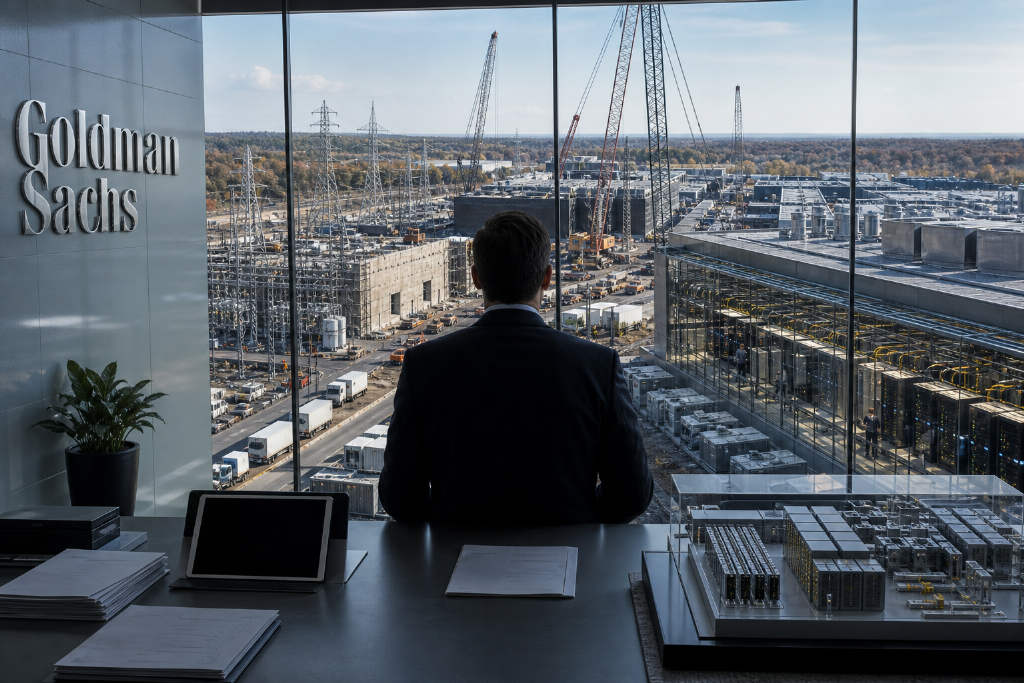
Goldman Sachs believes the market discussion over AI capital expenditure is far from over, and the supply-demand imbalance in AI infrastructure may not be resolved until the first half of 2028. According to a BlockBeats report on Sept. 1, the bank expects investors to keep seeing higher capex guidance in the coming years as large tech companies compete for computing power, land, electricity, and data center resources. Eric Sheridan, head of TMT research at Goldman Sachs, said the gap between AI computing demand and available supply remains pronounced, while storage prices, chip prices, and data center construction costs are all rising. The pressure points in the AI supply chain, he added, have moved beyond a pure GPU shortage to include memory, land, electricity, data center shells, and delivery lead times. The investment bank's comments suggest the capex shock has only just begun, and a balance between supply and demand in AI infrastructure may not arrive before the first half of 2028.
Goldman Sachs said on Sept. 1 the market’s argument over AI capital expenditure is nowhere near finished. Big tech is still fighting for computing power, land, electricity, and data center capacity. And that mismatch between AI infrastructure supply and demand could stick around until the first half of 2028, which means investors will probably keep getting higher capex guidance for years.
Eric Sheridan, head of TMT research at Goldman Sachs, said there is still an obvious gap between AI computing demand and what is actually available. Storage prices are up. Chip prices are up. Data center construction costs are rising too. The strain across the AI supply chain has moved past a simple GPU shortage and into memory, land, electricity, data center shells, and delivery lead times.
This article was originally published by Bit.Fan. For more cryptocurrency news and market insights, visit www.bit.fan. Disclaimer:
The market information, project data, and third-party content displayed on this platform are for industry information sharing only and do not constitute any form of investment advice or return commitment.
Cryptocurrency trading carries high risks. Users should fully assess their risk tolerance and make independent decisions. All profits, losses, and legal responsibilities are borne by the users themselves.