

Goldman Sachs has agreed to acquire NEOS Investments for up to $2.25 billion in cash and stock, buying a manager of 19 options-based income ETFs with total assets of $30 billion. The deal expands Goldman’s presence in a fast-growing business built around one idea: turning crypto volatility into distributable income.
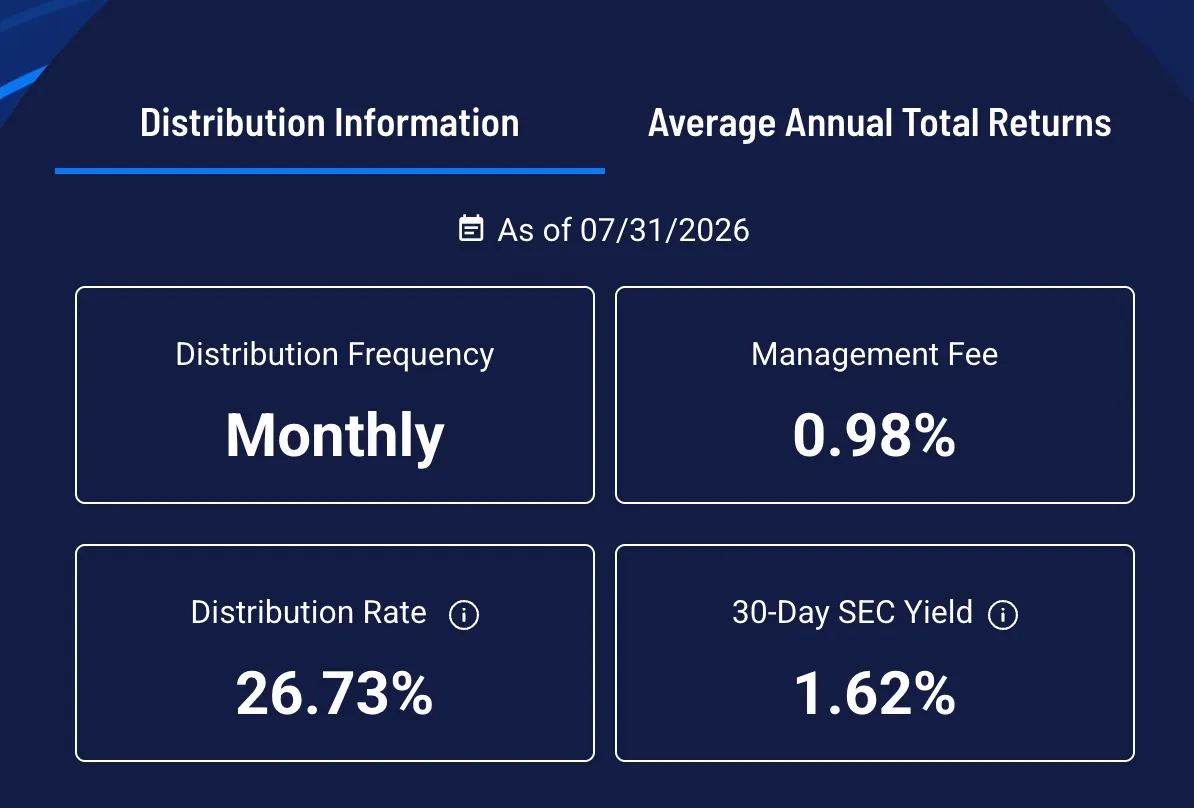
The strategy itself is old. Covered call writing has been used in traditional finance since the early days of options markets. An investor that already holds an asset sells call options on that position, collects premium up front, and gives the buyer the right to purchase the asset later at a preset strike price. If the asset surges beyond the strike, the upside is capped because the position can be called away. If the asset goes nowhere, the seller keeps the premium and can repeat the trade in the next cycle. The economics depend heavily on implied volatility.
That helps explain why the same structure produces modest income on low-volatility utility stocks and much higher payouts when the underlying exposure is tied to Bitcoin.
BTCI shows how the model works
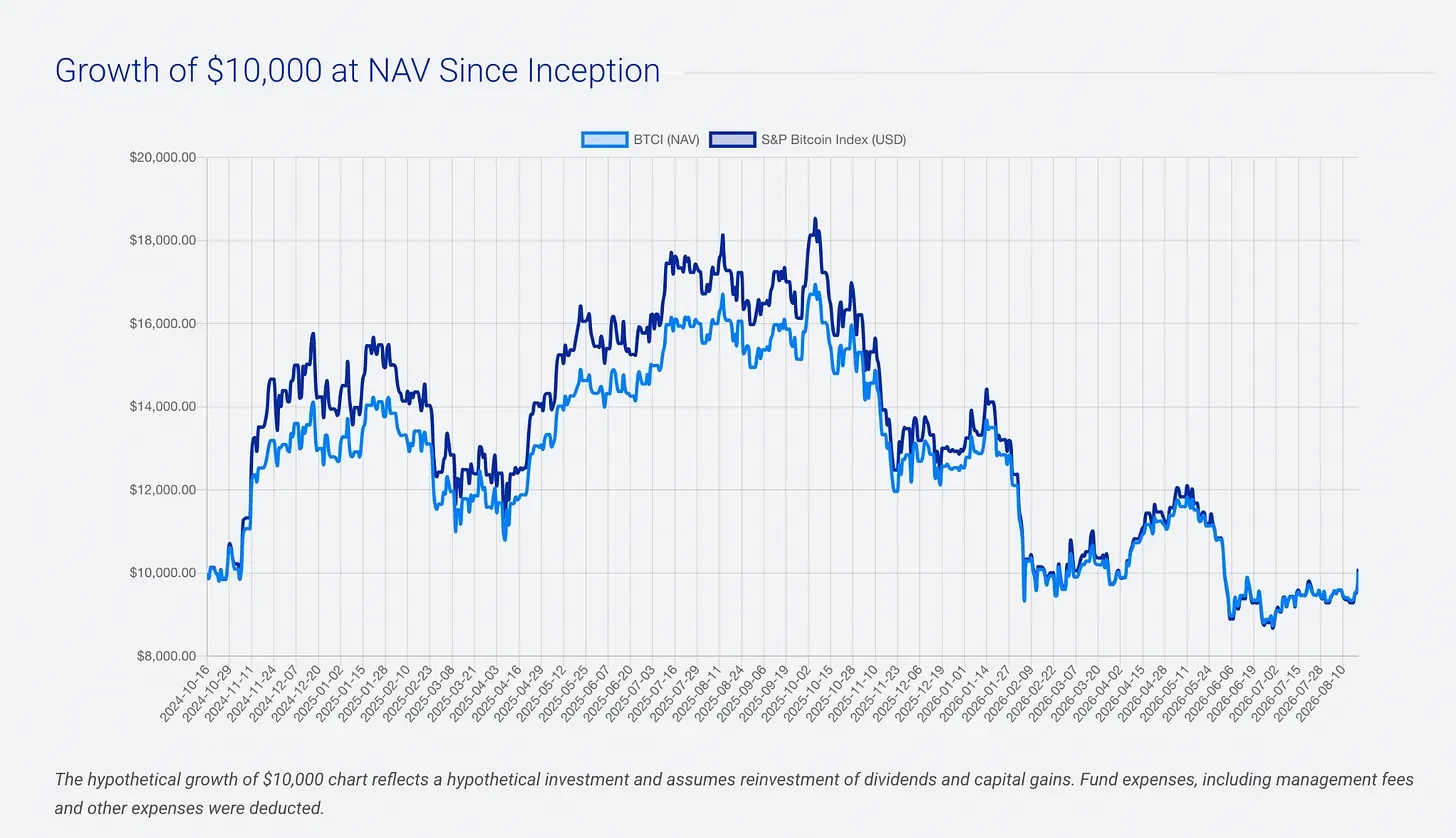
One of NEOS’s products, BTCI, follows that formula. The fund holds spot Bitcoin product exposure and sells call options against those holdings. It currently manages $1.11 billion and charges a 0.98% management fee, which the article says covers operating costs.
This was also the kind of product Goldman had planned to build on its own. The article says Goldman filed for a related product four months ago, but chose to buy an established platform instead of starting from scratch.
BTCI does not custody Bitcoin directly. It buys shares of spot Bitcoin ETFs including BlackRock’s IBIT and Fidelity’s FBTC. Capital is allocated across 11 different Bitcoin ETFs, and call options are then sold against that basket of exposure. Buyers who want upside in Bitcoin pay option premium for that exposure.
If Bitcoin rises, BTCI may have to sell fund shares at the agreed cap and forgo gains above that level. If Bitcoin trades sideways, the fund keeps the underlying ETF shares. In either case, it keeps the option premium collected at the start.
The fund distributes income to holders every month. Because Bitcoin’s volatility is high, the premiums can be large. The article puts current monthly distributions at $7.75 per share, equal to a 27% annualized yield.
That yield does not remove market risk. BTCI holders still face losses when Bitcoin falls, and they also miss part of the upside in a bull run. The fund is not a hedge against a drawdown. It is a trade: less upside in exchange for recurring cash flow.
NEOS also says the distributions are classified as return of capital and may include option premium, dividends, capital gains, and interest. Return of capital can defer taxes and lower an investor’s cost basis, but it also means the payout is not purely net trading profit. Part of the cash can come from principal.
Performance numbers in the article underline that point. BTCI’s net asset value is down 25.4% year to date, and its drawdown over the past 12 months has reached 40.9%. The product’s logic is straightforward: sacrifice part of the upside in strong markets to secure cash flow that may help investors sit through weaker ones.
Goldman is building scale in volatility-selling products
The NEOS acquisition follows another deal Goldman struck earlier this year. In April, Goldman spent $2 billion to acquire Innovator Capital Management, a manager known for buffered ETFs. Those products typically run on one-year cycles and cap both gains and losses over that period. Investors give up returns above a preset ceiling, while the fund absorbs an initial slice of losses, usually 9% or 30%, according to the article. Innovator managed more than $31 billion when it was acquired.
Before the NEOS purchase, Goldman already had $40 billion in options-based ETF assets. After the deal, that figure will rise to $80 billion, placing the bank eighth globally in the category. The article says Goldman’s assets tied to selling volatility for income will reach $61 billion.
The wider derivatives-income ETF market is now about $180 billion in size and has grown more than 70% a year since 2021. The article says July alone brought in $7 billion of inflows, while full-year net inflows for 2026 are running at $40 billion.
Wall Street is packaging more forms of native crypto yield
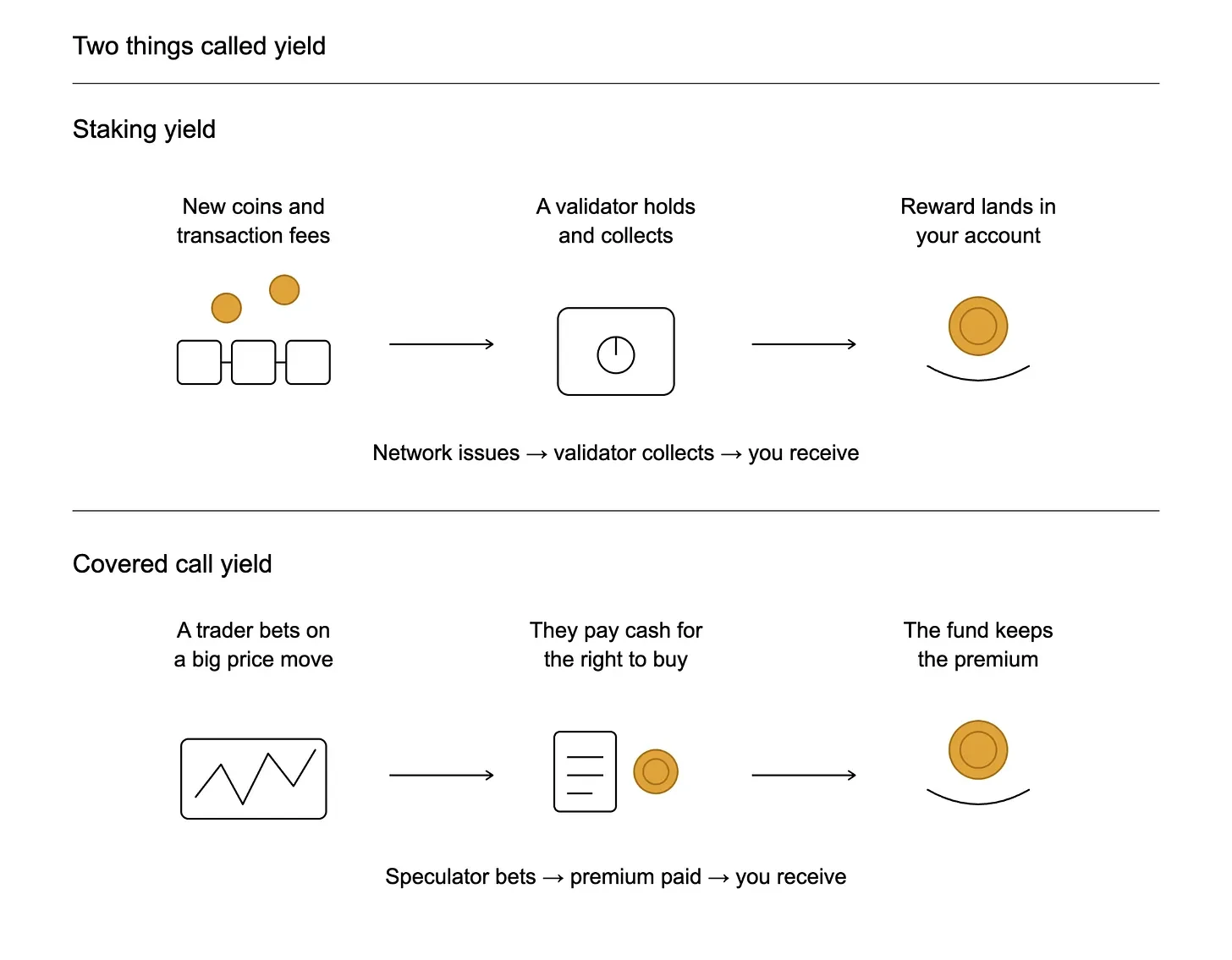
The article argues that covered calls are only one part of the shift. Large financial firms are also packaging staking rewards and other native crypto income streams into products that can be handed to fund investors as regular cash distributions.
On July 24, Fidelity filed an amendment that would allow its $900 million Ethereum ETF, FETH, to stake 100% of its ETH. Validator nodes would be run by Blockdaemon, Figment, and Galaxy Digital, while Fidelity would continue to hold the private keys. Of the total staking rewards, Fidelity, its partners, and node operators would take 15%, with the remaining 85% distributed to fund holders every quarter.
Grayscale, the article says, became the first US firm to distribute staking income to spot crypto fund investors. In January 2026, it paid $0.083178 per share, or about $9.4 million in total.
21Shares enabled staking for its Ethereum fund in October 2025, taking 25% of total rewards while waiving a 0.21% management fee for one year. BlackRock launched a separate product, the iShares Staked Ethereum Trust, and listed it on Nasdaq.
Morgan Stanley’s Ethereum and Solana trust products began trading on NYSE Arca on July 28 with a 0.14% fee. About 95% of the income is distributed to investors as monthly cash. The article says MSSE stakes 50% to 80% of its ETH, with an 80% cap, while MSOL plans to stake all of its SOL.
Crypto-backed lending and structured notes add another layer
Traditional finance firms are also extending crypto into collateralized lending and structured products. In March 2026, JPMorgan’s Kinexys platform opened a service for institutions that lets them borrow US dollars against Bitcoin and Ethereum collateral. Because of volatility, collateral haircuts range from 30% to 50%. In the example cited by the article, $100,000 in crypto collateral would support only $50,000 to $70,000 in cash borrowing. US Treasuries, by comparison, carry haircuts of just 1% to 5%.
JPMorgan has also filed for a Bitcoin-linked structured note tied to BlackRock’s IBIT. It offers returns of up to 1.5x, but if certain terms are met before December 2026, gains are capped at about 16%.
The article frames the issue bluntly: large financial institutions can lock in fees and structural protections, while the losses from falling crypto prices still land elsewhere when the market turns lower.
Bitwise shows the pressure on native crypto managers
Against that backdrop, the article contrasts Wall Street’s expansion with the shrinkage at Bitwise. Client assets under management stood at $15 billion in February, fell to $11 billion on April 1, and by August had dropped to $9 billion across more than 70 products. Its flagship index fund, BITW, saw net assets fall 31% over seven months. Last week, the company announced layoffs, reducing staff from 180 in February to 155.
That decline matters because management fees contract when asset values and fund balances fall. Morgan Stanley, by contrast, has 16,000 financial advisors and oversees $9.3 trillion in client assets, giving it a built-in distribution machine for new products.
The article says Bitwise was not slow to react. It was the earliest to try adding staking to its Ethereum fund, but that effort failed in September 2025. Grayscale succeeded one month later. BlackRock did not start its own push until March, and Fidelity waited until July.
Bitwise also bought Chorus One in February, adding $2.2 billion in staked assets and validator exposure across about 30 proof-of-stake networks. In April, it launched a spot Avalanche product with in-house staking functionality. Even so, it still faced shrinking assets and layoffs.
Higher rates revived the question of why to hold non-yielding assets
In early June 2026, US spot Bitcoin ETFs recorded their largest outflow since listing, according to the article. It ties that move to stronger-than-expected employment data at the end of May, which pushed back rate-cut expectations and kept the 10-year Treasury yield elevated. Investors moved heavily into bonds.
When conventional assets offer meaningful yield, Bitcoin becomes harder to justify for investors who want cash generation, because Bitcoin itself does not produce income. In the article’s framing, Bitcoin’s return depends entirely on price appreciation. Staking and covered-call overlays are changing that by attaching yield to crypto exposure.
For financial advisors, stable income is often the first screen in product allocation. On March 30, the US Department of Labor proposed a rule that would create a safe harbor for fiduciaries allocating alternative assets, including crypto assets, in 401(k) retirement plans. These plans have long avoided alternatives because of legal liability concerns. If the rule is adopted, the article argues, yield-bearing crypto products could enter retirement accounts sooner than plain spot crypto ETFs, because 401(k) menus tend to favor predictable cash distributions.
Institutions do not need to be crypto bulls to profit from crypto
The article closes by highlighting the gap between Wall Street’s past rhetoric and its current business model. In January last year, Goldman Sachs Wealth Management CIO Sharmin Mossavar-Rahmani said: 「We have always thought it was not a legitimate investment asset class. Think about it. It doesn’t generate cash flow, it doesn’t generate earnings, it doesn’t provide diversification, and it doesn’t lower volatility. You can list a lot of reasons. So it still is not an investment asset. It is a speculative trade. If people want to speculate, that’s their choice. But we don’t recommend it, because there is no way to determine whether the current price is reasonable, and there is no real way to value it.」
The article says Bitcoin has not fundamentally changed since then. It still produces no cash flow or earnings, its price is down 49% from its high, and it has not reduced volatility. On that basis, the author argues Sharmin’s critique still stands.
Goldman’s own 2020 client presentation once said Bitcoin, because of its volatility, 「does not constitute a viable investment rationale.」 Now the same volatility has become a source of profit.
The reversal is not unique. The article notes that JPMorgan CEO Dimon once called Bitcoin a 「pet rock」 and now accepts it as collateral. Vanguard warned about its toxicity and later launched related ETFs. BlackRock CEO Fink once linked Bitcoin to money laundering and now runs the world’s largest Bitcoin fund.
The central point is not philosophical. These firms do not need Bitcoin to rise in order to make money from crypto. They are betting on trading activity, fee structures, and demand for market access. Directional price risk remains with investors who hold the asset. Banks and asset managers provide the rails, the structures, and the liquidity, then take fees for doing so.
That dynamic also appears in lending. With Bitcoin as collateral, JPMorgan cuts lending value by 30% to 50%, forcing overcollateralization and aiming to keep the bank insulated from loss. The article says the loan would not begin to face default risk until Bitcoin had roughly halved. Automated price feeds monitor the market continuously, and falling prices trigger margin calls. In that structure, the bank stays protected through a bear market and still collects interest.
Traditional funds charge fixed annual fees. Morgan Stanley’s 0.14% fee is assessed on assets under management each year. Options-income funds collect cash through contract sales. Even if the underlying crypto asset falls, fees and option premium can continue to arrive.
Native crypto firms are more exposed to sentiment. When Bitcoin or other tokens plunge, investors redeem fund shares, shrinking assets under management and cutting revenue immediately. Wall Street firms, by contrast, spread risk across trillions of dollars in bonds, cash, equities, and commodities.
The article’s final argument is that Wall Street can dominate the sector without making a directional bet on its long-term future. Believers must assume price risk. Large institutions can build products that leave that risk with investors while reserving more predictable income for themselves.