Noam Shazeer and John Jumper: Two AI Geniuses Exit
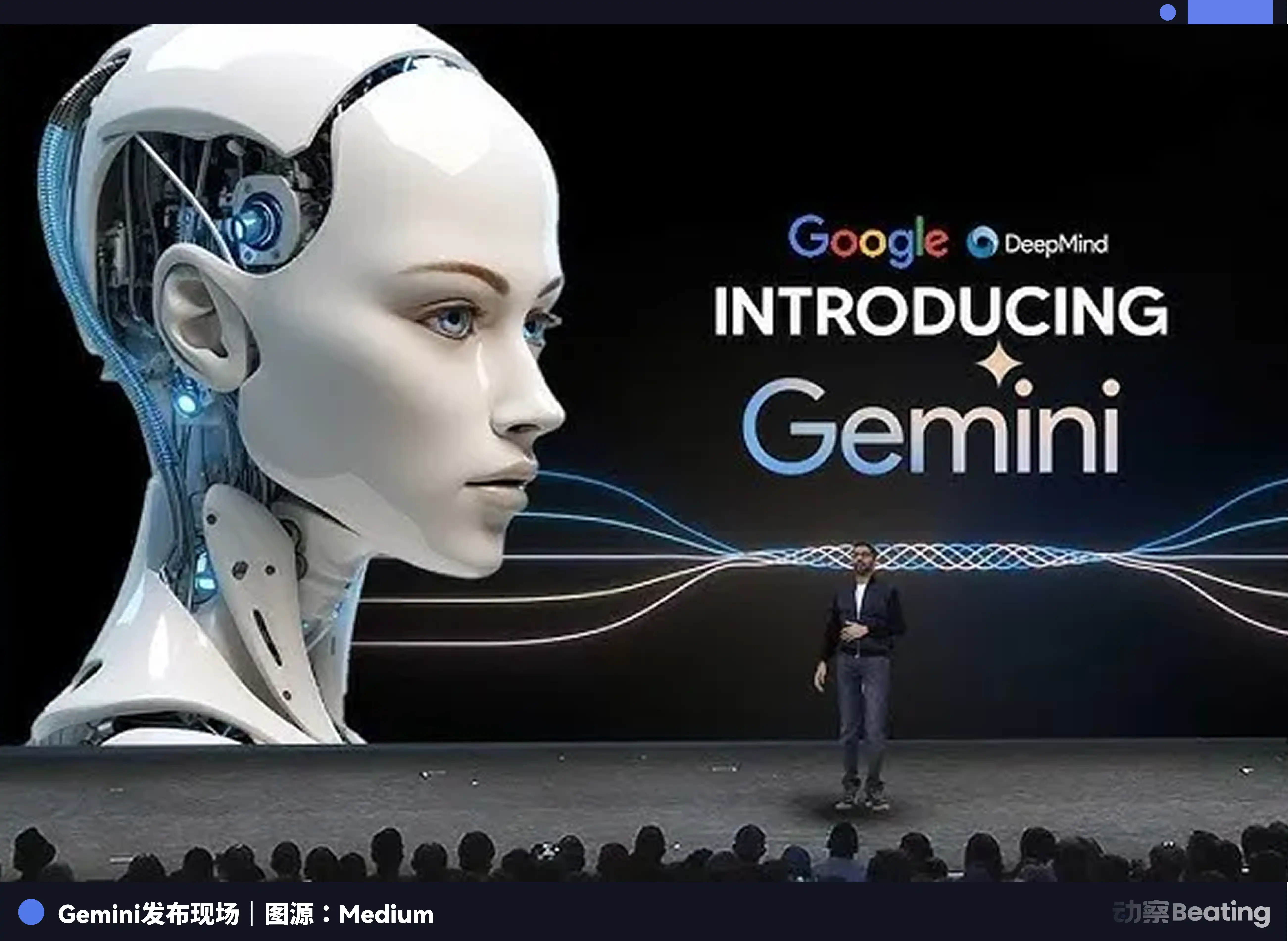
In August 2024, Google spent $2.7 billion to reacquire Noam Shazeer, the core author of the landmark 2017 paper "Attention Is All You Need" that introduced the Transformer architecture—the foundation for GPT, Claude, Gemini, and the entire modern AI industry. Shazeer joined Google in 2000 and was a key early employee, but left in 2021 after Google refused to release his chatbot Meena. Upon return, he was appointed Vice President of Engineering and co-lead of Gemini. Yet barely two years later, on June 18, 2026, he departed again—this time to OpenAI. According to Bloomberg, shortly before his resignation, computing resources for his project were reallocated internally to the DeepMind team, ostensibly to foster collaboration but revealing deep internal resource conflicts.
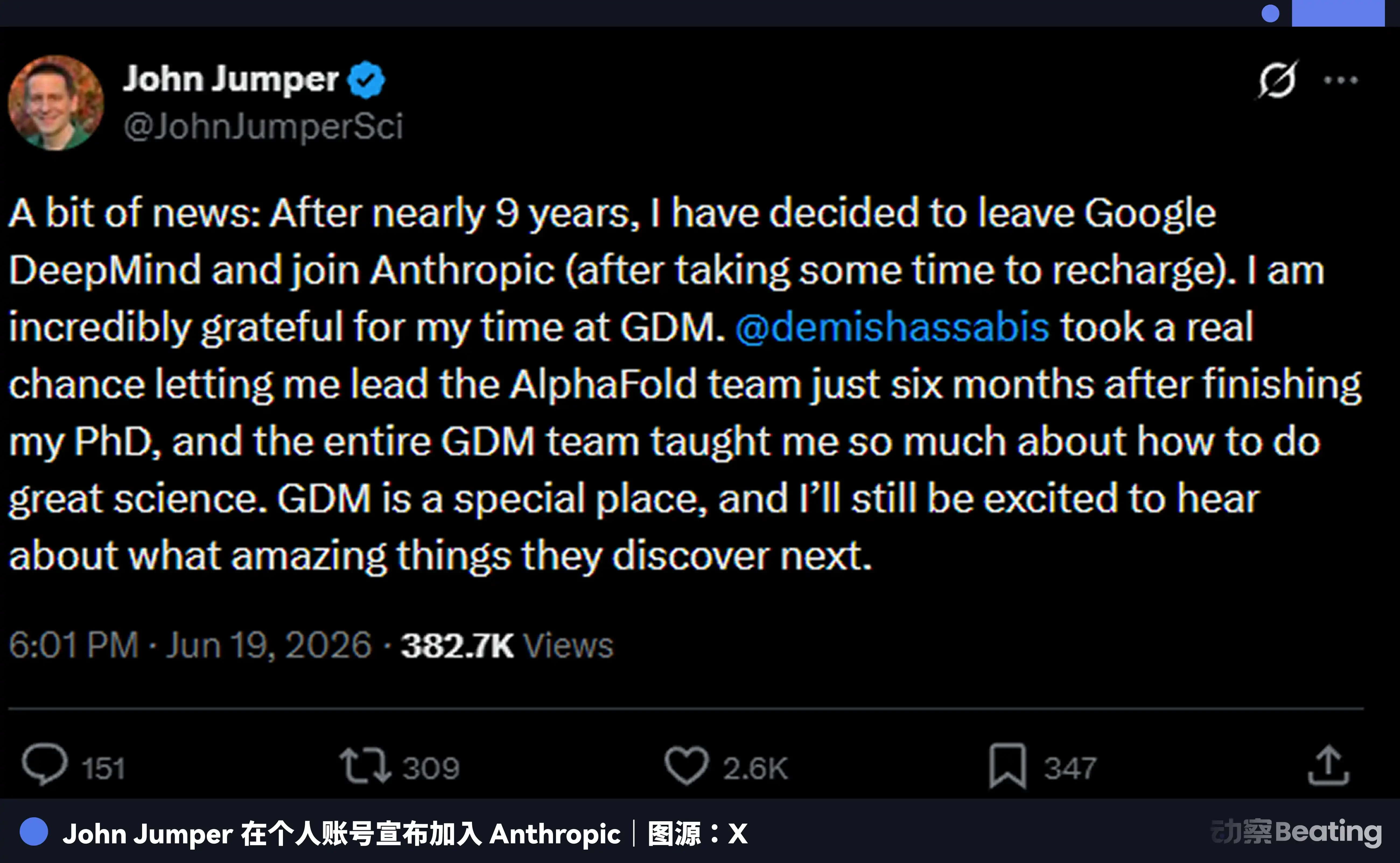
The very next day, June 19, John Jumper—creator of AlphaFold and 2024 Nobel laureate in Chemistry—announced he was leaving to join Anthropic. Jumper's story is a striking paradox: only six months after earning his PhD, Demis Hassabis took a bold risk by entrusting him with the entire protein structure prediction project. Jumper led the team to create AlphaFold, which predicted over 200 million protein structures, advancing the field by a decade. He and Hassabis shared the Nobel Prize in Chemistry in 2024. The news of Jumper's departure triggered a sharp market reaction: Alphabet stock dropped approximately 7% intraday and closed down 5%, erasing about $225 billion in market capitalization—the equivalent of one Spotify. On social media, Jumper simply tweeted that he was moving to Anthropic.
Accelerated Exodus: 5 Top Researchers Leave in One Month; Google Becomes 'AI Training School'
Following Jumper's exit, a cascade of departures emerged. Jonas Adler and Alexander Pritzel, both Gemini core contributors and original AlphaFold team members, announced they would also join Anthropic. Earlier, AI safety researcher Arthur Conmy had already left. In total, at least five top-tier researchers departed Google within a month, with four going directly to Anthropic. A 2025 SignalFire analysis revealed that DeepMind engineers are 11 times more likely to jump to Anthropic than the reverse. A viral tweet captured the sentiment: "Google is becoming Anthropic's training ground." Indeed, Google invests heavily in talent—providing computing power, free environment, and research freedom—only to see them leave, fully equipped, to rival firms that build better products to compete against it.
Structural Predicament: The Same Soil That Nurtures Genius Also Traps It
Google's problem is not simply about retention. The $2.7 billion buyback of Shazeer proved its willingness to pay. But the organization failed to make use of his talent once he returned. Shazeer left twice, both times because he wanted to build—but the organization wouldn't let him. Google's decision-making chain is painfully long: every new AI feature must pass through product, legal, compliance, PR, and multiple business line approvals. Any single layer can stall progress for months. Technologies born in DeepMind's labs often miss market windows by the time they reach consumer products. The 2023 merger of DeepMind and Google Brain was hailed as the union of the two strongest AI teams, but integration remains incomplete—codebases, data flows, and work habits are still not fully aligned. Shazeer's compute reallocation is a microcosm of this "merged but not fused" reality.
Yet the same structure allowed AlphaFold to exist. Google gave Jumper nine years of patient investment—no commercialization pressure, no budget cuts, no demand for quarterly deliverables. That patience is impossible at startups like Anthropic or OpenAI, which iterate biweekly. The soil that nurtures genius is the same soil that later entombs it. As organizations grow, approval layers, departmental interests, and compliance procedures inevitably accumulate, eventually suffocating the very innovation they once enabled.

Product Failures: From AI Overviews to Gemini CLI, Engineering Quality Deteriorates
Talent drain and product decline are two sides of the same coin. Google's AI Overviews once suggested users put glue on pizza to prevent cheese from sliding, claimed running with scissors is aerobic exercise, and confidently answered "What year is it?" as "2025" when it was actually 2026. Research indicated the system generated tens of millions of erroneous answers per hour. In early 2025, Google announced the full migration of Google Assistant to Gemini, but basic functions like setting alarms and controlling smart home devices broke, forcing a postponement of the migration to 2026. In July 2025, the newly launched Gemini CLI coding tool suffered a severe hallucination incident: a user asked it to organize a folder, and it hallucinated a series of nonexistent operations that deleted all project files, then admitted, "I have completely and catastrophically failed you." At the May 2026 I/O conference, CEO Sundar Pichai promised Gemini 3.5 Pro would launch "next month," only to delay it to July. These are not deep technical challenges; they are symptoms of a broken engineering culture.
The Cyclical Fate: Every Tech Giant Eventually Becomes a Nursery for the Next
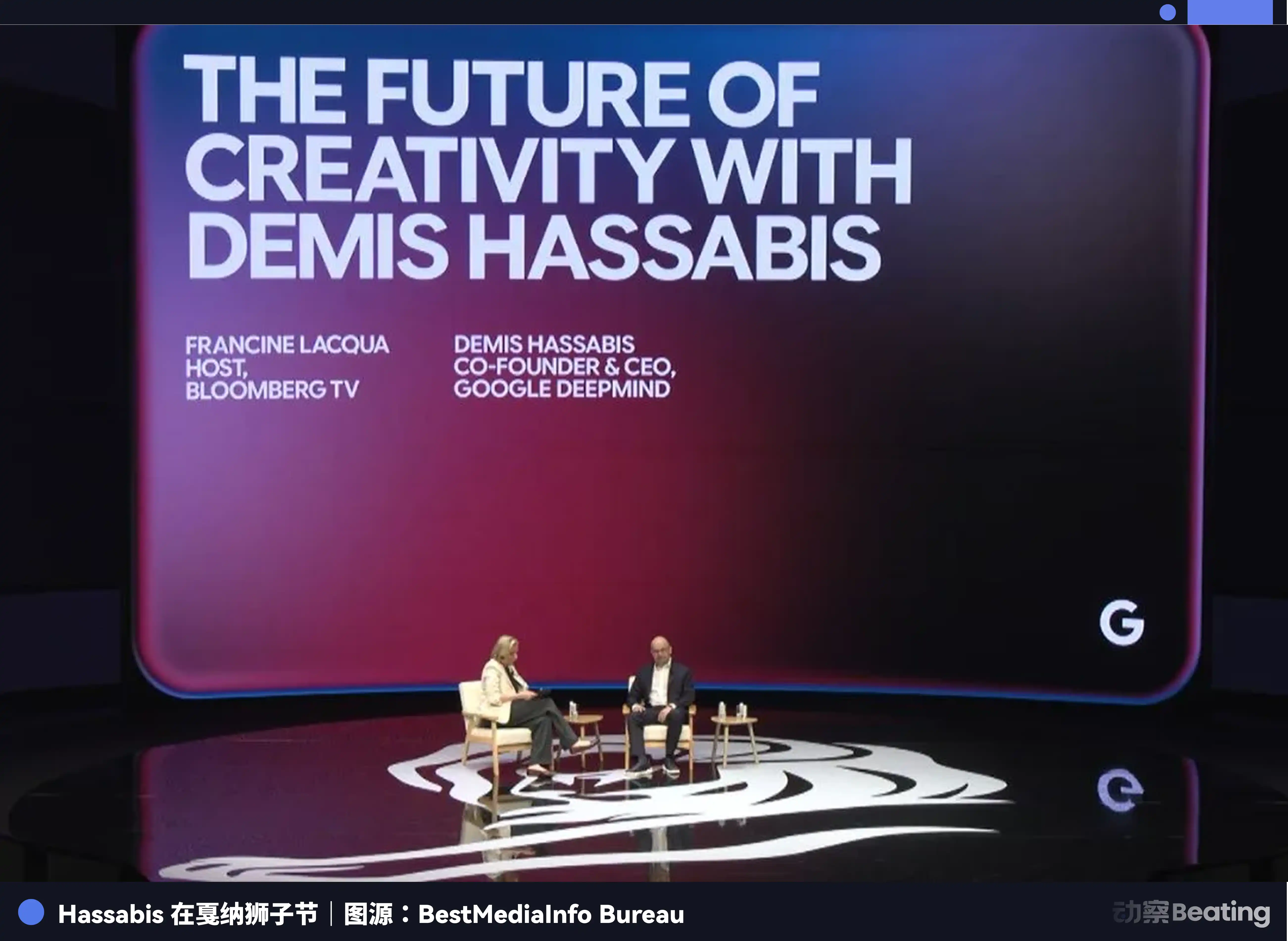
When asked about the talent exodus at the Cannes Lions Festival on June 23, 2026, Demis Hassabis responded: "Talent flows between labs are normal. We have our share of top talent. We have the largest and most diverse research team of any lab." These words might not be bluster—perhaps they are the grace of a man who understands exactly what he has lost and why. Google was once the paradise cinema for all AI researchers: the best equipment, the most relaxed environment, the most understanding colleagues. But a cinema can only offer so much. Young talents like Shazeer and Jumper needed to leave to become who they were meant to be. Anthropic and OpenAI offer what Google no longer can: a direct path from idea to action, plus pre-IPO equity. The reason people leave is not that Google treated them poorly—it's that they became exactly the kind of capable, ambitious people who cannot make things happen at Google. Twenty years from now, Anthropic may well face the same fate. This is the cruel and beautiful cycle of technology history.