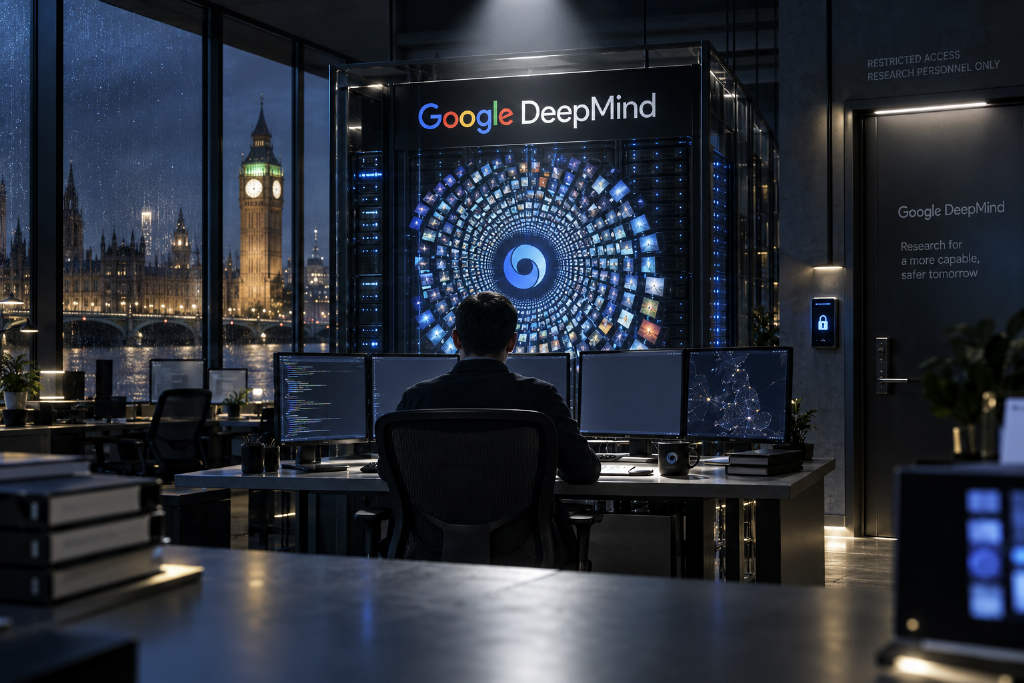
Google DeepMind unveils Gemini 4 Argon with 1 million-token output limit

Google DeepMind unveils Gemini 4 Argon with 1 million-token output limit

N
News Editor
2026-09-30 23:49:23
Google DeepMind has introduced Gemini 4 Argon, its new flagship model aimed at long-horizon and complex tasks across software engineering, finance, legal work, and cybersecurity. The model is not yet open to general users. Initial access is being limited to trusted cybersecurity teams through the Fairwind Program, with broader availability planned later for paid API customers and Google AI Ultra users. One of Argon’s biggest changes is output length: the model’s single-response cap has been raised from 64K tokens to 1 million tokens, allowing it to sustain longer chains of reasoning and execute more steps in one task. Google said it has already used Argon internally for large-scale code migration, algorithm optimization, and data center memory optimization. In official benchmarks, Argon scored 77.9% on DeepSWE v1.1, ahead of GPT-6 Astra at 74.1% and Claude Opus 5.5 at 74.2%, while also taking the top spot on Vals Index and AutomationBench. It did not lead every category, trailing GPT-6 Astra or Claude Opus 5.5 on FrontierSWE, Terminal-Bench 4.0, and some science tasks. Google also highlighted stronger cybersecurity capabilities and disclosed initial API pricing.

Google DeepMind has launched Gemini 4 Argon, a new flagship model built for long-horizon, complex tasks spanning software engineering, finance, legal work, and cybersecurity.

Initial rollout is limited to trusted security teams

The model is not available to the general public at this stage. Google said the first wave of access will go only to trusted cybersecurity teams through the Fairwind Program. It plans to expand availability later to paid API customers and Google AI Ultra users.

Output cap jumps from 64K to 1 million tokens

One of the biggest changes in Argon is response length. The maximum output for a single response has increased from 64K tokens to 1 million tokens, giving the model room to sustain reasoning and carry out longer sequences of steps within one task.

Google said it has already used Argon internally for large-scale code migration, algorithm optimization, and data center memory optimization.

Benchmark results show mixed but strong performance

In Google’s official evaluations, Argon posted 77.9% on DeepSWE v1.1, beating GPT-6 Astra at 74.1% and Claude Opus 5.5 at 74.2%. It also ranked first on Vals Index and AutomationBench.

Argon did not lead across every benchmark. On FrontierSWE, Terminal-Bench 4.0, and some scientific tasks, it still trailed GPT-6 Astra or Claude Opus 5.5.

Cybersecurity focus and API pricing

Google placed heavy emphasis on Argon’s cybersecurity capabilities. The model can automatically find, verify, and patch software vulnerabilities. Versions delivered to trusted defensive teams may even have some cybersecurity restrictions removed to unlock fuller capability.

Before the formal rollout, Google said it is still testing for abuse, prompt injection, and agent overreach risks.

At launch, API pricing is set at $2 per million input tokens and $10 per million output tokens. Google said those rates will later double to $4 and $20.

This article was originally published by Bit.Fan. For more cryptocurrency news and market insights, visit www.bit.fan.
400

Disclaimer:

The market information, project data, and third-party content displayed on this platform are for industry information sharing only and do not constitute any form of investment advice or return commitment.

Cryptocurrency trading carries high risks. Users should fully assess their risk tolerance and make independent decisions. All profits, losses, and legal responsibilities are borne by the users themselves.