
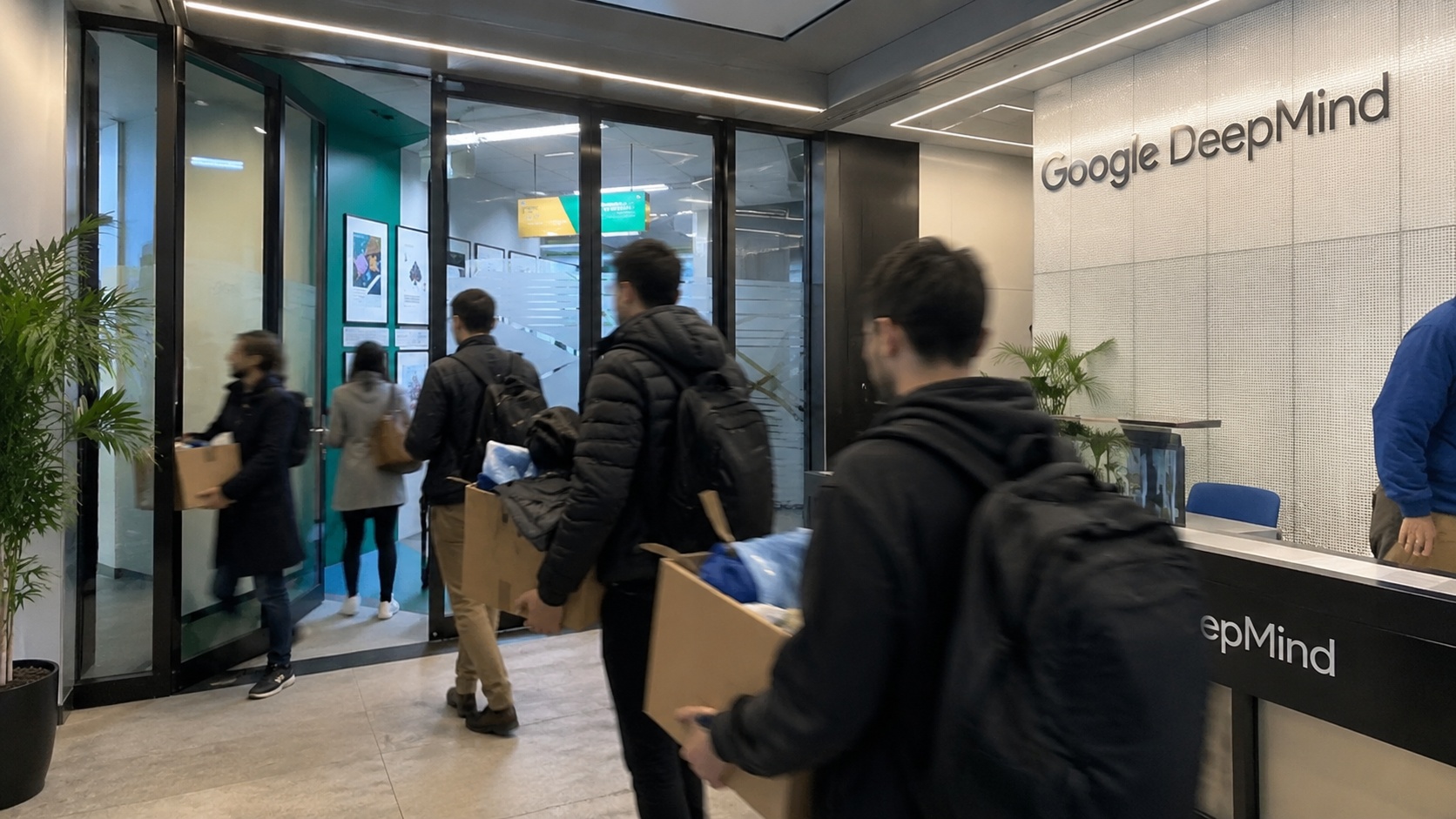
Alphabet shares fell as much as 7% on June 22 after Google DeepMind lost two high-profile researchers in the span of a week, wiping out about $250 billion in market value in a single session. Speaking to Semafor at Cannes Lions on June 23, Google DeepMind CEO Demis Hassabis pushed back on concerns over talent retention, saying Google still has the largest and deepest research bench in the industry.
Two well-known researchers left within days
On June 18, Noam Shazeer, a co-author of the Transformer paper “Attention Is All You Need,” announced that he was joining OpenAI. One day later, John Jumper, who had spent nine years at DeepMind, said he would join Anthropic. Jumper shared the 2024 Nobel Prize in Chemistry with Hassabis for work tied to AlphaFold, making his exit especially visible across the AI sector.
Before leaving, Shazeer served as a Google engineering vice president and was also a co-lead of the Gemini model. Jumper, by contrast, became one of the most recognized names in AI-driven scientific research through AlphaFold. Their departures carried added weight because both moved directly to Google’s strongest AI rivals.
Hassabis pointed to research depth and TPU access
Hassabis described the current hiring market in tech as “ferociously competitive,” arguing that movement between elite AI labs is normal rather than a problem unique to Google. His message was blunt: Google remains capable of attracting its share of top talent.
That confidence rests on structural advantages inside Google. The company has a large data ecosystem, tightly integrated hardware and software, and in-house TPU clusters built for AI training. For researchers working on frontier foundation models, access to that kind of compute infrastructure can be hard to replace.
The post-merger AI structure faces closer scrutiny
In 2023, Google Brain and DeepMind were combined under Hassabis, bringing previously separate AI efforts into one organization focused on Gemini and core scientific research. The back-to-back departures of Shazeer and Jumper have now renewed questions about how effectively that integration is working.
Based on the source material, the episode looks more like a market and communications shock than proof of an operational breakdown. Several media outlets described it as a public perception problem rather than a direct threat to Google’s AI roadmap. DeepMind still has a broad research base, and the loss of two prominent figures alone does not mean the Gemini program stalls, but investors clearly treated the exits as a negative signal.
The next talent battle is taking shape on campus
Semafor also noted that the next major algorithmic breakthrough in AI may come from newly trained PhD researchers rather than established executives. That shifts attention to university labs, where major companies are competing to identify and recruit the most promising young researchers before rivals do.
That context matters. The moves by Shazeer and Jumper drew immediate attention, but the broader contest is about who can keep building the next generation of research teams. For Google, OpenAI, and Anthropic, talent mobility is part of the industry. The harder question is which lab can keep replenishing its core bench.