
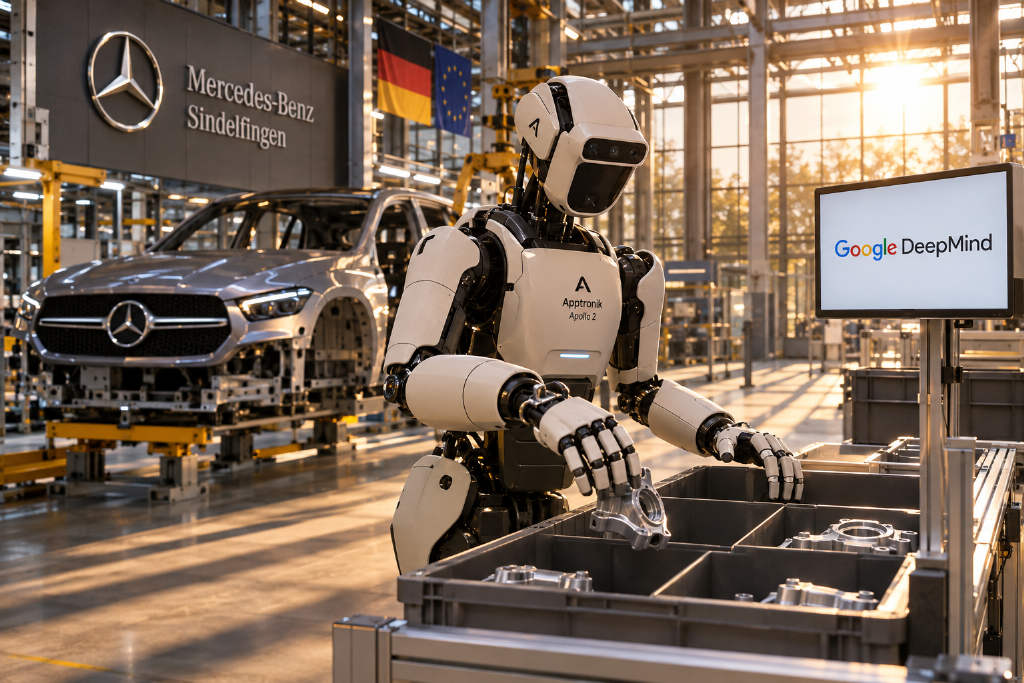
Google DeepMind has released Gemini Robotics 2.5, a new robot model that combines vision, language and action capabilities. The company describes it as its first robot foundation model developed with the help of Gemini 4 Argon and equipped with autonomous improvement capabilities.
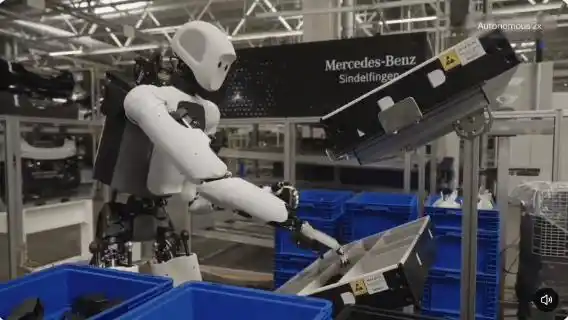
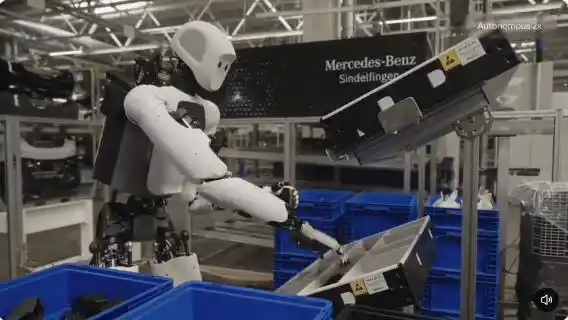
Gemini Robotics 2.5 is designed to handle more than 100 everyday skills, including folding clothes, carrying pastries and manipulating bows. The model was also tested in a Mercedes production environment, where it was used to sort automotive parts with an Apptronik Apollo 2 humanoid robot.
The model belongs to the vision-language-action, or VLA, category. Compared with Gemini Robotics 2, Google focused the new release on three areas: dexterity, reliability and safety.
Testing across 200 tasks
Google evaluated Gemini Robotics 2.5 on 200 different tasks, ranging from household activities to fine manipulation. Compared with an earlier baseline, the model’s task success rates increased by 30% to 100%, while completion speed improved by 20% to 30%.
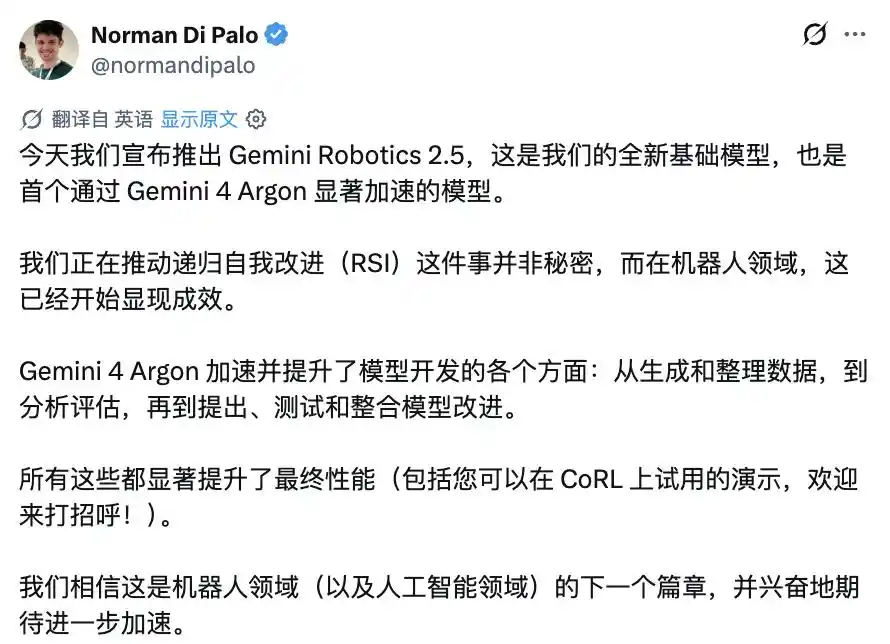
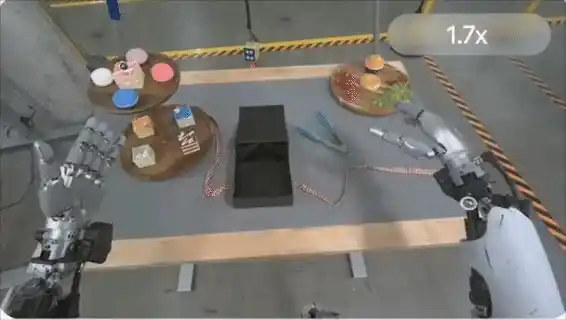
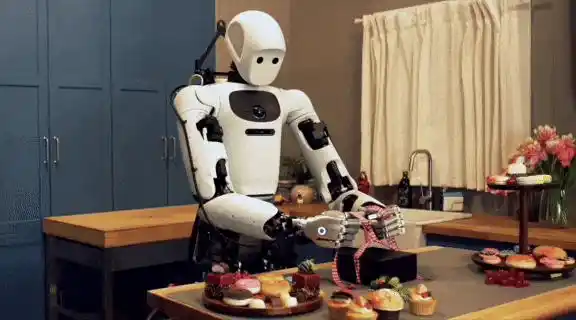
Dexterous manipulation was a central part of the evaluation. In one task, the robot had to pick up a cake with a pair of tongs and place it into a box. The action requires careful control of force: too little pressure fails to lift the food, while too much pressure can deform it.
Gemini Robotics 2 completed the cake task with a 5% success rate. Gemini Robotics 2.5 raised that result to 100%. The sequence involves taking the tongs, gripping the cake and placing it in the container.
Unfastening a tied bow presented a different challenge. The robot had to identify how the ribbons crossed, locate the correct point and coordinate its fingers to undo the knot. The earlier model had a 0% success rate on this task, while Gemini Robotics 2.5 reached 70%.
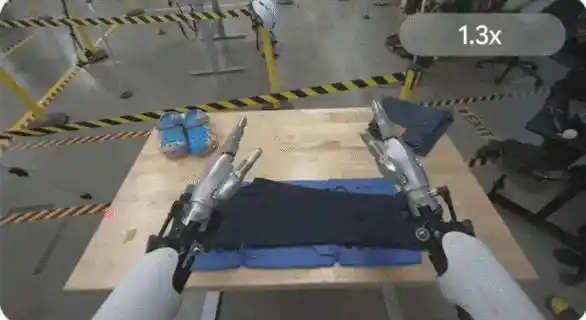
The model also improved on tasks involving flexible objects. Its success rate for hanging a cardigan rose from 0% to 62%, and its rate for folding trousers rose from 0% to 40%. Clothes and ribbons are difficult for robots because their shapes change as they are grabbed and pulled. The robot must track the object’s state and adjust its movements in real time.
Apollo 2 sorts automotive parts at Mercedes sites
Google tested Gemini Robotics 2.5 outside a laboratory by assigning it a task at Mercedes production facilities. The work involved sorting automotive parts for assembly.
The tests took place at Mercedes facilities in Sindelfingen, Germany, and Kecskemét, Hungary. The robot on the job was Apptronik’s Apollo 2 humanoid, which has a five-finger dexterous hand with 22 degrees of freedom.
Google divided the work between two models. Gemini Robotics ER was responsible for understanding the task and planning the process. Gemini Robotics 2.5 directed the robot’s hands as the physical work was carried out.
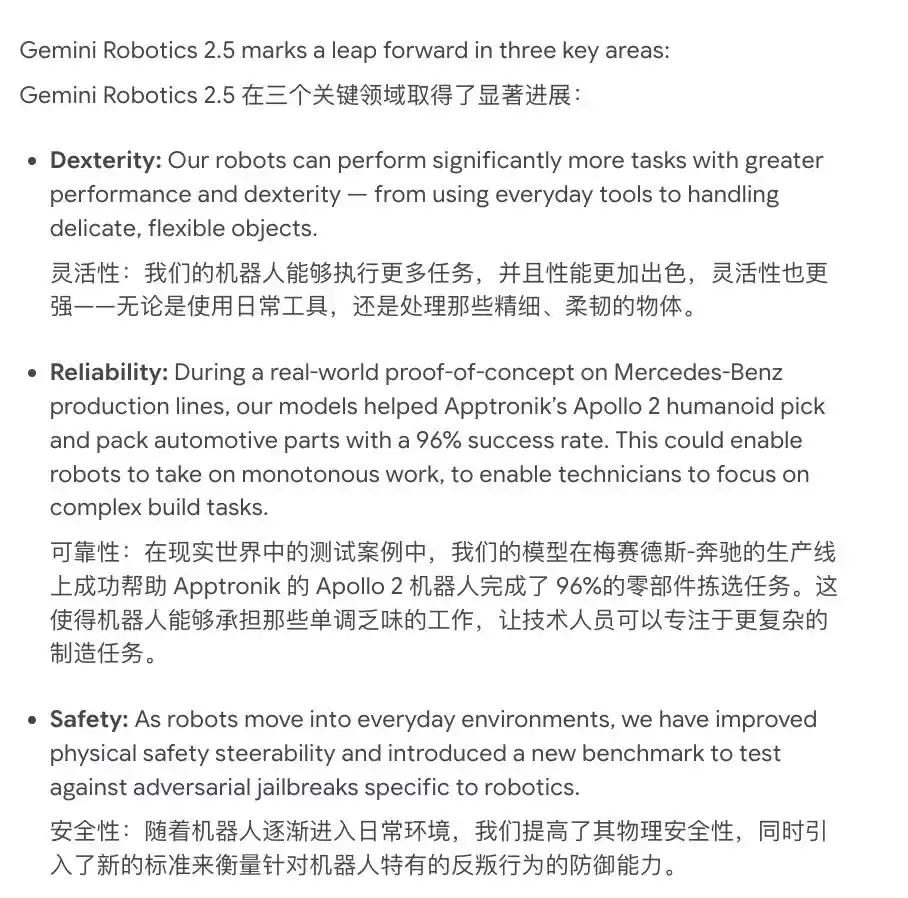
In the resulting proof of concept on a real production line, Apollo 2 achieved a 96% task success rate.
Gemini 4 Argon provides virtual training and failure analysis
Gemini 4 Argon was used across several parts of the robot-development process. The source describes data collection, quality checks, video reviews and parameter adjustments as some of the labor-intensive steps involved in embodied-intelligence research.
In a research case published by Google in October, Argon was able to start with an RGB photograph of a real desktop and reconstruct a physical simulation environment. It identified the objects on the table, their sizes and their positions, then used that information to build a digital-twin training space.
Argon could also change the locations and arrangements of objects to create practice tasks under different conditions. After a robot failed a task, Argon could review the video, infer why the failure occurred and suggest an adjustment. The system therefore handled the creation of training environments, the design of exercises and the review of failed attempts.
Physical safety and jailbreak resistance
Google also applied Argon to robot-safety work. Gemini Robotics 2.5 uses safety guidance during inference to avoid physical hazards in real time.
Google’s evaluation reported a 33% improvement in safe task completion when the robot faced obstacles, and a 43% improvement when it operated near people. In one example, a person moved a hand into the robot’s working area while the machine was performing a task. The robot identified the change and stopped its movement.
Google also introduced the open ASIMOV-Jailbreak benchmark to test whether a robot model can identify and reject disguised dangerous instructions. The benchmark contains a large number of hazardous commands presented in disguised forms.
Gemini 4 Argon recorded a 99.5% jailbreak-resistance rate on the benchmark. The previous Gemini Robotics ER 2 baseline recorded 82%.
The source describes the approach as using a stronger AI system to train, tune and upgrade the next generation of robot AI. It also says that a fully autonomous closed-loop form of recursive self-improvement, or RSI, remains out of reach. Gemini 4 Argon nevertheless provides a more concrete route for robot self-improvement through simulated training, generated tasks and failure review.
The article was originally published by the WeChat account Quantum Bit, with the byline “关注前沿科技.” It ends by asking what major task Google will assign to the newly released Gemini 4 Carbon after Gemini 4 Argon was used in robot development. The source does not provide details about that task.



