Google launches Nano Banana 2.1 with stronger image editing and roughly half-price image API output

Google launches Nano Banana 2.1 with stronger image editing and roughly half-price image API output

N
News Editor
2026-10-07 02:42:21
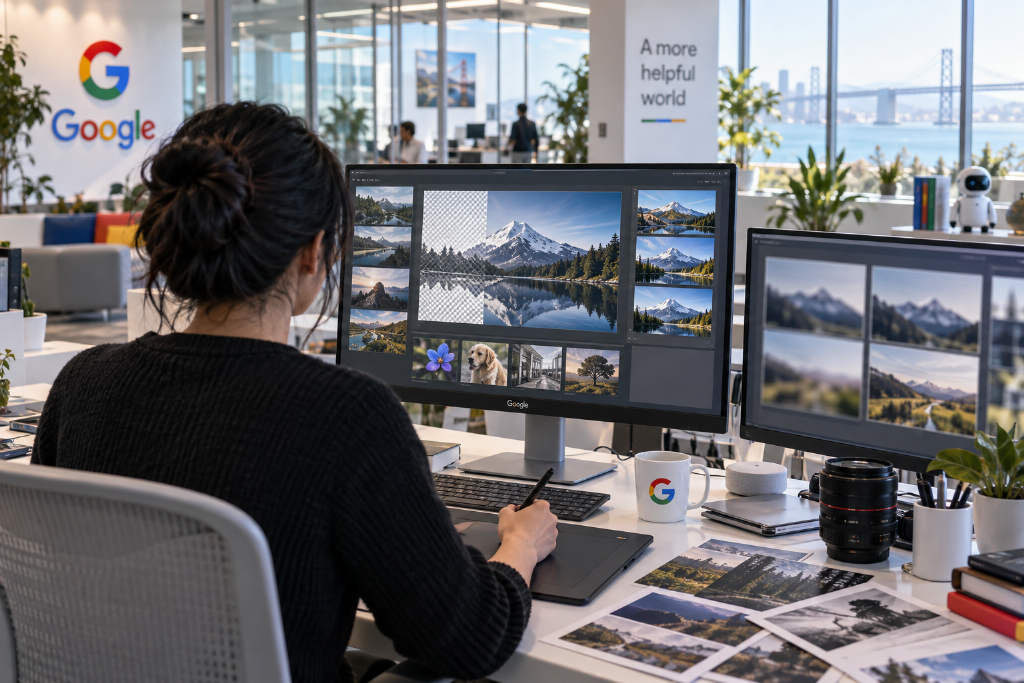
Google has released Nano Banana 2.1, an upgraded version of Nano Banana 2 that remains focused on efficient image generation and editing. The update centers on image quality, instruction following, text rendering, and character consistency across multi-turn workflows. The model is already rolling out across Gemini, AI Mode, AI Studio, Flow, Stitch, and Google Ads, with the API listed as gemini-nano-banana-2.1. Image editing is the main focus of the release. Nano Banana 2.1 supports 1K, 2K, and 4K output, can use up to 14 reference images at once, and is designed to keep as many as four characters and 10 objects consistent. Google also said it improved mask-based editing, infographic layout, image text, and ultra-wide image generation. Users can choose among minimal, medium, and high thinking settings. According to Google’s model card, Nano Banana 2.1 with thinking enabled posted higher point estimates than Nano Banana 2 and Nano Banana Pro across all 10 evaluations, including text-to-image, general editing, multi-person consistency, and mask editing. An independent Arena ranking also showed gains, placing the model fifth in text-to-image and sixth in single-image editing, both the best results among Google models so far. Pricing moved in two directions: image output got cheaper, while input and text or thinking output became more expensive.

Google has officially released Nano Banana 2.1, an upgraded version of Nano Banana 2 that keeps the same focus on efficient image generation and editing. The main changes are in image quality, instruction following, text rendering, and character consistency across multi-turn interactions.

The model has already started rolling out across Gemini, AI Mode, AI Studio, Flow, Stitch, and Google Ads. Its API model name is gemini-nano-banana-2.1.

Image editing is at the center of the update

Nano Banana 2.1 supports 1K, 2K, and 4K output. It can take up to 14 reference images at the same time and maintain consistency for as many as four characters and 10 objects. Google also strengthened mask editing, meaning changes can be limited to selected areas, and said it improved infographic layout, image text, and ultra-wide image generation.

The model now offers three thinking settings: minimal, medium, and high.

Google’s model card and Arena rankings both point to better performance

According to Google’s own model card, Nano Banana 2.1 with thinking enabled posted higher point estimates than Nano Banana 2 and Nano Banana Pro across all 10 evaluations, including text-to-image, general editing, multi-person consistency, and mask editing.

An independent Arena ranking also confirmed a visible improvement. Nano Banana 2.1 is currently ranked No. 5 in text-to-image and No. 6 in single-image editing. Both are the highest placements achieved by a Google model, though it still trails GPT Image 2.5 and GPT Image 2.

Image output is cheaper, but other API costs went up

Pricing moved in the opposite direction from performance. Standard API output prices for 1K, 2K, and 4K images are $0.0336, $0.0504, and $0.0756, respectively, or about half the level of Nano Banana 2.

At the same time, input pricing rose from $0.50 per million tokens to $1.50 per million tokens. Text and thinking output pricing also increased from $3 to $7.50. As the number of reference images rises and thinking intensity gets heavier, the cost advantage created by cheaper image output becomes smaller.

This article was originally published by Bit.Fan. For more cryptocurrency news and market insights, visit www.bit.fan.
200

Disclaimer:

The market information, project data, and third-party content displayed on this platform are for industry information sharing only and do not constitute any form of investment advice or return commitment.

Cryptocurrency trading carries high risks. Users should fully assess their risk tolerance and make independent decisions. All profits, losses, and legal responsibilities are borne by the users themselves.