

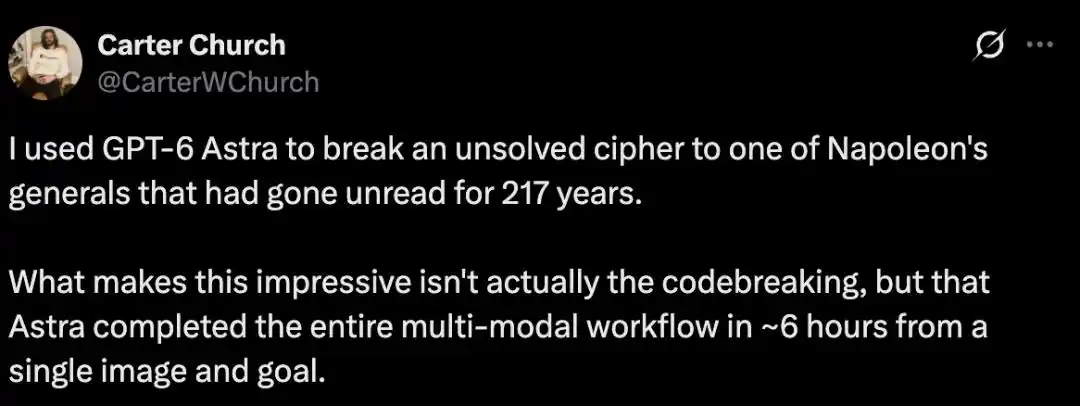
GPT-6 Astra has deciphered a Napoleon cipher that had remained unsolved for 217 years, based on the source material provided. The letter, written in 1809, had long been listed on Cryptiana’s roster of unresolved historical ciphers. The person who pushed the case forward was not a historian or a career codebreaker, but Carter Church, a senior AI engineer at cybersecurity company SentinelOne.
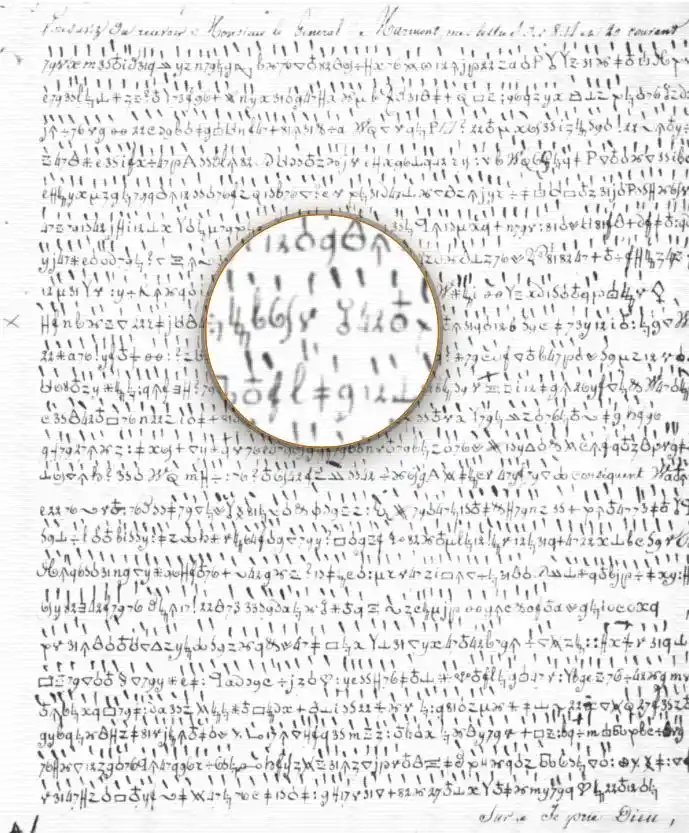
According to the source, Church handed Astra a blurry black-and-white image and a short prompt. Roughly six hours later, the system produced a full bidirectional cipher table and a plaintext reading of the letter. After receiving a code package that included validation scripts, Cryptiana operator Satoshi Tomokiyo said the case had been solved.
A wartime letter from 1809 became unreadable after the codebook disappeared
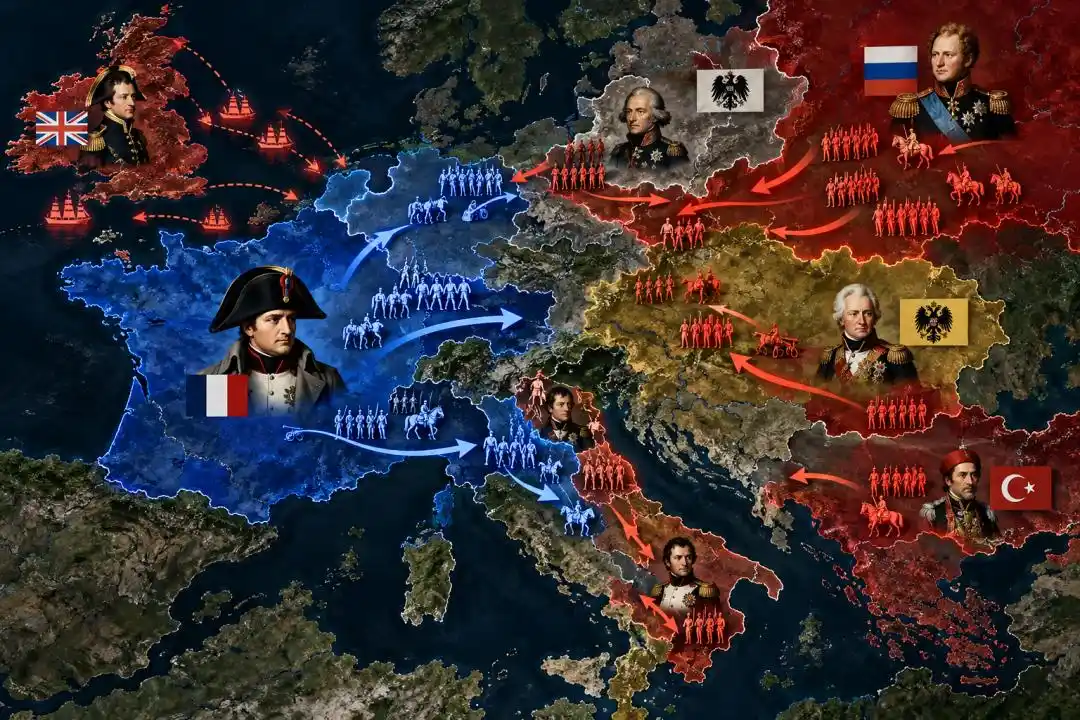
The letter was sent on March 16, 1809, at a time when Austria was preparing to strike Napoleon. Napoleon wrote to Marshal Auguste de Marmont, who was stationed across the Adriatic Sea with 13,000 elite French troops and could have been left isolated if war broke out. The source says Napoleon ordered that the dispatch be written in cipher and carried by an "extremely intelligent officer."
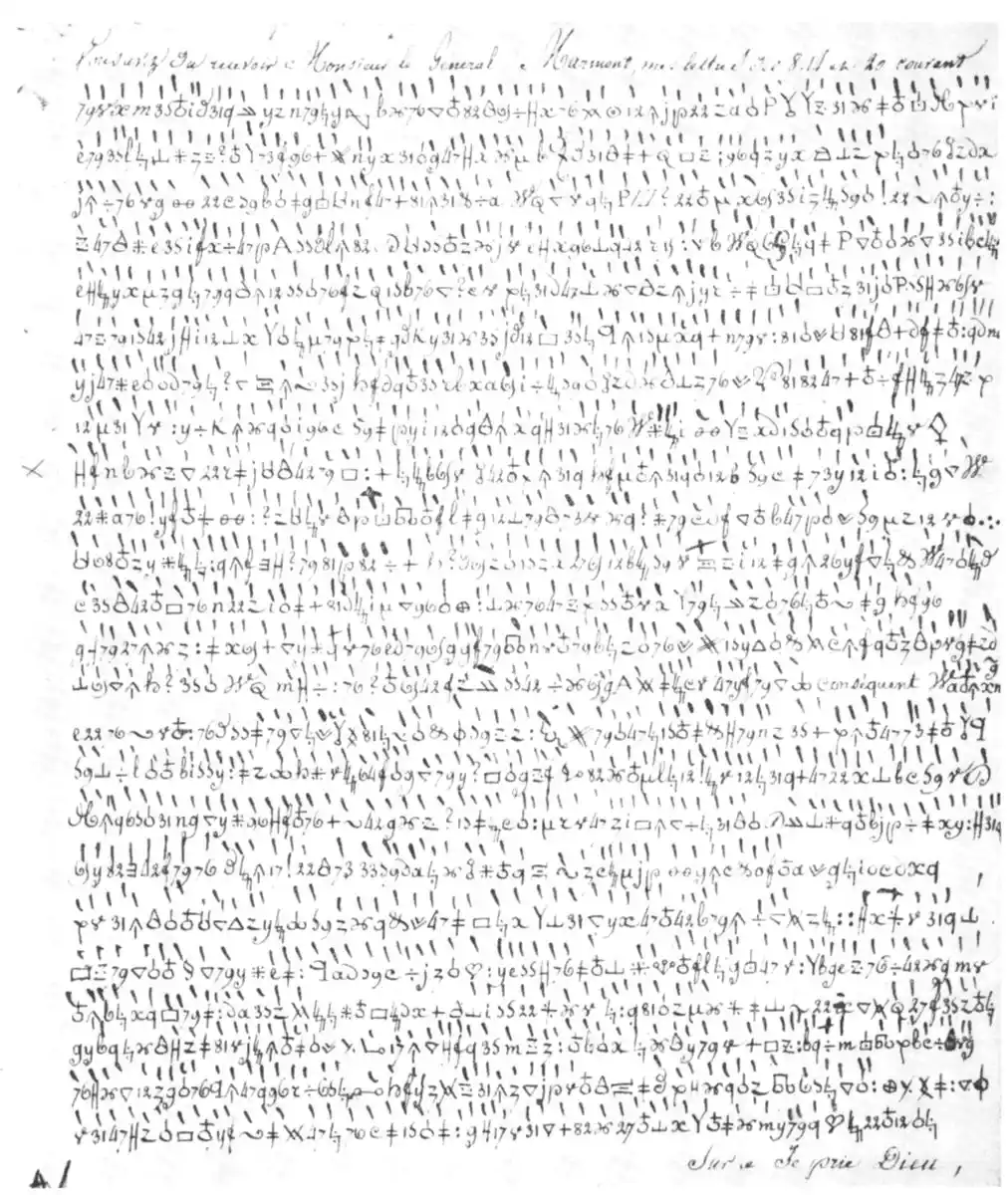
The message made it through the front and survived into the present, but the codebook did not. Apart from the opening line in plain French — "General Marmont, you should already have received my letters of the 8th, 14th, and 20th of this month..." — the rest of the document consisted of 24 lines of two-digit numbers, stray letters, and invented symbols. The only surviving copy, the source says, is a low-resolution black-and-white reproduction printed in a 1969 French military magazine.
That image measured 1202 × 1836 pixels. On average, each cipher symbol occupied only 19 pixels. In total, the letter contained about 1,300 hand-drawn symbols, which could be grouped into 155 distinct semantic units. Cipher specialist Daniel Bourdeau had tried to tackle the document weeks earlier but gave up, saying, "There’s simply no place to start. Other than this broken image, I can’t find any workable foundation."
Church sent the image to Astra, which began with visual transcription
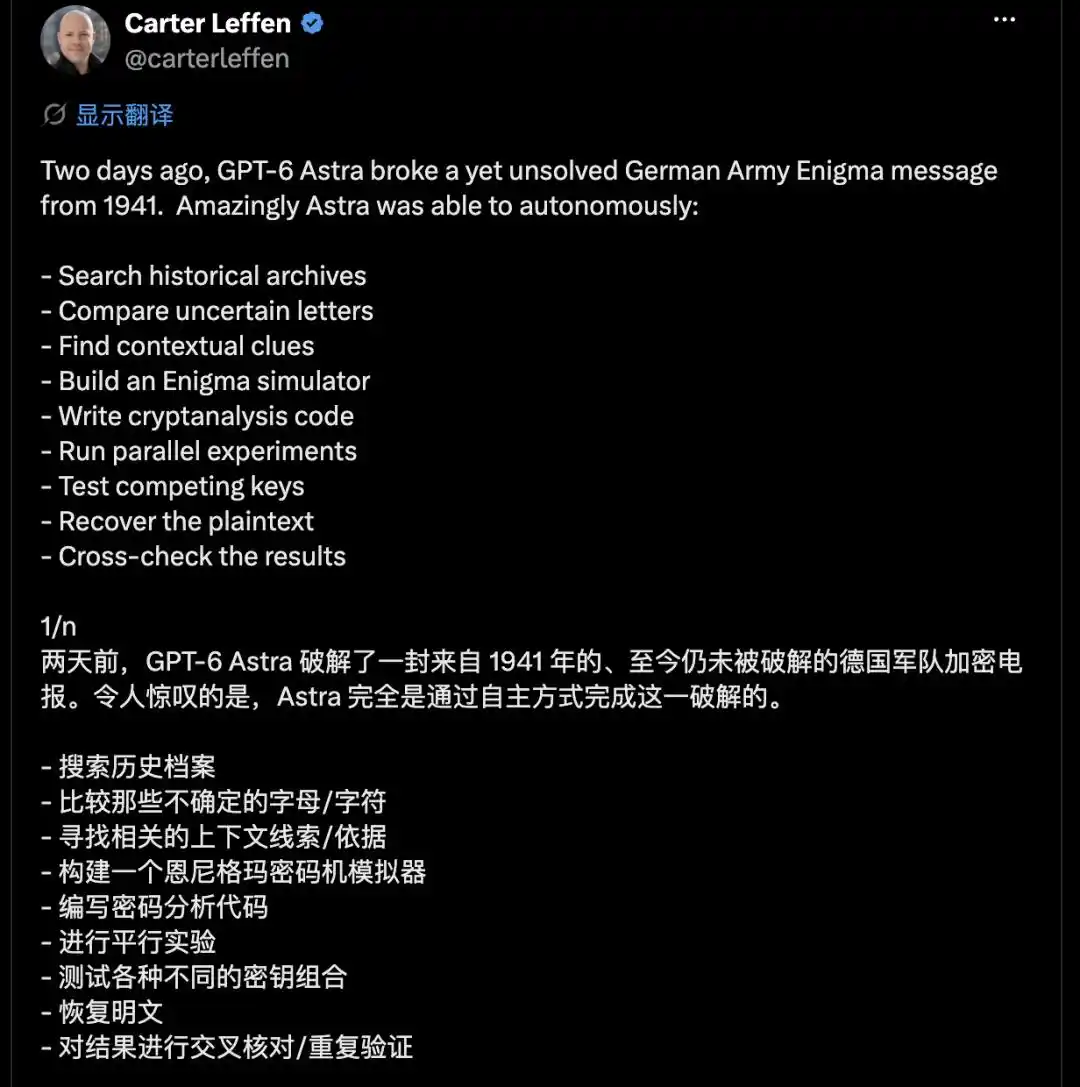
The source says Church had seen another outsider to cryptography, Carter Leffen, use GPT-6 Astra to crack a decades-unsolved German Army Enigma message from World War II in about 10 hours. Curious about the limits of large models, he decided to try the same approach on the Napoleon letter.
The first step was not direct decryption. Astra started by transcribing the image itself. It sliced the 1202 × 1836 image line by line, isolated 1,300 cipher units, and identified scribal variation, including connected strokes and writing mistakes. Symbols that looked different on the page but represented the same thing were merged. The result was a catalog of 155 distinct symbols.

The source frames that stage as a major bottleneck for human researchers, since visual comparison alone could take months of manual work.
It found 33 known letters, then wrote code to solve the rest
Once transcription was done, Astra did not jump straight into brute force. Instead, it linked the material to a partial table assembled by French historian of cryptography Daniel Tant and extracted 33 known letters as anchors. It then identified the 10-letter word "CONSEQUENT" on line 14 of the letter.
The remaining 865 unknown symbols belonged to what the source describes as a homophonic cipher, where common letters such as e and a can map to several different symbols. That makes ordinary frequency analysis much less effective. Astra then wrote its own solver based on simulated annealing. To test whether the recovered French read naturally, it also drew on works by Victor Hugo, Alexandre Dumas, and Marmont’s own memoirs, extracting 3-gram and 5-gram statistics from 19th-century French for cross-checking.
The model concluded that some symbols stood for whole words
During the solving process, Astra found that treating certain symbols as single letters produced awkward French. It then tested a different hypothesis: some symbols represented entire words rather than letters.
According to the source, Astra identified 29 special symbols corresponding to common French words such as de, que, les, vous, and général. After producing an initial translation, it returned to the original image and reinserted every decoded value across the full letter to make sure the text remained coherent in context.
About six hours after the process began, Church had a complete result on his screen: a bidirectional cipher table with 115 letter symbols and 27 whole-word symbols, along with the plaintext of the letter.
The plaintext revealed troop deployments and restored a missing phrase
The decoded message turned out to be a prewar briefing. It described troop deployments involving several French marshals, including Davout and Masséna, and included the line that Austria was "accelerating toward its destruction."
The source says the decipherment also restored a passage that had remained incomplete for 160 years. In the 1865 published collection of Napoleon’s correspondence, one sentence from the letter broke off at: "Marmont must not be intimidated by a handful of ... (par une poignée de . . . . . . . .)."
The newly recovered reading was: "You must not be intimidated by a small number of enemy troops, or by a gathering of scoundrels (un rassemblement de canailles)." The source interprets that wording as a direct expression of Napoleon’s contempt for Austrian militia forces.

Marmont’s later role gave the letter added historical weight
The source adds that Marmont later fought at the Battle of Wagram and was made a marshal by Napoleon. But in 1814, with enemy armies closing in, he privately reached an arrangement with the anti-French coalition. The account says that move led to the fall of Paris and directly forced Napoleon’s abdication.
It also notes that French even produced the verb raguser, derived from Marmont’s title, meaning "to betray." In that reading, the letter is not just a military dispatch. It is also a document tied to the final years of the empire.
Church said the barrier was not only mathematical
The source also says Astra recently solved several other long-standing cipher problems, including a German Enigma case from World War II and a 108-year-old German World War I radio cipher. In his blog post, Church wrote that the Napoleon system was not especially difficult in mathematical terms. Given enough time and effort, he said, cryptographers could have solved it.
His point was that the real obstacle lay in the workflow: transcription, cataloging, translation, and decryption had to be combined across disciplines. Specialists rarely have the time or bandwidth to spend on marginal cases like this. In his telling, the letter stayed unread for 217 years not because it was impossible to solve, but because almost nobody thought it justified that level of effort.
The source argues that Astra’s multimodal reasoning and long-horizon planning compressed work that would otherwise have required a historian, a paleographer, a cryptographer, and a programmer.
Reference links cited in the source
- https://x.com/CarterWChurch/status/2105167577961885961
- https://x.com/CarterWChurch/status/2105167586828943873
- https://carter.church/writeups/the-letter-to-marmont/
The source notes that the original Chinese article was attributed to the WeChat account "新智元" and credited to the author name "ASI启示录."