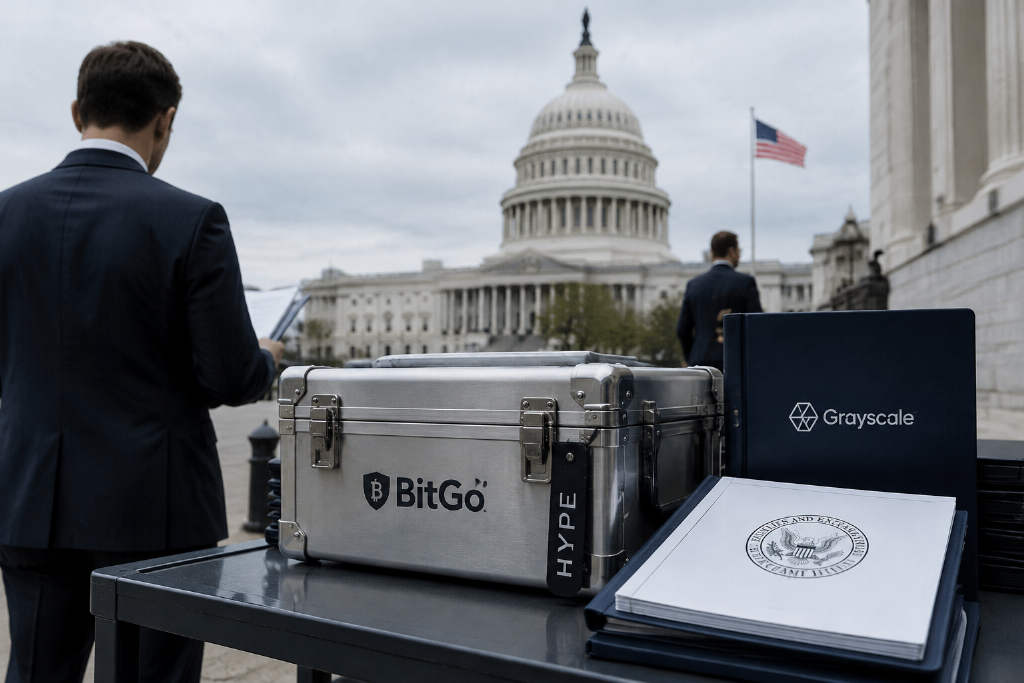
Grayscale has added BitGo Bank and Trust as an additional custodian for its HYPE spot exchange-traded fund, according to a filing disclosed to the U.S. Securities and Exchange Commission. The asset manager signed the agreement with the nationally chartered U.S. bank on Sept. 30 and disclosed the move in a Form 8-K. Grayscale said the decision was part of its ongoing risk management measures as the ETF’s assets under management increased. As of Oct. 6, the HYPE spot ETF held about $215 million in assets under management. The product was the largest of the three HYPE spot ETFs listed in the United States. The update was cited by Techub News, with CoinPost referenced as the source mentioned in the brief.
Grayscale signed an agreement with BitGo Bank and Trust on Sept. 30 to add the nationally chartered U.S. bank as an additional custodian for its HYPE spot ETF.
The move was disclosed in a Form 8-K filed with the U.S. Securities and Exchange Commission. Grayscale said the added custodian was part of its ongoing risk management measures as assets under management for the ETF expanded.
As of Oct. 6, the fund had about $215 million in assets under management, making it the largest of the three HYPE spot ETFs listed in the United States. Techub News carried the brief and cited CoinPost.
This article was originally published by Bit.Fan. For more cryptocurrency news and market insights, visit www.bit.fan. Disclaimer:
The market information, project data, and third-party content displayed on this platform are for industry information sharing only and do not constitute any form of investment advice or return commitment.
Cryptocurrency trading carries high risks. Users should fully assess their risk tolerance and make independent decisions. All profits, losses, and legal responsibilities are borne by the users themselves.