

More than 70% of DAO treasury assets are still held in native tokens, according to GSR Global Head of Markets Spencer Hallarn, a setup he says leaves protocols exposed to simultaneous declines in treasury value, revenue generation, and on-chain activity when market conditions weaken.
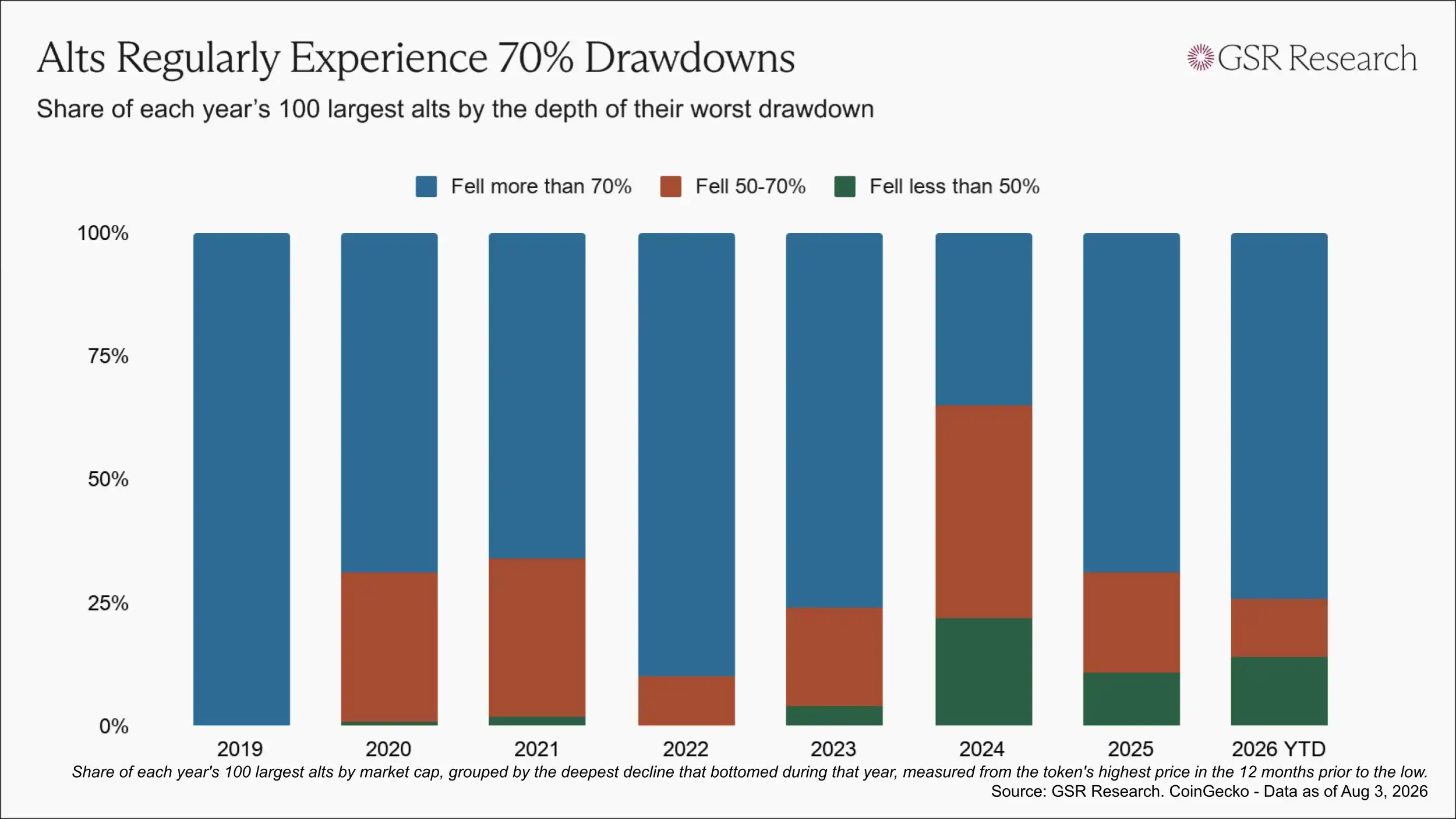
The commentary, published by GSR and carried by MarsBit in a translated version by TechFlow, argues that the same pattern shows up in every market cycle. During bull markets, rising token prices help fund roadmaps and support budgets. Once the cycle turns, the treasury that was meant to finance development can become the project’s largest source of risk.
Native-token concentration makes crypto treasuries procyclical
Hallarn says crypto treasuries are procyclical by design because most DAOs keep the bulk of their reserves in their own tokens, while allocations to stable assets and diversified reserves remain relatively low.
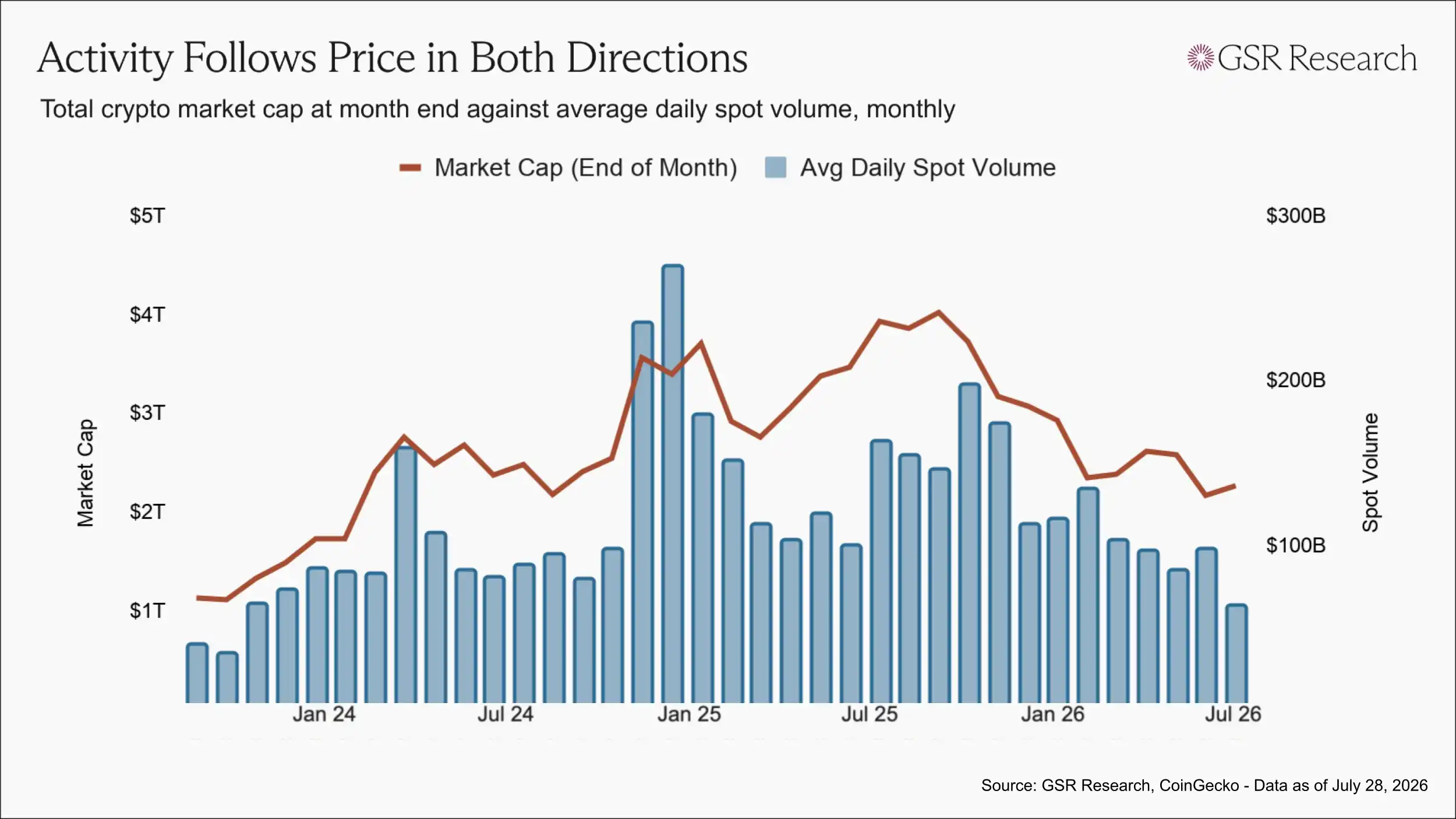
That structure creates a compounding problem in weaker markets. As token prices fall, treasury value declines. At the same time, protocol activity softens, fee generation slows, and liquidity worsens. In Hallarn’s framing, the treasury becomes least valuable at the exact moment the project needs it most.
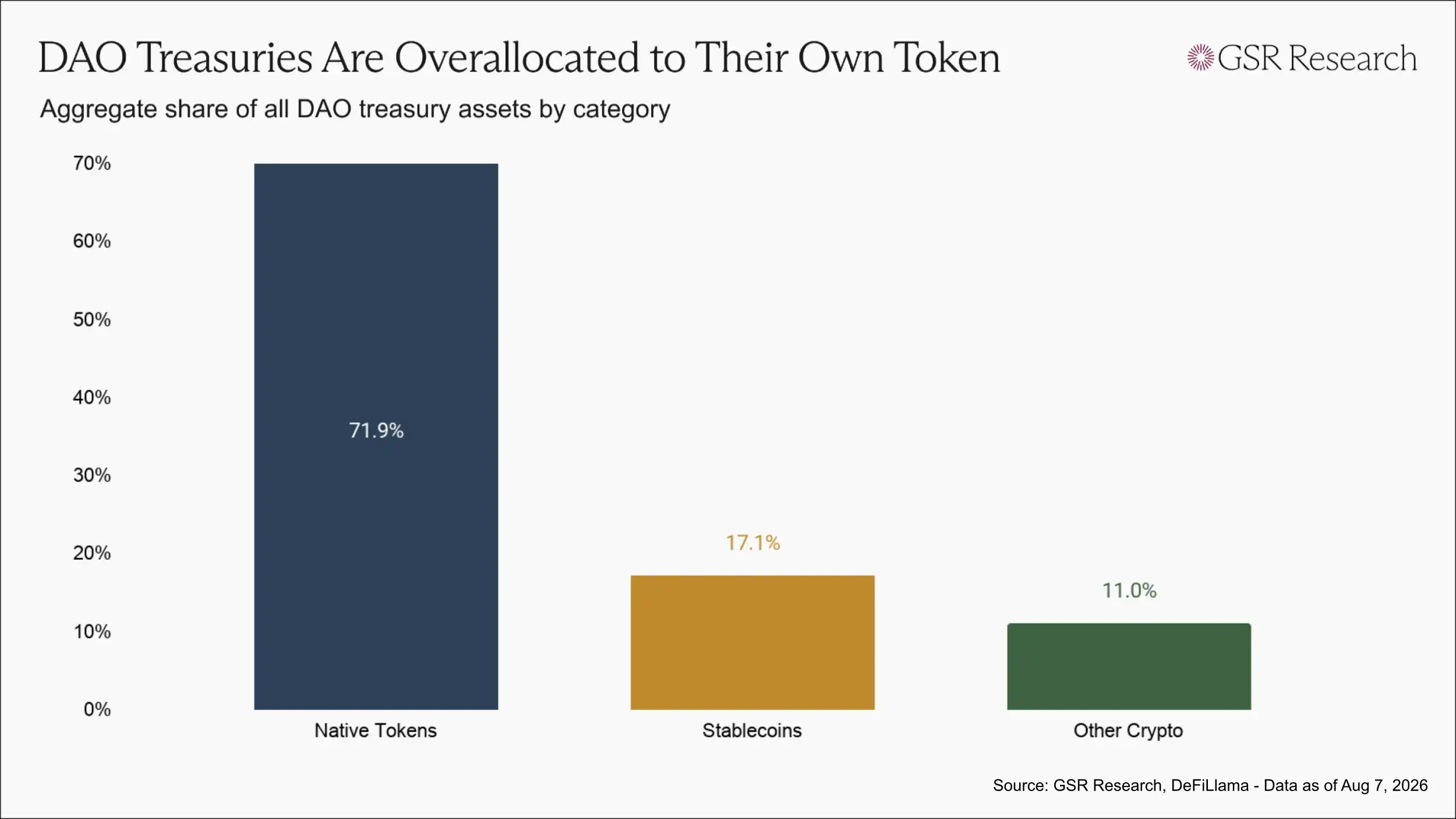
GSR says teams often believe they have enough treasury resources to withstand a difficult market, but both sides of the balance sheet are tied to the same underlying risk.
Operating costs do not fall with the token price
The note says salaries, audits, infrastructure, and grants are typically dollar-denominated. They do not decline just because a token does. Projects that rely on token sales to fund operations therefore have to sell more tokens to raise the same amount of money when market conditions deteriorate.
That can add another layer of pressure. Selling more supply into a weak market can push the price lower, which then increases the number of tokens needed for the next quarter’s funding. Hallarn argues that treasury depletion can move much faster than a simple drawdown chart would suggest.
For that reason, he says the first question GSR asks clients is straightforward: if the market falls for another 12 months, can the treasury still fund the roadmap?
Many projects hedge only after prices have already fallen
Hallarn says GSR’s OTC desk has seen the same pattern across cycles. In bull markets, very few projects want to hedge because option premium looks like a sacrifice of upside. After a selloff begins, conversations change quickly and demand for protection rises almost overnight.
That is also when protection becomes more expensive. GSR says implied volatility typically rises after the market falls, increasing the cost of downside hedges just as demand peaks. Hallarn compares that to buying insurance only after the storm has already arrived.
His conclusion is that hedging should be treated as an ongoing treasury policy rather than a last-minute move driven by fear. Projects do not need to predict the market’s next step, he says. They need to make sure known liabilities can still be funded across different price outcomes.
GSR points to collars as a way to protect downside without selling spot holdings
Because crypto volatility is usually more expensive than volatility in traditional assets, Hallarn says one of the structures GSR executes most often is the collar. In that structure, a project sells a call option above the current market price and uses the premium received to buy a put option below the current price.
That creates a defined range for the token. Value is protected below the put strike, while the project gives up gains above the call strike. If the structure is designed well, the two legs can offset each other and the trade can be done at zero cost, according to GSR.
Hallarn says that is one reason collars are a preferred hedging tool for many projects. Buying puts outright consumes stable reserves, and those are often the same reserves the hedge is intended to protect.
He adds that a collar is not the same as selling. The project keeps exposure within a chosen range and exchanges upside above the call strike for a known floor. When a team sets a dollar-based budget a year in advance, that can turn a volatile asset into a range the finance function can actually plan around.
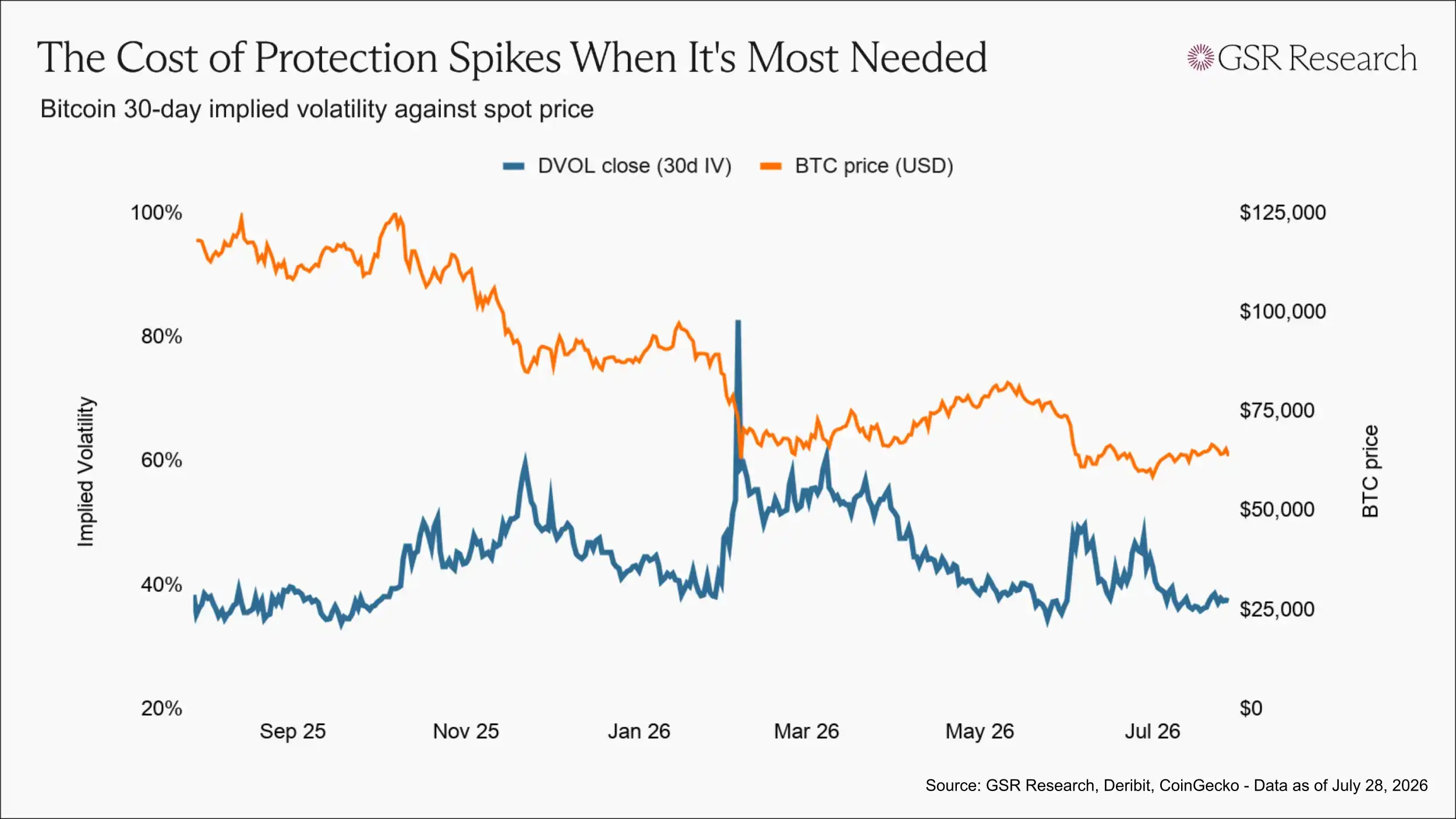
Timing still matters. Hallarn gives a simple example: a project that sets a floor when its token is at $10 protects most of that value, while a project that waits until the token falls to $4 will likely establish a floor near $4. The structure can still work in both cases, but it cannot restore value that has already been lost.
Treasury construction shapes operating runway
According to GSR, projects that make it through multiple cycles usually split treasury assets into separate buckets with clear roles.
Operating reserves are held in cash or stable assets and used for salaries and day-to-day expenses. Longer-term crypto holdings remain invested, with hedges applied where appropriate. Strategic positions can stay intact without putting the organization’s survival directly at the mercy of market swings.
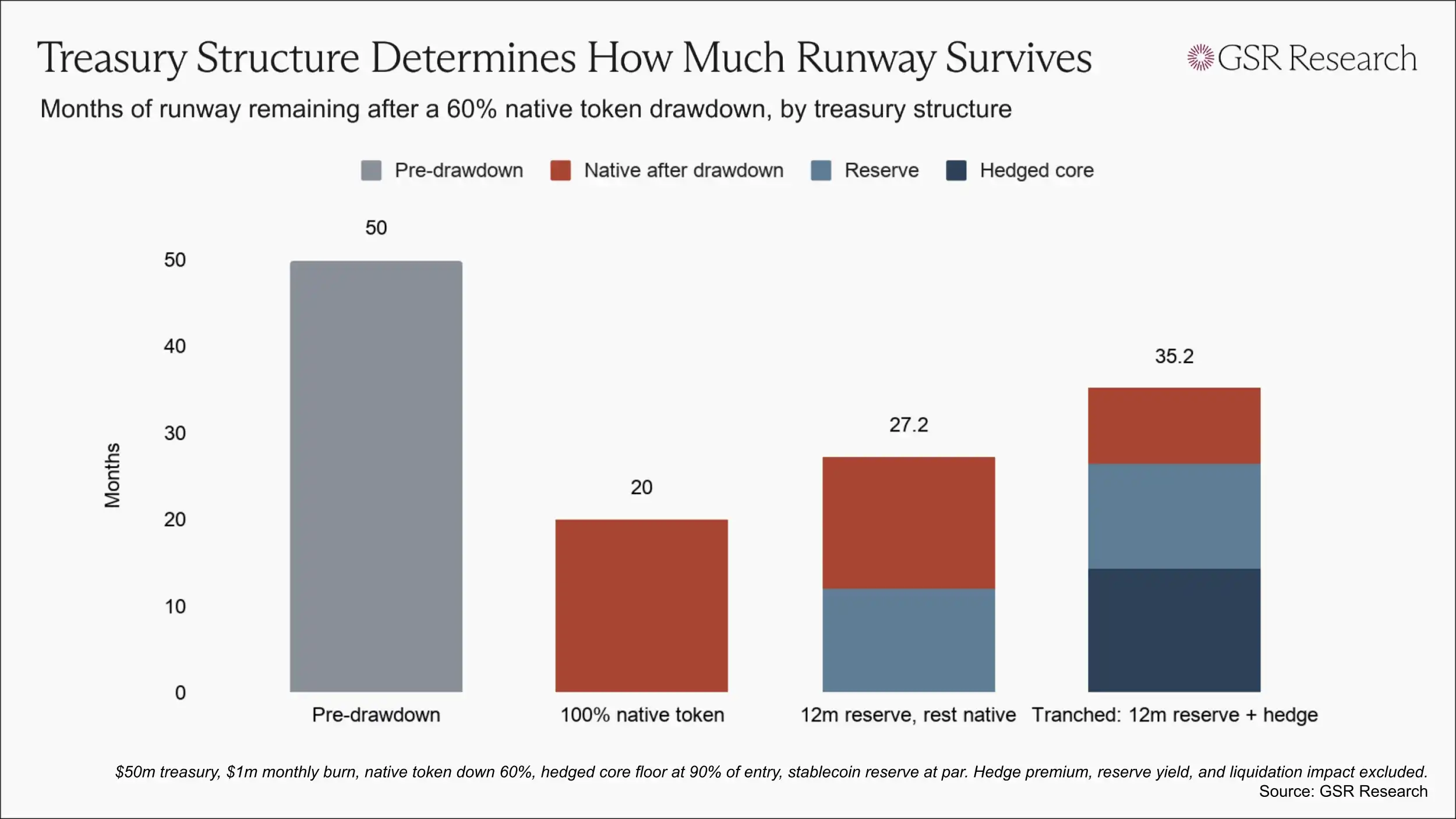
Hallarn says a treasury held entirely in native tokens can lose years of runway in a major drawdown. Separating reserves and protecting long-term holdings can preserve much more runway even without assuming any market recovery. His message is simple: survival comes before growth.
What GSR says it provides
GSR says it works with foundations, DAOs, and protocols on OTC execution, collars and other customized derivatives, structured hedging solutions, and block trades. The firm says those transactions are tailored to each treasury’s liquidity profile, governance structure, vesting schedule, operating budget, jurisdictional limits, and token concentration in order to manage concentration, market risk, and liquidity.
It also says its activity in these markets includes execution and structuring for treasury transactions across different market conditions.
Disclosures and risk statements
GSR says the material is provided for information only and does not constitute advice or a recommendation to buy, sell, or hold any investment mentioned. It also says the material is intended only for sophisticated institutional investors and does not constitute an offer, solicitation, or commitment to enter into any transaction or to provide investment services where doing so would be unlawful. The firm says it is not acting as an adviser or fiduciary in providing the material.
The company also says the material is not an independent research report and was not prepared under legal requirements designed to promote the independence of investment research, including those associated with the FCA, FINRA, or CFTC. It says its own interests may conflict with those of counterparties, that it may trade investments discussed in the material for its own account, may take views opposite to those expressed, and may hold positions in related instruments.
GSR says the information is based on sources believed to be reliable but gives no guarantee as to accuracy or completeness. Any opinions or estimates reflect the author’s judgment as of the publication date and may change without notice, and the firm says it does not plan to update the information.
The note also says trading and investing in digital assets involve substantial risk, including price volatility and limited liquidity, and may not be suitable for all investors. GSR says it accepts no liability for direct or indirect losses arising from use of the material, and that the content is copyrighted and may not be obtained, copied, or redistributed without prior written permission. It adds that separate regulatory legal disclosures for the United States, the United Kingdom, and Singapore are available elsewhere.