

At about 4:30 a.m. on Aug. 7, an alarm call came from the Jade Park luxury residential tower in Asuncion, Paraguay. Police arrived and found a man who had fallen from a high floor at the base of the building. His body was naked and covered with a black plastic sheet.
Officers then entered an apartment on the 30th floor, where they found an open door and a disordered interior. No other person was found at the scene. Apartments on the 27th and 30th floors tied to the deceased were later examined for evidence, and police have not announced any conclusion.
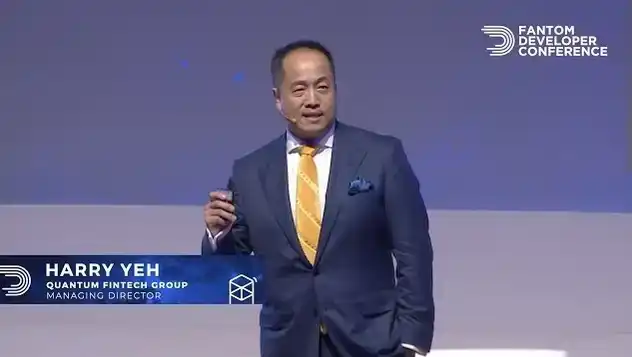
The man was soon identified as Harry Chun Tak Yeh, a crypto investor and project founder of Chinese descent, also known by the Chinese name Yeh Junde.
From early bitcoin buyer to public-facing crypto founder
Yeh maintained a personal page listing Tomb, LIF3, L3 Reserve, L3USD and his Quantum Fintech Group. The figures shown on that page totaled more than $2 billion.
His profile in crypto began before Tomb became widely known. Yeh had said he bought bitcoin in 2013 when BTC was about $60. He later entered the bitcoin over-the-counter and block trading market as managing partner at Binary Financial. From at least 2015, he regularly appeared at industry events including Coin Congress and Money20/20, speaking on bitcoin prices, liquidity and institutional capital. By 2022, he was being interviewed by Bloomberg as founder of Quantum Fintech Group about whether the crypto market was entering a 「supercycle」.
Tomb did not put him in front of the public for the first time, but it gave him a larger stage.
Tomb’s rise and collapse
Tomb originally operated on Fantom. Its core design was an algorithmic token pegged to FTM: when the token traded above the peg, the system expanded; when it fell below the peg, contraction and waiting replaced yield.
At its peak, the protocol held more than $1.6 billion. By Aug. 10, 2026, two days after news of Yeh’s fatal fall surfaced, that figure had dropped to less than $30,000, leaving the project close to zero.
The same pattern appeared across other related projects. LIF3 and L3USD were also described as essentially wiped out. The source report added that even the Fantom network those projects ran on was close to disappearing, let alone the value of protocols built there.
The damage also shows up in posts from retail users. A quick search on Reddit brings up threads such as 「Is TOMB finance dead?」 and 「Is the TOMB/FTM LP Dead now?」 One user wrote that about $1,200 placed in the TOMB/FTM liquidity pool shrank sharply after the peg broke. Another said an investment of roughly $2,000 had been reduced to almost nothing.
A death during a deep crypto bear market
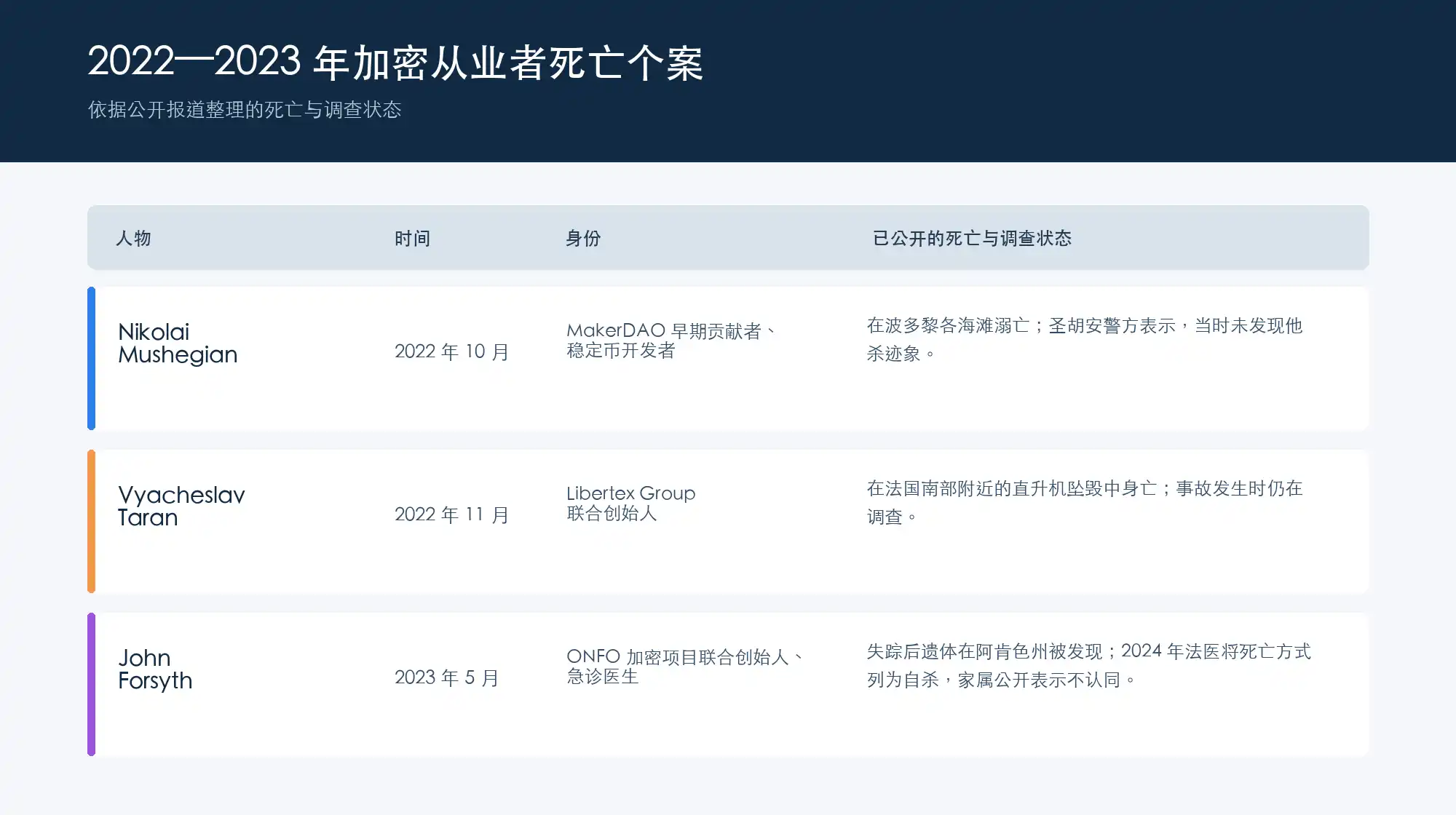
The report frames Yeh’s death within a broader bear-market pattern. It says deaths seem to appear alongside market downturns, and that the signal was especially clear in the bear market that followed the collapse of FTX in 2022.
It also says there is still no evidence that these incidents were homicides. In the absence of proof of murder, speculation often grows. During falling markets, an unpublished autopsy, a helicopter still under investigation, or a fearful final post on social media can all be pulled into the making of a larger mystery. The report places Yeh in that atmosphere as well.
After 100 project deaths, capital and people are leaving
The article argues that 2026 has become one of the harshest bear markets crypto has faced, with both money and people flowing out. According to figures cited in the piece, more than 100 crypto projects have already shut down, gone bankrupt or permanently ceased operations, spanning trading platforms, wallets, lending protocols, NFT marketplaces and blockchains.
Losses from security incidents continue to pile up. PeckShield data cited by the report shows hacks and scams caused about $4.04 billion in losses in 2025. In the first half of 2026 alone, roughly $972 million was stolen from DeFi.
Developers are leaving too, and some moved before their projects ever reached liquidation. Move language creator and Mysten Labs co-founder Sam Blackshear recently said he was joining Anthropic to work on defensive security research. OpenSea co-founder Alex Atallah went on to start OpenRouter, while Oasis Labs founder Dawn Song joined Meta’s AI team.
As of March 2026, weekly code commits in crypto were down about 75% from the start of 2025, and the number of active blockchain developers had fallen 56%.
The piece ends back in Asuncion, at the open door on the 30th floor and police still moving in and out in search of clues. At the same time, it says, those who remain in crypto are still trying to reopen the door to the industry itself.