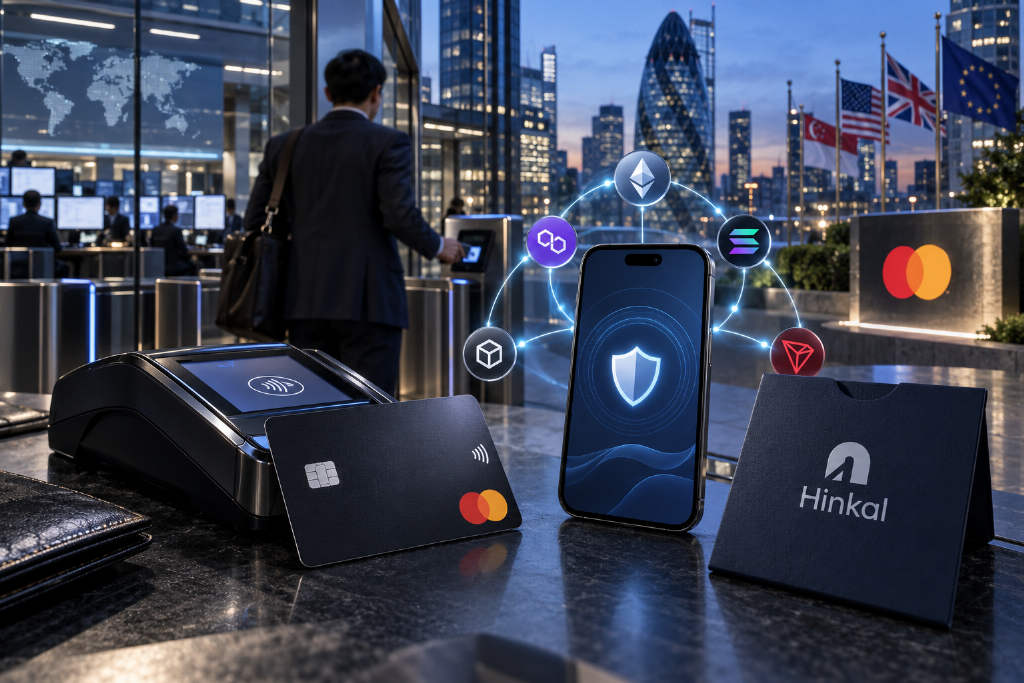
Privacy infrastructure provider Hinkal said on Oct. 9, 2026 that it has joined Mastercard’s crypto partner program, a network designed to connect crypto and blockchain teams with Mastercard and its global payments rails. The program includes stablecoin issuers and infrastructure providers, fiat on- and off-ramp services, crypto card enablers, and blockchain and blockchain service providers.
Mastercard describes the initiative as a way to turn technical capabilities into compliant use cases that can operate in global commerce. Some participants may also gain access to financial institutions in issuing and acquiring networks, along with regulatory and compliance support aligned with global standards. Use cases named in the announcement include cross-border payments and remittances, B2B transactions, money movement and settlement flows, stablecoin payments, and card programs that let users spend digital assets at everyday merchants.
Hinkal said its product can add embedded privacy features to wallets, payment platforms, and blockchains. It supports stablecoin settlement in private balances and uses zero-knowledge proofs to move funds without exposing the amount, sender, or recipient during on-chain verification. The company said the capability is live on Ethereum, Polygon, Solana, TRON, and other major EVM chains, with access available through SDKs and APIs. Existing integrations include Polygon Wallet’s Private Send, Hinkal private send in the Tether Wallet Development Kit, Turnkey wallets using the Hinkal SDK for privacy features, and Avvio running Hinkal private payments in its own interface.
According to ChainCatcher, privacy infrastructure provider Hinkal announced on Oct. 9, 2026 that it has joined Mastercard’s crypto partner program.
The program links crypto and blockchain teams with Mastercard teams and its global payments network. Its members include stablecoin issuers and infrastructure providers, fiat conversion service providers, crypto card support providers, and blockchain and blockchain service providers. Mastercard positions the program as a way to convert technical capabilities into compliant use cases for global commerce.
Program scope includes payments and compliance support
Some members can also access financial institutions across issuing and acquiring networks and receive regulatory and compliance support aligned with global standards. The use cases listed in the announcement include cross-border payments and remittances, B2B transactions, money movement and settlement flows, stablecoin payments, and card programs that allow users to spend digital assets at ordinary merchants.
Hinkal focuses on embedded privacy for wallets, payment platforms, and chains
Hinkal said it can provide embedded privacy capabilities for wallets, payment platforms, and blockchains. Stablecoins can be settled in private balances and transferred with zero-knowledge proofs, allowing on-chain verification of transfers without disclosing the amount, sender, or recipient.
The capability is already live on Ethereum, Polygon, Solana, TRON, and other major EVM chains, and can be integrated through SDKs and APIs.
Existing integrations include Polygon Wallet and Tether Wallet Development Kit
Current integrations include Private Send in Polygon Wallet, Hinkal private send in the Tether Wallet Development Kit, Turnkey wallets that can add privacy features through the Hinkal SDK, and Avvio, which runs Hinkal private payments in its own interface.
This article was originally published by Bit.Fan. For more cryptocurrency news and market insights, visit www.bit.fan. Disclaimer:
The market information, project data, and third-party content displayed on this platform are for industry information sharing only and do not constitute any form of investment advice or return commitment.
Cryptocurrency trading carries high risks. Users should fully assess their risk tolerance and make independent decisions. All profits, losses, and legal responsibilities are borne by the users themselves.