
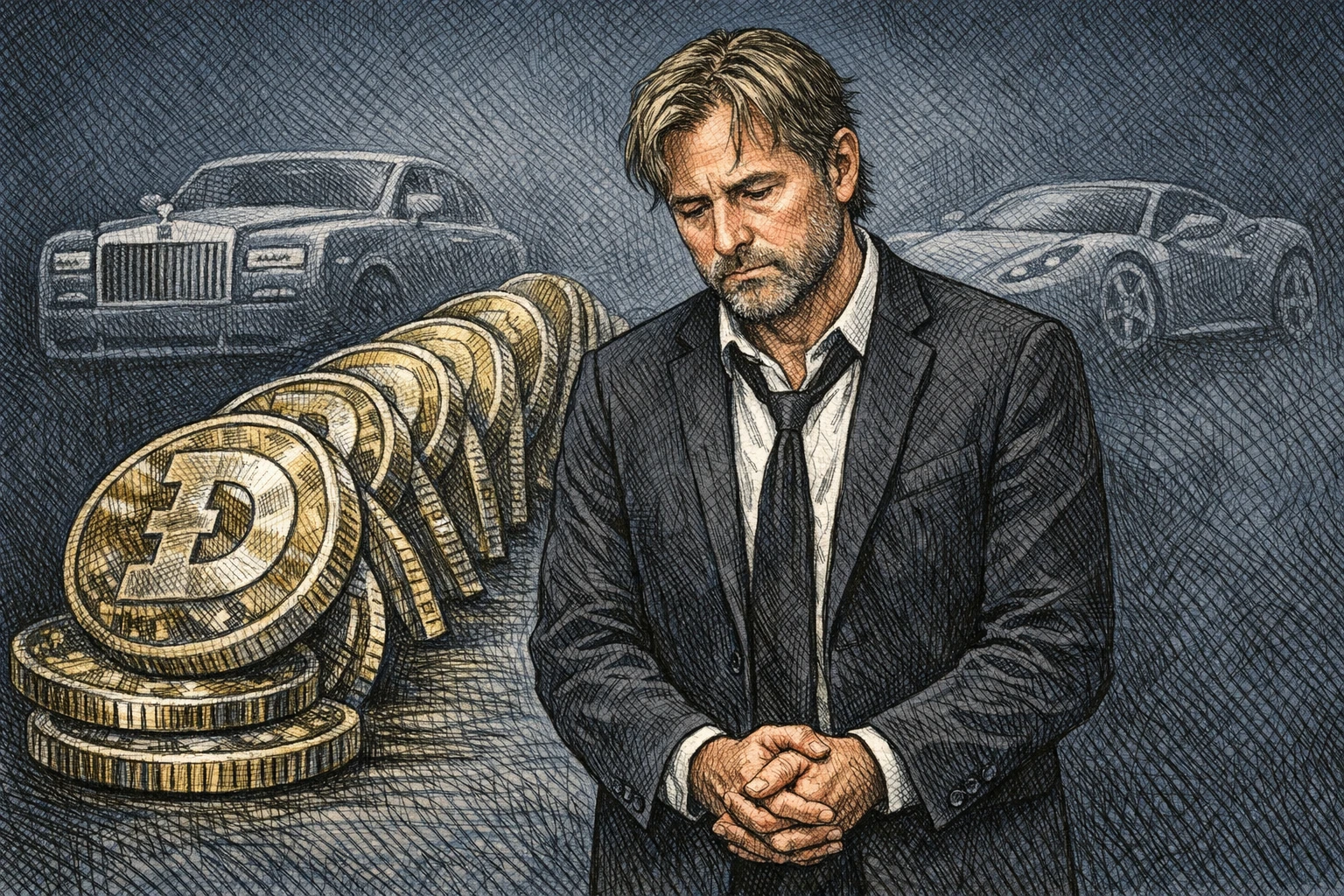
Carl Rinsch, the Hollywood director behind Keanu Reeves' '47 Ronin', was sentenced to 30 months in federal prison on Monday (June 29) for fraud and money laundering. He diverted $11 million provided by Netflix for a sci-fi series into stock options and Dogecoin (DOGE), turning $4 million into a $27 million windfall during the 2021 meme coin frenzy.
Fake Production Budget, Real Crypto Bet
Netflix originally paid Rinsch's production company over $44 million to produce the sci-fi series 'White Horse' (later renamed 'Conquest'). During the 2020 pandemic, Rinsch requested an additional $11 million, claiming he needed more funds to complete filming. Instead, he transferred the money to a personal brokerage account. After losing $5.9 million on stock options in weeks, he moved the remaining $4 million to Kraken and went all-in on Dogecoin. The gamble paid off spectacularly in May 2021, yielding a profit of roughly $27 million. In an email to Kraken customer support, Rinsch wrote: "Thank you, God bless crypto."
Luxury Spree: Five Rolls-Royces and a Ferrari
With the illicit gains, Rinsch embarked on a massive spending spree. According to the indictment, he spent about $10 million on personal luxuries, including $2.4 million on five Rolls-Royces and a Ferrari, $3.8 million on furniture and antiques, $1.8 million on credit card bills, $1 million on lawyers to sue Netflix, and $652,000 on watches and clothing (including a single watch worth $388,000).
Court Rejects Leniency, Orders Full Repayment
Rinsch never completed the series and did not return Netflix's money. He was arrested in March 2025 and convicted on seven counts in December, including wire fraud, money laundering, and illegal property transactions, facing a maximum of 90 years. Prosecutors sought a 5-year sentence, while Rinsch's defense cited mental health issues and requested no jail time. Even Keanu Reeves wrote a letter to the court pleading for leniency. Judge Jed Rakoff handed down the 30-month term — far below the government's request — plus three years of supervised release and ordered full restitution of $11 million to Netflix. The case closes a bizarre chapter linking Hollywood production to crypto gambling.