
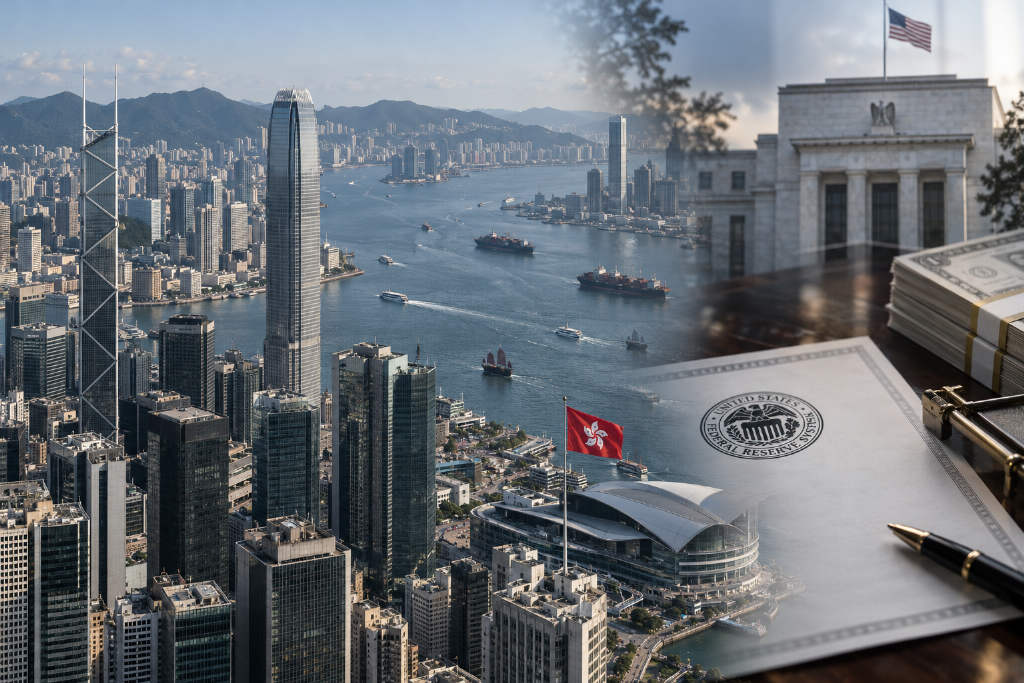
John Moolenaar, the Republican chair of the U.S. House Select Committee on the Chinese Communist Party, sent a letter to the Federal Reserve last week asking it to review the Hong Kong Monetary Authority’s eligibility for the Fed’s Foreign and International Monetary Authorities repo facility, according to an exclusive CNBC report. The facility lets central banks borrow short-term U.S. dollars from the Fed by pledging U.S. Treasuries as collateral.
A Fed spokesperson said the central bank had received the letter and would respond. The HKMA declined to comment.
Moolenaar says Hong Kong no longer warrants separate treatment
CNBC said Moolenaar asked the Fed to consider whether the legal and institutional autonomy that once distinguished Hong Kong from mainland China, and gave it preferential treatment under U.S. law, has been “fully dismantled.” He also asked the Fed to examine that question alongside China’s recent efforts to promote the renminbi as an alternative to the U.S. dollar.
The report said the People’s Bank of China launched its own version of a FIMA-style tool in June this year, allowing central banks to borrow Chinese government bonds on a short-term basis. In July, PBOC Governor Pan Gongsheng said Hong Kong was the first user.
Moolenaar wrote: "The Federal Reserve’s own facility should not passively participate in this process, nor should it allow the CCP to copy and paste the American system for its own use."
He also said Hong Kong borrowed as much as $1.4 billion from the facility in May 2020 and has not made material use of it since then. In the letter, he argued that the limited current financial exposure makes this the right time for a careful review rather than a rushed response during a crisis.
Economists question whether curbs would help the dollar
The FIMA facility was created during the 2020 pandemic to let countries obtain dollar liquidity without selling U.S. Treasuries in a crisis. The HKMA was among the first central banks approved to use it. According to the Fed’s own description, the facility provides dollar liquidity through repo transactions.
CNBC cited the latest Fed data showing that, as of last Wednesday, no institution was using the facility. The Fed publishes only aggregate usage and does not disclose borrowing details for individual central banks.
Eswar Prasad, a Cornell University economics professor, told CNBC that if the FIMA repo facility has any effect, it is to raise the dollar’s standing in global finance and reinforce the role of U.S. Treasuries as a global safe-haven asset. On that basis, he said it is hard to see how restricting access would strengthen the dollar’s position or remove any threat.
Shehzad Qazi, managing director at China Beige Book, said Fed Chair Warsh is unlikely to take action at a sensitive moment if it could be seen as intervening in China policy. But he said the episode suggests Congress may be starting to engage with China policy in new ways.
Dollar still dominates global reserves
CNBC, citing International Monetary Fund data, said the U.S. dollar accounts for 56.7% of official foreign exchange reserves held by central banks worldwide, while the renminbi accounts for 2.1%.