
The House Ways and Means Committee will consider crypto tax legislation on Wednesday that would exempt some digital-asset transaction fees from capital-gains calculations and apply new federal tax rules to stablecoins, staking, mining and digital asset trading.
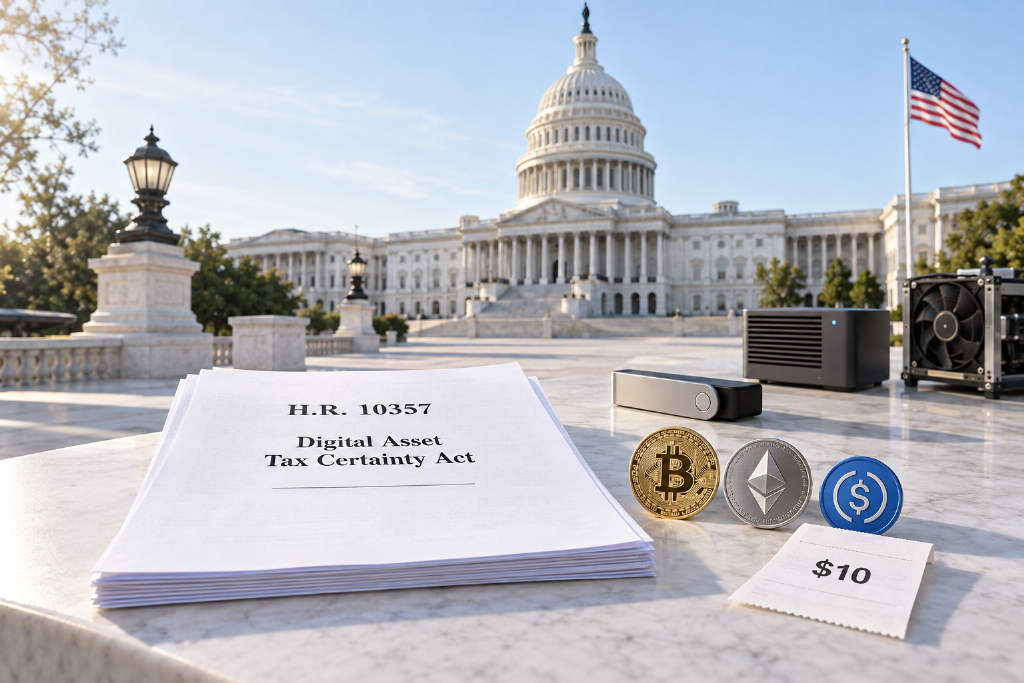
Committee Chairman Jason Smith, a Missouri Republican, introduced the 114-page Digital Asset Tax Certainty Act, H.R. 10357. The committee has scheduled its markup for 10 a.m. Eastern on Sept. 16.
Markup set for Sept. 16
During a markup, committee members debate a bill, offer amendments and decide whether to send it to the full House.
The proposal would create a de minimis exemption for qualifying network or transaction fees worth $10 or less. In tax law, de minimis refers to an amount considered too small for standard tax treatment.
That matters because paying a blockchain fee with crypto can create a taxable event under current Internal Revenue Service treatment, which classifies digital assets as property. If the bill is approved, taxpayers would be able to disregard gains or losses linked to eligible fees.
Stablecoins, staking and mining are also covered
Lawmakers reviewed small-transaction exemptions and six other crypto tax proposals during a June hearing on digital asset taxation.
H.R. 10357 would use the redemption value of qualifying dollar-pegged stablecoins as their tax basis when those tokens are purchased near that value. It would also tax mining and staking rewards as ordinary income and let certain investment trusts stake assets without putting their tax status at risk.
An earlier proposal supported by crypto industry groups would have deferred income recognition for some newly created mining and staking rewards. That language is not included in H.R. 10357.
Bill also expands wash-sale treatment
The legislation would extend wash-sale rules to digital assets, exempt qualifying crypto loans from being treated as sales, and establish a Treasury program that would let eligible taxpayers amend prior returns and pay outstanding taxes, interest and penalties.
The measure still needs to clear the committee and then win approval from the House, Senate and President before it can take effect.