
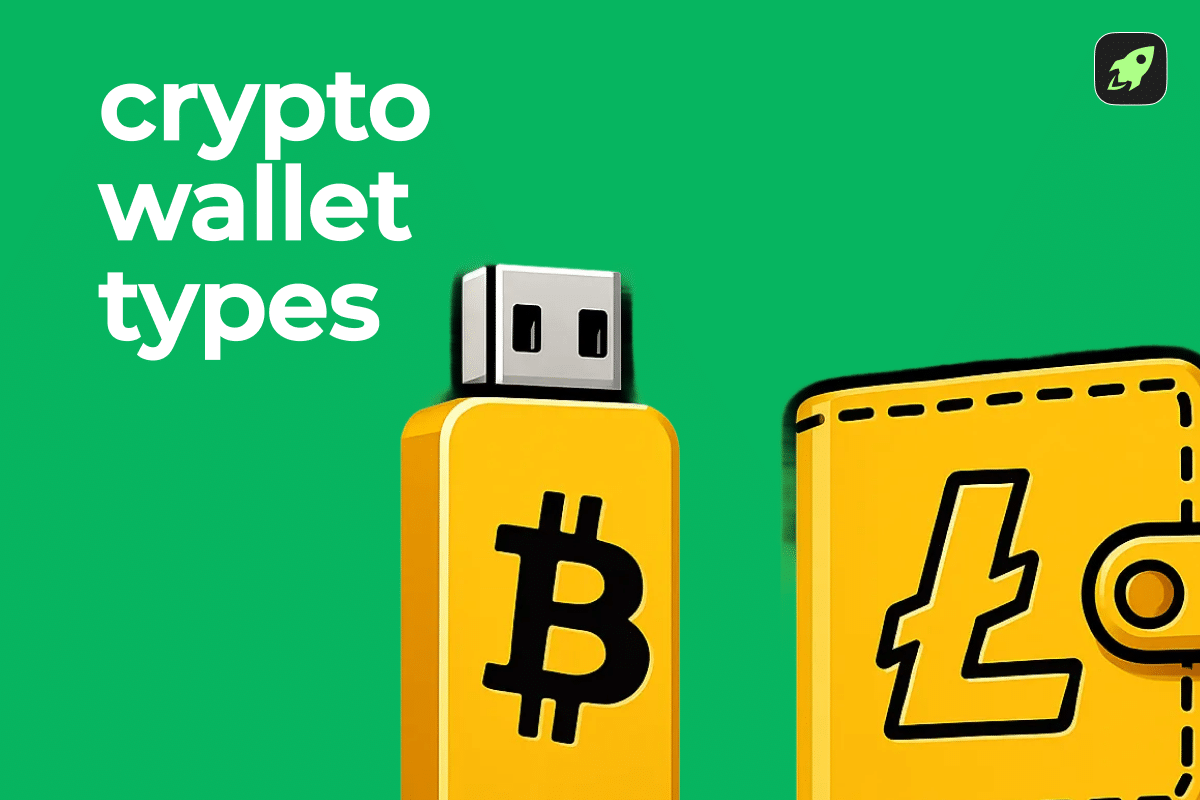
The core wallet question is simple: who controls the private keys? In a long-form guide, CryptoComLearn maps out the main crypto wallet categories, covering custodial and non-custodial wallets, hot and cold wallets, software wallets, hardware wallets, paper wallets, multisig wallets, MPC wallets, Bitcoin Lightning wallets, smart contract wallets, and HD wallets.
Control starts with custodial versus non-custodial
The article says custodial wallets are usually run by third parties such as exchanges. Users log in with an account and password, while the platform holds the private keys and can often assist with account recovery. The tradeoff is direct: the platform controls the funds. As the piece notes, when FTX collapsed in 2022, users lost access to billions of dollars in crypto assets, a clear example of custodial risk.
Non-custodial wallets flip that model. Users generate and store their own seed phrase and private keys, and the wallet provider cannot directly access the assets. This setup powers much of DeFi, NFTs, and Web3 usage. It also comes with a hard rule: if the seed phrase is lost, access to funds may be lost as well. The guide frames the choice plainly. Beginners may prefer custodial simplicity, while users entering Web3 usually need non-custodial control.
Hot wallets trade security margin for speed
The guide splits wallets by connectivity too. Hot wallets stay online and usually run on phones, desktops, or browser extensions. They are convenient for sending and receiving crypto, signing transactions, and interacting with dApps. That convenience comes with a wider attack surface, including hacks, phishing attempts, and malware.
Cold wallets keep private keys offline as much as possible. Hardware wallets and paper wallets fall into this group. Because they are isolated from the internet, they offer stronger protection for long-term storage and larger balances, though moving funds in and out is usually slower. The article’s rule of thumb is straightforward: hot wallets can work for smaller balances, while larger holdings are better suited to cold storage. Using both is common.
Software wallets and hardware wallets remain the main routes
Software wallets are applications installed on phones, computers, or browsers, and most of them function as hot wallets. The article names MetaMask, Trust Wallet, and Phantom as familiar examples, citing their popularity for transfers, token management, dApp access, and NFT support. It also notes that newer products are trying to keep the same ease of use while adding more security in the background.
Hardware wallets store private keys on offline physical devices and are presented as a standard option for cold storage, especially for people holding larger amounts over time. The piece points to Ledger and Trezor as the dominant brands in this segment. It also says they support multiple blockchain networks and use BIP-32 or BIP-44 standards to derive multiple wallet addresses from a single seed phrase. One warning stands out: counterfeit hardware wallets are a real risk, so purchases should be made directly from manufacturers or official resellers.
Paper wallets, multisig, and MPC solve different problems
A paper wallet stores public and private keys on paper and stays fully offline, which protects it from online attacks. The downside is physical fragility. It can be burned, torn, faded, stolen, or misplaced. The article makes its position clear: paper wallets are no longer recommended for beginners, and most users are better served by hardware wallets or well-secured software wallets.
Multisig wallets require two or more private keys to approve a transaction. The guide uses a 2-of-3 example, where any two of three keys must sign before funds can move. That structure can fit teams, DAOs, and families managing shared crypto holdings, but it is more complex and not especially beginner-friendly.
MPC, or multi-party computation, wallets split a private key into encrypted shares distributed across devices or participants. Transactions are signed through secure computation, without reassembling the full key. The article argues that this reduces single-point-of-failure risk, which is why some non-custodial wallets and exchange-operated internal wallets use MPC. Recovery can still become complicated if too many shares are lost or corrupted.
Lightning, smart contract, and HD wallets target specific use cases
For Bitcoin micropayments, the guide highlights Lightning wallets, which can send sats almost instantly and with very low fees. The use cases mentioned are small, frequent payments such as tipping or buying coffee. Examples listed in the article include Phoenix, Muun, Breez, and BlueWallet. Some of these wallets are custodial, while others are non-custodial.
Smart contract wallets do not rely only on a private key. Instead, a smart contract on-chain defines how the wallet behaves. The article says this design can support social recovery, multisig rules, spending limits, and gasless transactions, and links the model to Ethereum account abstraction under ERC-4337. It names Argent and Safe as prominent examples.
HD, or hierarchical deterministic, wallets are described as the default structure behind most modern crypto wallets. A single seed phrase can generate multiple addresses and keys, letting users back up one root secret instead of handling each address separately. For most users, that is the underlying design they are already using, whether they realize it or not.
No single wallet fits every user
The guide’s practical takeaway is narrow and useful. Users with small balances and basic needs may prefer simpler wallets. People active in DeFi, NFTs, and Web3 often need non-custodial or smart contract wallets. Long-term holders tend to prioritize cold storage. Bitcoin users focused on tiny payments may look to Lightning wallets first.
The article does not push one universal answer. It frames wallet choice around a basic tradeoff: convenience, control, or stronger offline security.