


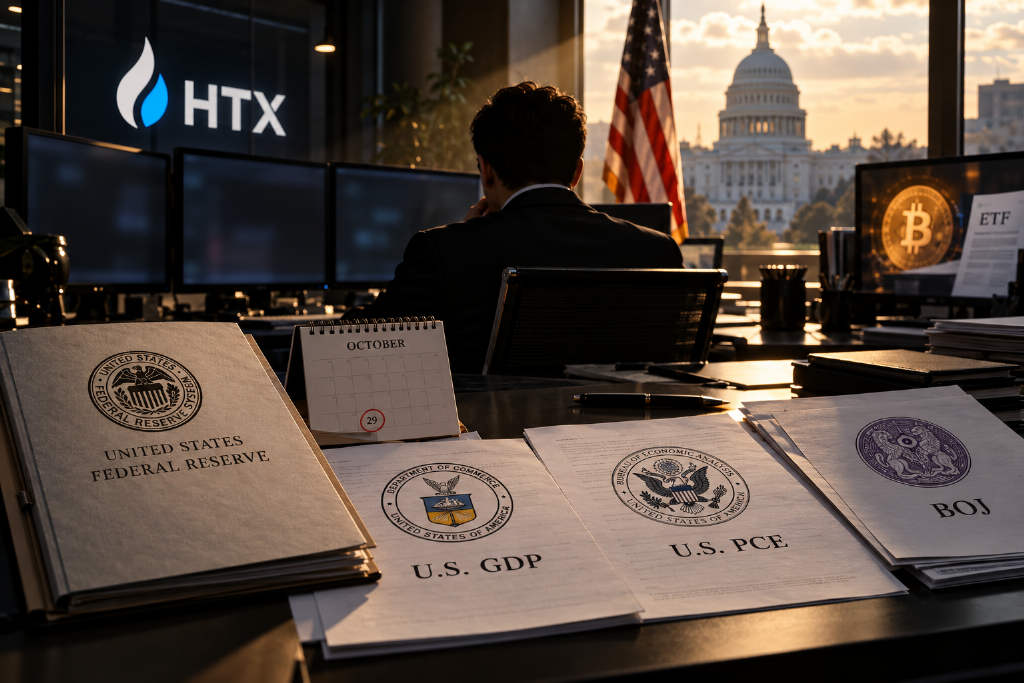
HTX Research analyst Chloe said institutional buying in crypto has started to recover, but the move is still not strong enough to confirm a trend reversal. Based on Farside data, U.S. spot Bitcoin ETF products saw cumulative net inflows of about $1.075 billion between Oct. 19 and Oct. 21, a positive short-term signal that, in her view, still does not remove market concerns about the future rate path.
Markets are watching this week’s U.S. data first
Chloe said traders should focus on two U.S. releases in the remaining sessions this week: the flash PMI reading due at 21:45 Taipei time on the 23rd, followed by the University of Michigan consumer sentiment and inflation expectations data at 22:00.
Her view is that if economic activity stays firm and price pressure keeps rising, any rebound in crypto is still likely to be capped by rate expectations. In the current setup, she said, strong macro data is actually a bearish signal for BTC.
Next week brings the Fed, GDP and PCE on the same day
She said the bigger bout of volatility is likely to arrive next week. The Federal Reserve is scheduled to release its rate decision at 02:00 Taipei time on Oct. 29, followed by a press conference at 02:30. Later that same day at 20:30, the U.S. advance estimate for third-quarter GDP and September PCE data are set to be released.
According to Chloe, current market pricing leans toward rates staying unchanged in October and another hike in December. She warned that 「a pause in rate hikes alone may not amount to a fresh bullish catalyst; the direction depends more on the tightening guidance that follows.」
She also pointed to a timing detail: the PCE release comes after the Fed decision. If markets rally after the early-morning policy announcement, inflation data later that day could reverse the move, leaving short-term traders on edge across both sessions.
Bank of Japan and U.S. earnings add more variables
The Bank of Japan’s policy meeting on Oct. 29-30 is another external factor she flagged. If the BOJ delivers a more hawkish-than-expected policy signal and drives a rapid yen appreciation, carry trade unwinds could amplify selling pressure across risk assets, with crypto often among the areas hit when capital pulls back.
She also said the U.S. earnings season could feed into crypto risk appetite through the market reaction to technology companies’ earnings and capital spending. Expectations for AI-related giants’ capital expenditure are closely tied to how the crypto market prices the liquidity narrative.
Two scenarios outlined by HTX Research
Chloe laid out two scenarios. In the first, the Fed softens its signal on future rate hikes, core PCE comes in below expectations, and ETF inflows continue. Under that setup, BTC would have a better chance of breaking above this week’s high and lifting ETH and SOL as well.
In the second, a hawkish policy signal, hotter-than-expected inflation, or a rapid rise in the yen could send the market back to recent lows, with higher-volatility altcoins facing greater downside pressure.
Her base case for the next two weeks is a period of choppy repair, event shocks and repricing, rather than a broad rally across the market.
The article also noted that the content does not constitute investment advice, or an offer, solicitation or recommendation for any investment product.