
Hyperliquid’s Aligned Quote Assets v2 mechanism, known as AQAv2, began accruing yield on Aug. 26. For HYPE, that adds a new buyback funding source tied to stablecoin reserve income on top of trading fees.
Under the design described in the source article, AQAv2 revenue is settled on a 30-day cycle and automatically sent to the Assistance Fund on the eighth day after the cycle ends. The funds are then used بالكامل for HYPE buybacks. The first revenue transfer is expected on Oct. 3. That means Aug. 26 does not bring an immediate large-scale buyback, but it does mark the point at which related stablecoin reserves on Hyperliquid start building capital for future repurchases.
According to the Odaily report, the market currently expects AQAv2 to add roughly $150 million to $200 million a year in buyback funding for Hyperliquid. For a protocol that already has strong revenue and repurchase capacity, the significance is not limited to a bigger top line. AQAv2 broadens the structure of that income by creating a source that is less directly tied to trading activity and can expand alongside stablecoin scale.
In the article’s framing, AQAv2 is effectively a second buyback engine for HYPE.
What AQAv2 does
AQAv2 is a revenue-sharing framework for stablecoins on Hyperliquid. The core structure is simple: a stablecoin issuer can share reserve income with Hyperliquid in exchange for liquidity and distribution inside the Hyperliquid ecosystem.
To understand AQAv2, the article first looks back at AQA, its earlier version. Hyperliquid previously introduced Aligned Quote Assets, or AQA, to allow eligible stablecoins to serve as quote assets in its spot and perpetual markets. In return, those assets could receive lower trading fees, higher market maker rebates, and greater volume contribution.
AQAv1 had a clear restriction, though. Only stablecoins exclusive to Hyperliquid could qualify as an Aligned Quote Asset. That excluded assets such as USDC that are distributed across other ecosystems including Ethereum and Solana.
Hyperliquid’s initial idea was to trade fee concessions for deep ecosystem commitment from stablecoin issuers. As AQAv1 played out, that exclusivity requirement came to be seen as a limit on the protocol’s development. As described in the article, it kept Hyperliquid from tapping the global liquidity and brand reach already built by mature stablecoins such as USDC, while native stablecoin USDH faced difficulty competing head-on with those larger products.
AQAv2 was introduced to remove that bottleneck. Based on Hyperliquid’s official definition cited in the report, the new version extends aligned status to stablecoins that are not exclusive to Hyperliquid, as long as the deployer shares about 90% of cost-adjusted reserve income generated by the stablecoin circulating on Hyperliquid.
Put simply, AQAv1 looked like: give me exclusive access to the stablecoin and I will give you trading incentives. AQAv2 changes that to: you can keep serving other ecosystems, but if you want deeper access to Hyperliquid, you need to share reserve income.
How Circle and Coinbase fit in
In May, Circle and Coinbase announced a partnership with Hyperliquid. Under that arrangement, USDC became Hyperliquid’s official aligned stablecoin, while native stablecoin USDH is being phased out.
Under the terms outlined in the article, Circle serves as the technical deployer and is responsible for keeping minting, redemption, and cross-chain transfer infrastructure running smoothly. Coinbase acts as the treasury deployer, handling treasury management and revenue distribution.
To secure long-term commitment and performance, both parties are required to stake 500,000 HYPE each. Either side must give six months’ notice before exiting. The report also says that if insufficient balance in the vault address causes a revenue deduction failure, the staked amount can be penalized at a daily rate of 2%.
In practical terms, Hyperliquid contributes users, liquidity, and financial markets. Circle provides the USDC product. Coinbase provides reserve asset management. The three parties then share in the value created as USDC supply on Hyperliquid grows.
That is one of AQAv2’s most notable features. Hyperliquid does not need to issue USDC itself, and it does not need to directly manage billions of dollars in Treasurys and cash reserves. Even so, it can still participate in the income generated by those dollar assets by contributing users and market infrastructure.

Seen from that angle, AQAv2 is not only an update to a stablecoin framework. It also points to a business model in which Hyperliquid monetizes its liquidity and distribution capacity.
How much it could add in a year
Once the structure is clear, the next question is scale. The article says the answer mainly depends on two variables: the amount of stablecoins on Hyperliquid and the actual yield earned on reserve assets.
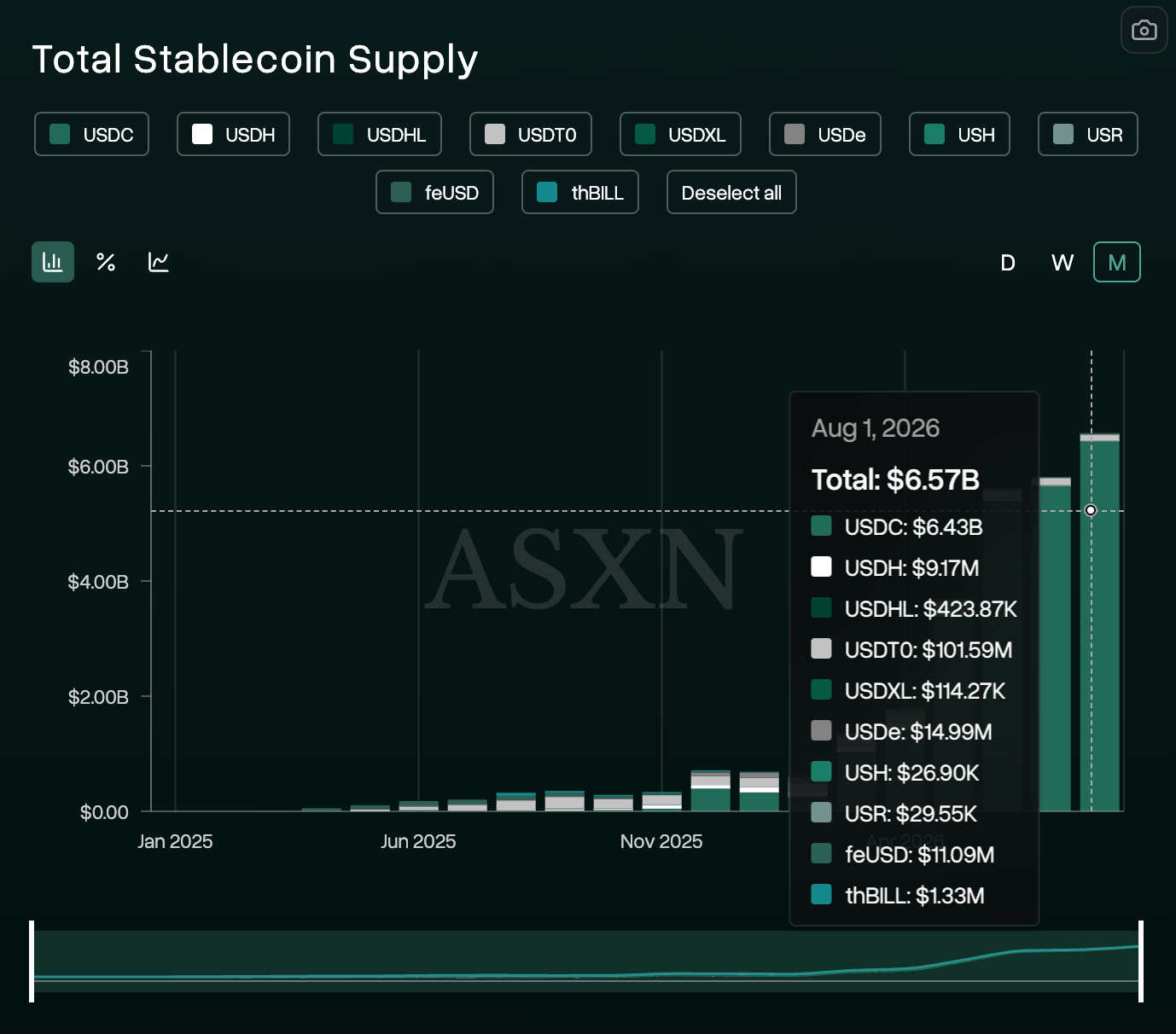
According to the latest Hyper Screener data cited in the report, stablecoin circulation on Hyperliquid has reached about $6.57 billion. USDC accounts for the overwhelming majority at about $6.43 billion.
Because AQAv2 shares about 90% of reserve income, the article uses a straightforward formula:
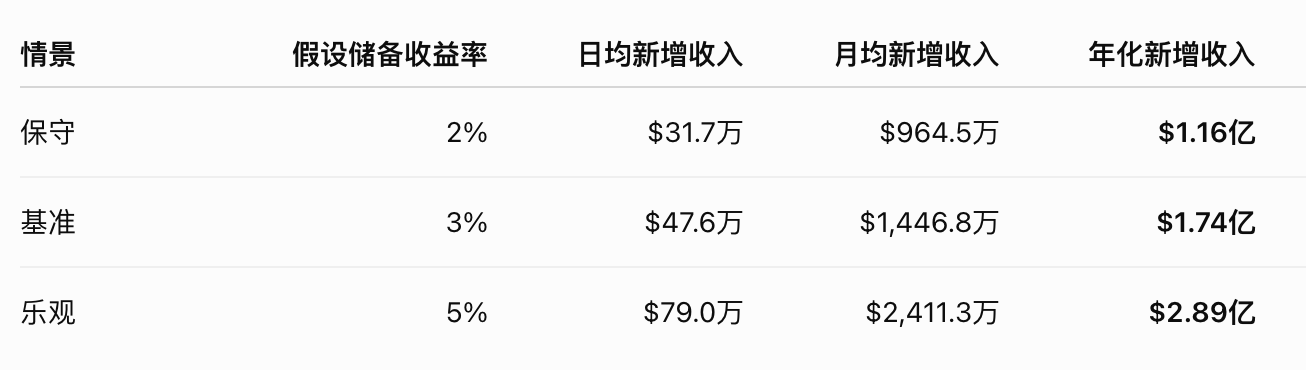
AQAv2 annualized revenue ≈ USDC on Hyperliquid × reserve yield × 90%
Using the current USDC base of roughly $6.43 billion, revenue changes with the reserve yield assumption. The article highlights one example in particular: at a 3% yield, AQAv2 would generate about $476,000 in additional daily revenue for Hyperliquid, or about $174 million on an annualized basis.
The report then compares that figure with Hyperliquid’s existing revenue. Hyper Screener data cited in the article shows Hyperliquid has recorded $50.27 million in cumulative revenue so far in August. Using 26 days as a rough divisor, that works out to around $1.933 million per day. On that basis, AQAv2 running at a 3% reserve yield would add revenue equal to about 24.6% of current average daily income.
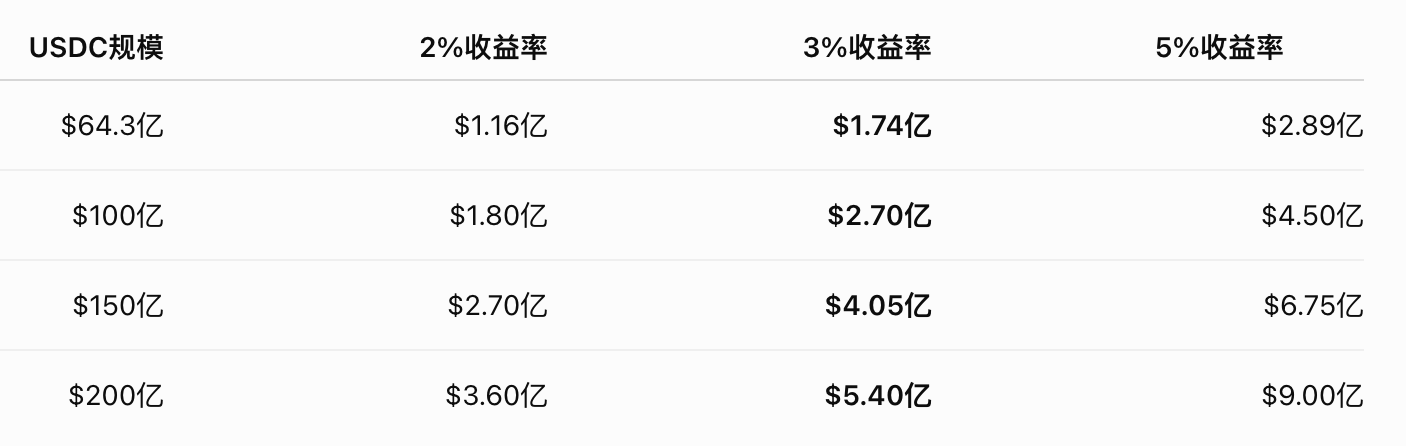
Even on that static snapshot, the article argues AQAv2 is already too large to ignore as a marginal revenue source. The bigger point, though, is that USDC circulation on Hyperliquid is still growing quickly. More USDC means more reserve income. More reserve income means more funds entering the Assistance Fund. More funds there means more capital available for HYPE buybacks.
On that view, $150 million to $200 million in annual income is not necessarily the ceiling for AQAv2. The article presents it more as a baseline starting point.
What changes for HYPE
Before AQAv2, the market’s core pricing logic for HYPE was tied largely to Hyperliquid’s trading volume and fee income. The launch of AQAv2 adds another variable to that framework. HYPE’s buyback capacity is no longer linked only to trading activity; it is now also connected to stablecoin scale.
The Odaily article says HYPE has been in a strong run recently. With macro liquidity improving and broader market sentiment rising, HYPE has moved above $80 and set a new all-time high. In the article’s reading, the market is using price to reflect expectations for Hyperliquid’s growth, and AQAv2 adds another layer of fundamental support: the larger the USDC base, the higher the reserve income, and the more money can ultimately be directed to HYPE buybacks.
The report also notes that after the recent rally, HYPE is no longer cheaply valued. Whether it can continue higher will still depend on whether revenue, stablecoin scale, and buyback size can keep growing. Even so, based on the information presented, Hyperliquid appears to be evolving from an on-chain trading venue that earns from fees into a protocol that can capture value from trading, stablecoins, and the wider on-chain financial ecosystem.
AQAv2 may not be the only reason behind HYPE’s next move, but in Odaily’s assessment it could become an important part of the token’s longer-term value capture framework.