
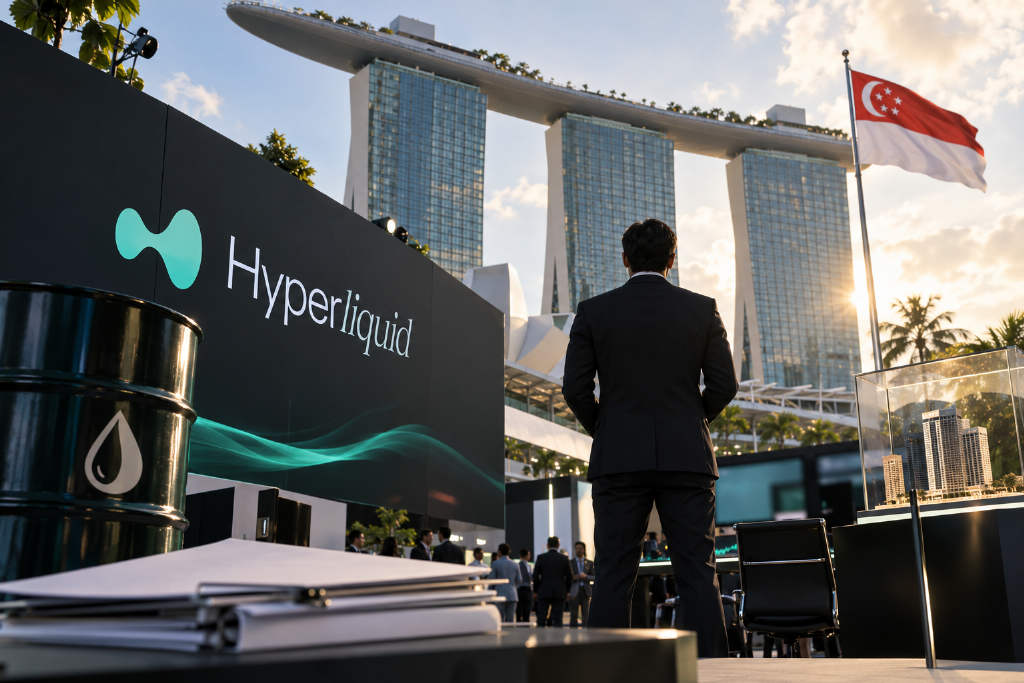
According to ChainCatcher, Hyperliquid founder Jeff Yan said during a discussion at TOKEN2049 in Singapore that the HIP-3 market at one point contributed about 51% of Hyperliquid’s trading volume in July. He said that performance indicates clear product-market fit for the segment.
Yan said users’ willingness to move away from existing financial products and try new on-chain markets suggests there had been a large gap in product supply. He also said it shows users trust the execution ability of the teams deploying those markets.
Real-world asset perpetuals are becoming a key use case
The discussion highlighted perpetual contracts linked to real-world assets such as crude oil and Pre-IPO products. Yan said those products have become an important application direction for HIP-3.
He added that one of the more notable changes over the past year has been the rise of markets that allow users to participate in trading opportunities that were previously inaccessible. In his view, some assets in traditional finance are often available early only to a small group of participants, and by the time they are opened to the public, much of the main growth phase may already have been captured by those with access advantages. He said the financial system should be opened to a broader group of users as much as possible.
Hyperliquid wants to be infrastructure, not a front-end rival
Yan also said Hyperliquid would rather position itself as an open protocol and infrastructure layer that can be used by different financial products and applications, instead of competing directly with front-end platforms.
He said Builder Codes allows developers to build products including mobile applications and institutional-grade trading terminals without having to set up underlying systems such as matching and liquidation on their own, while directly connecting to Hyperliquid’s markets and liquidity.
Yan said, 「No one is competing with the internet」, adding that Hyperliquid is likewise closer to an infrastructure layer that can be adopted by different companies.