
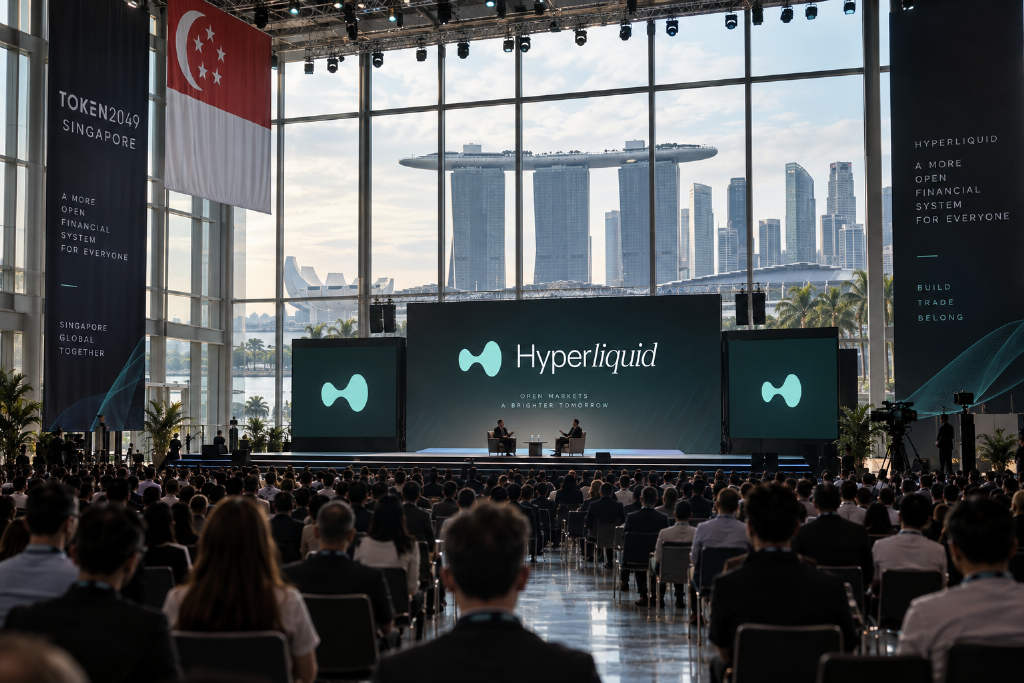
According to ChainCatcher, Hyperliquid co-founder and CEO Jeff Yan said during a fireside chat at Token2049 in Singapore that traditional Wall Street wealth-creation opportunities, such as company shares, are largely inaccessible to public investors before they reach exchanges. That leaves retail investors missing what he described as the most significant gains before listing.
Yan said some assets are tradable only by a small group through most of their growth phase. By the time the public is able to trade them, much of that growth has already been captured by a privileged minority, and he said that model of wealth creation is not sustainable.
Yan says Hyperliquid is focused on access
Yan said Hyperliquid’s main mission is to expand access to wealth-creation opportunities and bring more people into the financial system, with revenue serving as a byproduct.
He added that part of Hyperliquid’s success comes from the fact that perpetual contracts do not expire. In his view, that cuts down the number of decisions traders need to make and prevents liquidity from fragmenting.
Revenue figures and broader industry signals
Data from DefiLlama shows Hyperliquid generated $72 million in revenue over the past 30 days, making it the third-ranked protocol by revenue.
Blockchain asset manager Pantera said in July that perpetual contracts could become one of the dominant trading instruments in global finance because of their structural advantages. It also said Hyperliquid shows how blockchain infrastructure can challenge traditional markets.
Jeffrey Sprecher, CEO of Intercontinental Exchange, the parent company of the New York Stock Exchange, has called on regulators to create a level playing field for the launch of 24/7 on-chain perpetual contracts.
In March this year, the New York Stock Exchange partnered with tokenization platform Securitize to advance blockchain-based infrastructure for stock trading.