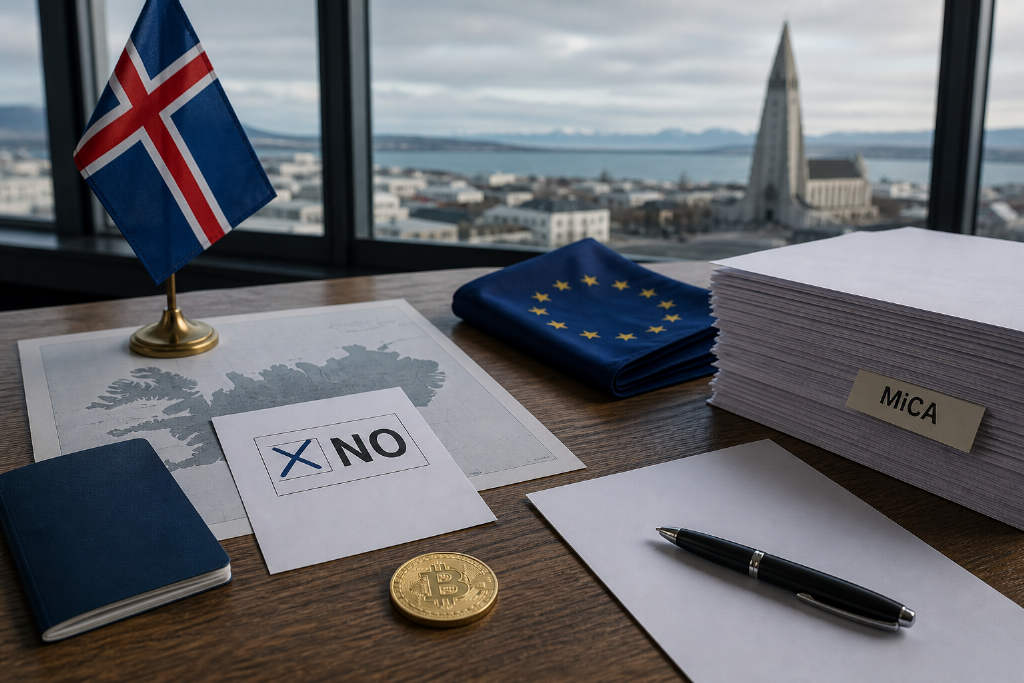
Iceland held a referendum on Aug. 30 in which 52.8% of voters, or 105,339 ballots, opposed restarting negotiations to join the European Union. The outcome leaves Iceland in the European Economic Area while remaining within the Schengen framework. Because Iceland is an EEA member rather than an EU member state, the European Union’s Markets in Crypto-Assets regulation, or MiCA, does not automatically apply there at this stage. Crypto-related activity in Iceland is still mainly governed by general financial laws. The report added that MiCA is expected to be incorporated into the EEA Agreement in the future, but no formal timetable has been set so far, according to Bitcoin.com News cited by Odaily.
Iceland held a referendum on Aug. 30, and 52.8% of voters, representing 105,339 ballots, opposed restarting negotiations to join the European Union.
The result leaves Iceland in the European Economic Area, or EEA, and within the Schengen framework.
As an EEA member rather than an EU member state, Iceland is not currently subject automatically to the European Union’s Markets in Crypto-Assets regulation, known as MiCA. Crypto activity in the country is mainly regulated under general financial laws.
The report said MiCA is expected to be incorporated into the EEA Agreement in the future, but there is no formal timetable at present.
This article was originally published by Bit.Fan. For more cryptocurrency news and market insights, visit www.bit.fan. Disclaimer:
The market information, project data, and third-party content displayed on this platform are for industry information sharing only and do not constitute any form of investment advice or return commitment.
Cryptocurrency trading carries high risks. Users should fully assess their risk tolerance and make independent decisions. All profits, losses, and legal responsibilities are borne by the users themselves.