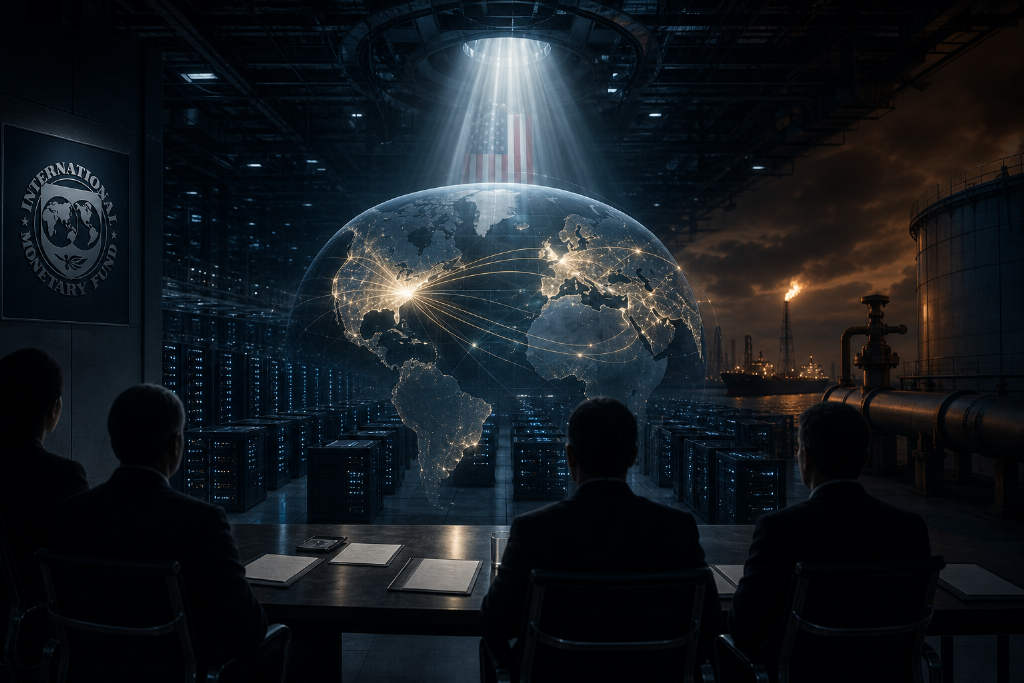
International Monetary Fund Managing Director Kristalina Georgieva said the current wave of AI investment is no longer confined to the United States and is starting to spread across the global economy, according to the Financial Times. As countries step up spending on data centers and related infrastructure, she said AI is shifting from a US-specific trend into a broader engine for world economic growth.
Georgieva also said the global economy has been hit by the Iran war and the energy shock triggered by the closure of the Strait of Hormuz, though the impact has so far been less severe than previously expected. She attributed that resilience to weaker energy demand, emergency releases of oil and natural gas reserves, increased supply from outside the Gulf, and growth in renewable energy and coal supply.
At the same time, she said the world economy remains caught in a tug-of-war between the AI boom and the economic damage tied to the conflict with Iran. While AI investment is still concentrated in the US, countries involved in the AI hardware supply chain and exporting related products worldwide are also benefiting. Georgieva warned that the energy shock is not over, adding that another rise in oil prices could lift inflation, force central banks to raise interest rates, increase government financing costs, and weigh on growth.
International Monetary Fund (IMF) Managing Director Kristalina Georgieva said the surge in AI investment is spreading from the United States to other parts of the world, according to the Financial Times. As more countries increase spending on data centers and related infrastructure, AI is moving from being a US phenomenon toward becoming a driver of global economic growth.
Global economy faces competing pressures
Georgieva said the world economy has been hit by the Iran war and the energy shock caused by the closure of the Strait of Hormuz, but has held up better than previously expected. She said the global economy is still in a tug-of-war between the AI boom and the economic shock tied to the war with Iran.
She said the impact of the energy crisis has been cushioned by lower energy demand, emergency releases of oil and natural gas reserves, rising energy supply from outside the Gulf, and increased supply from renewables and coal.
Benefits extend beyond the US
While AI investment remains concentrated in the US, Georgieva said countries that participate in the AI hardware supply chain and export related products globally are also benefiting.
Warning on oil, inflation and rates
Georgieva warned that the energy shock is not over. With oil and natural gas reserves continuing to fall and winter approaching in the Northern Hemisphere, another rise in oil prices could push up inflation, force central banks around the world to raise interest rates, increase government financing costs, and weigh on economic growth.
This article was originally published by Bit.Fan. For more cryptocurrency news and market insights, visit www.bit.fan. Disclaimer:
The market information, project data, and third-party content displayed on this platform are for industry information sharing only and do not constitute any form of investment advice or return commitment.
Cryptocurrency trading carries high risks. Users should fully assess their risk tolerance and make independent decisions. All profits, losses, and legal responsibilities are borne by the users themselves.