

Crypto Enters Industrial Formation: Regulation and Infrastructure Converge
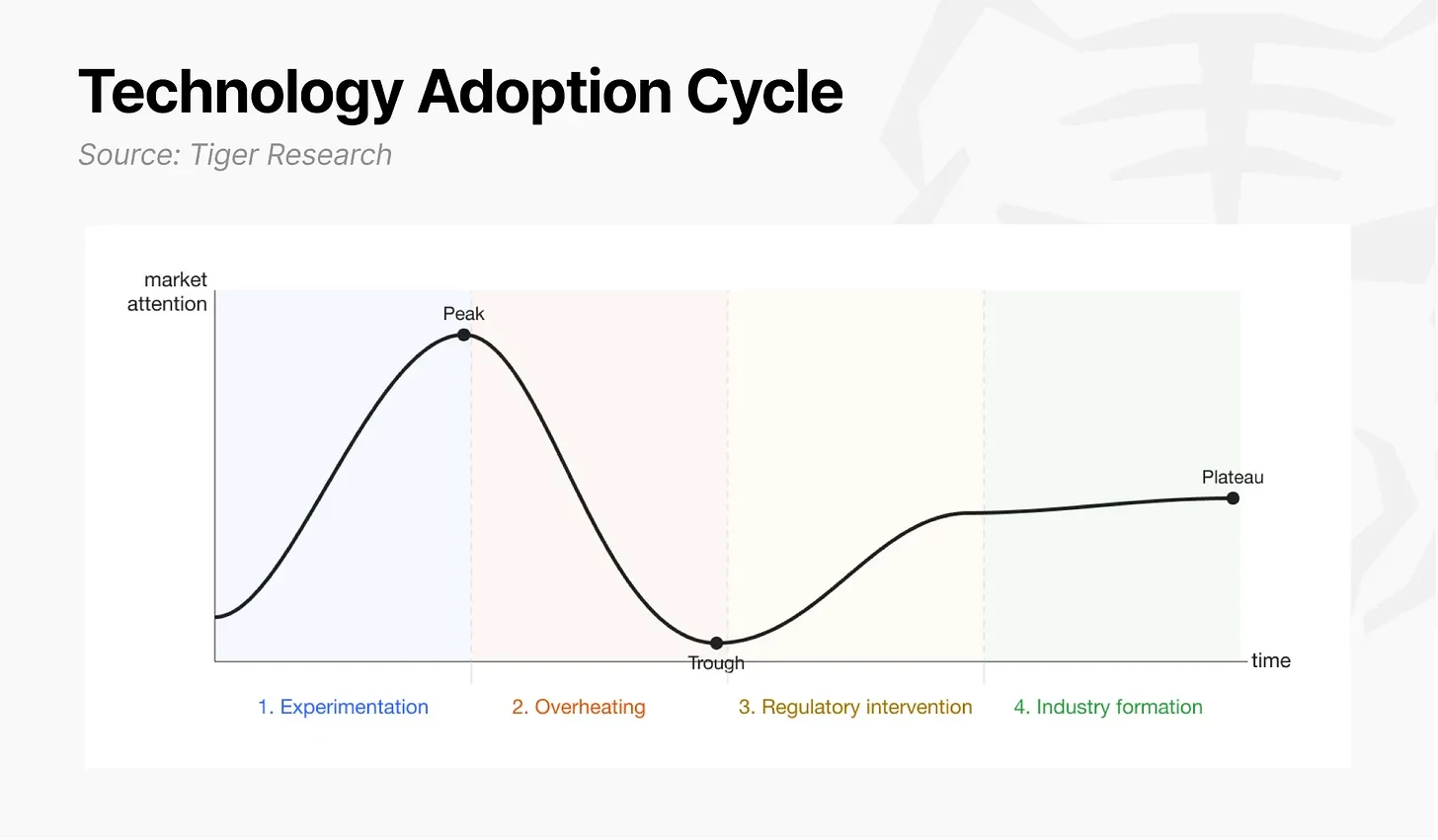
New technologies typically pass through four stages: experimentation, overheating, regulatory intervention, and industrial formation. The crypto industry is currently in the transition between stages three and four. After Bitcoin's early experiments in payments and settlement, the 2017 ICO boom and 2021 DeFi wave brought speculative excess, and the 2022 FTX collapse marked a turning point. Speculative demand was filtered out, real use cases were validated, and US regulators began shifting toward formalization rather than laissez-faire or suppression.
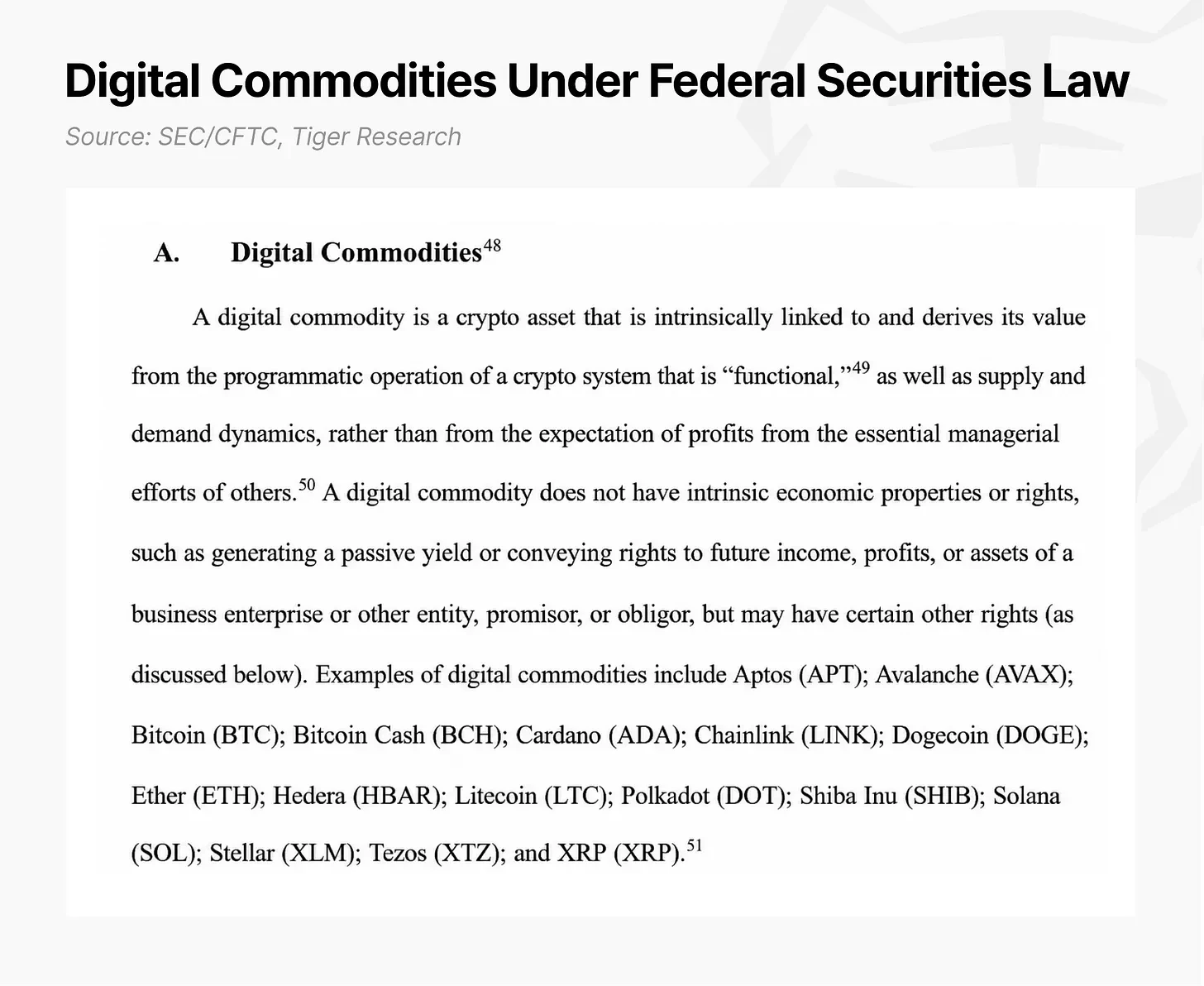
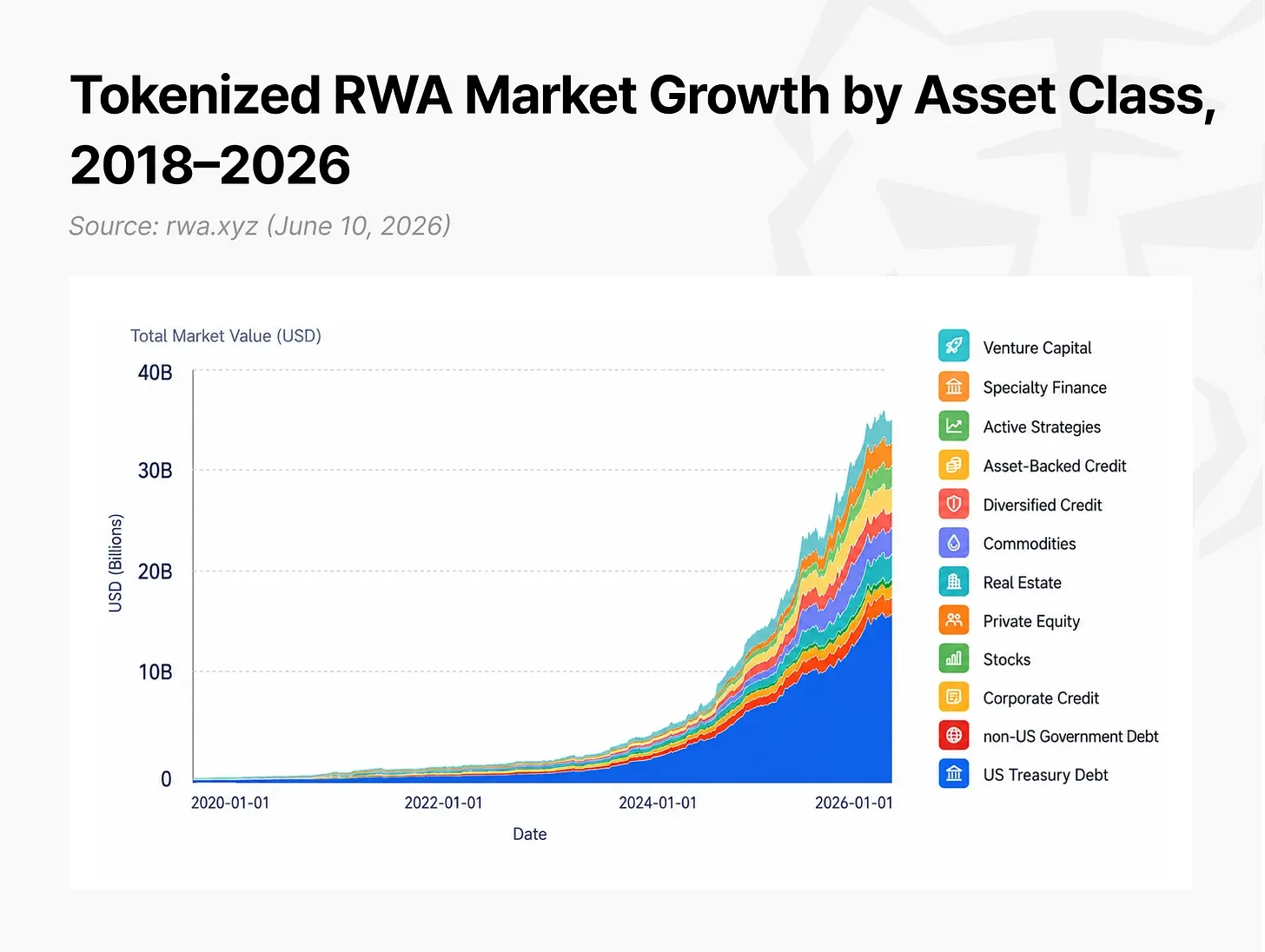
In March 2026, the US Congress passed the GENIUS Act, clarifying the legal status of stablecoins. The SEC and CFTC issued joint interpretive guidance designating 16 assets including Solana (SOL) as digital commodities, abandoning the old security/non-security binary and excluding protocol staking from securities law. Institutional adoption accelerated: the tokenized real-world asset (RWA) market grew approximately 257% in 15 months, from $5.4 billion in early 2025 to $19.3 billion by end of March 2026; including stablecoins, total on-chain asset scale approached $300 billion. Industrial formation has begun in parallel with regulatory construction.
The Logic of Internet Capital Markets (ICM) and Solana's Strategic Position
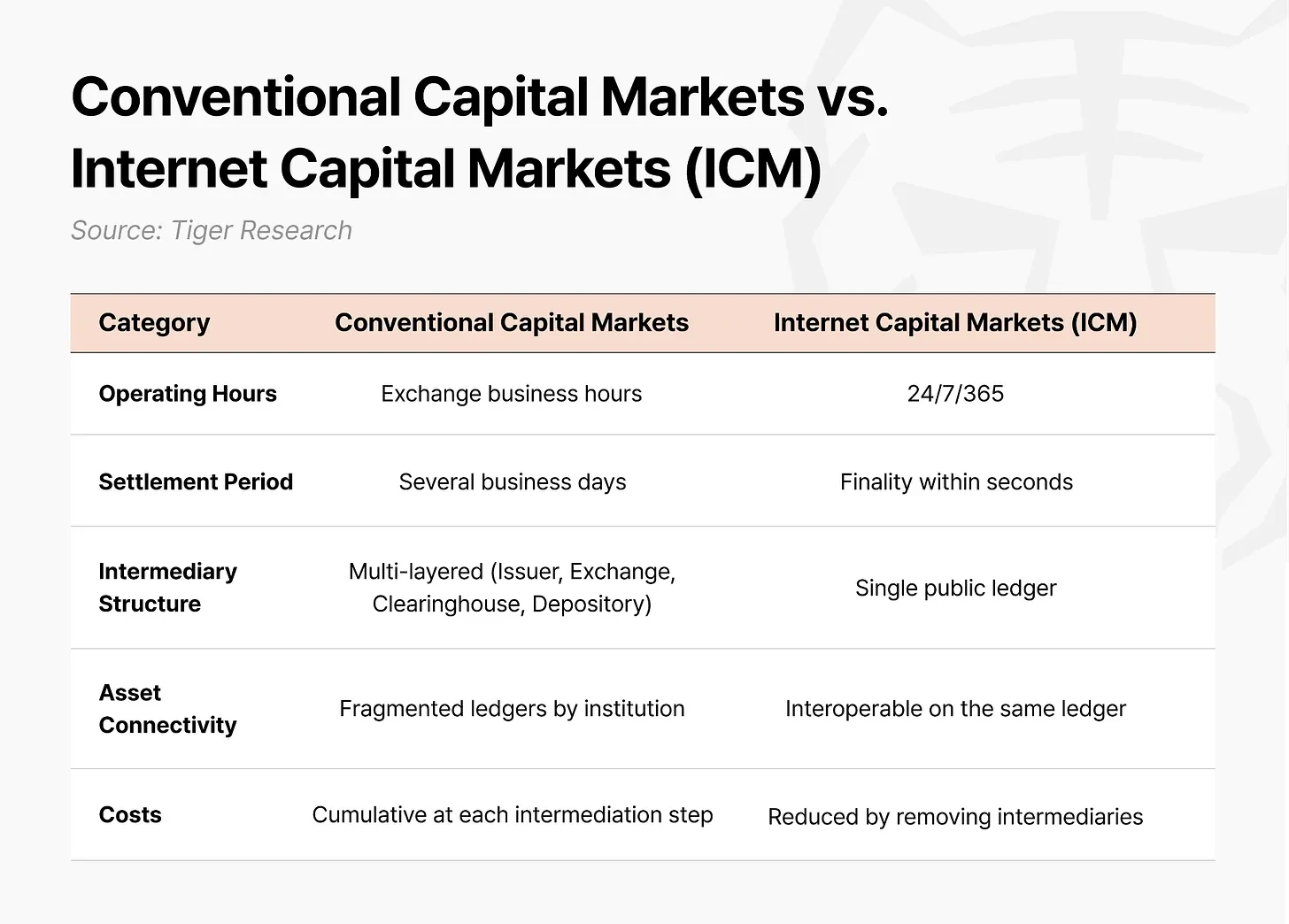
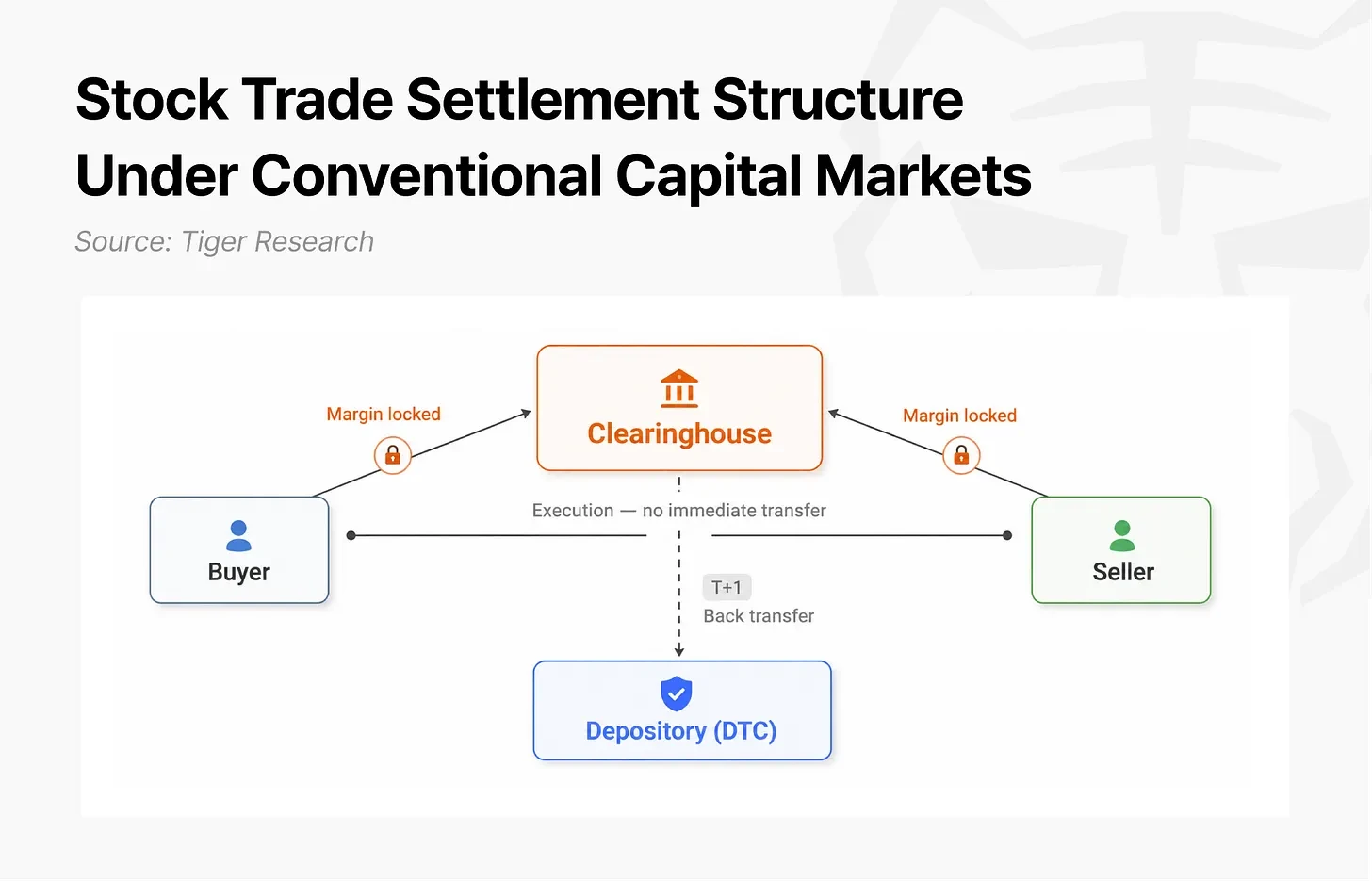
The future the crypto industry points to after entering the industrial phase is a reconstitution of capital markets themselves, defined as Internet Capital Markets (ICM): asset issuance, trading, and settlement all completed on a single public blockchain. Unlike the traditional T+1 settlement architecture with clearinghouses and inter-institutional reconciliation, ICM replaces the clearinghouse with smart contracts, enabling atomic settlement (DvP) where execution and settlement complete in seconds, eliminating counterparty risk and margin requirements.
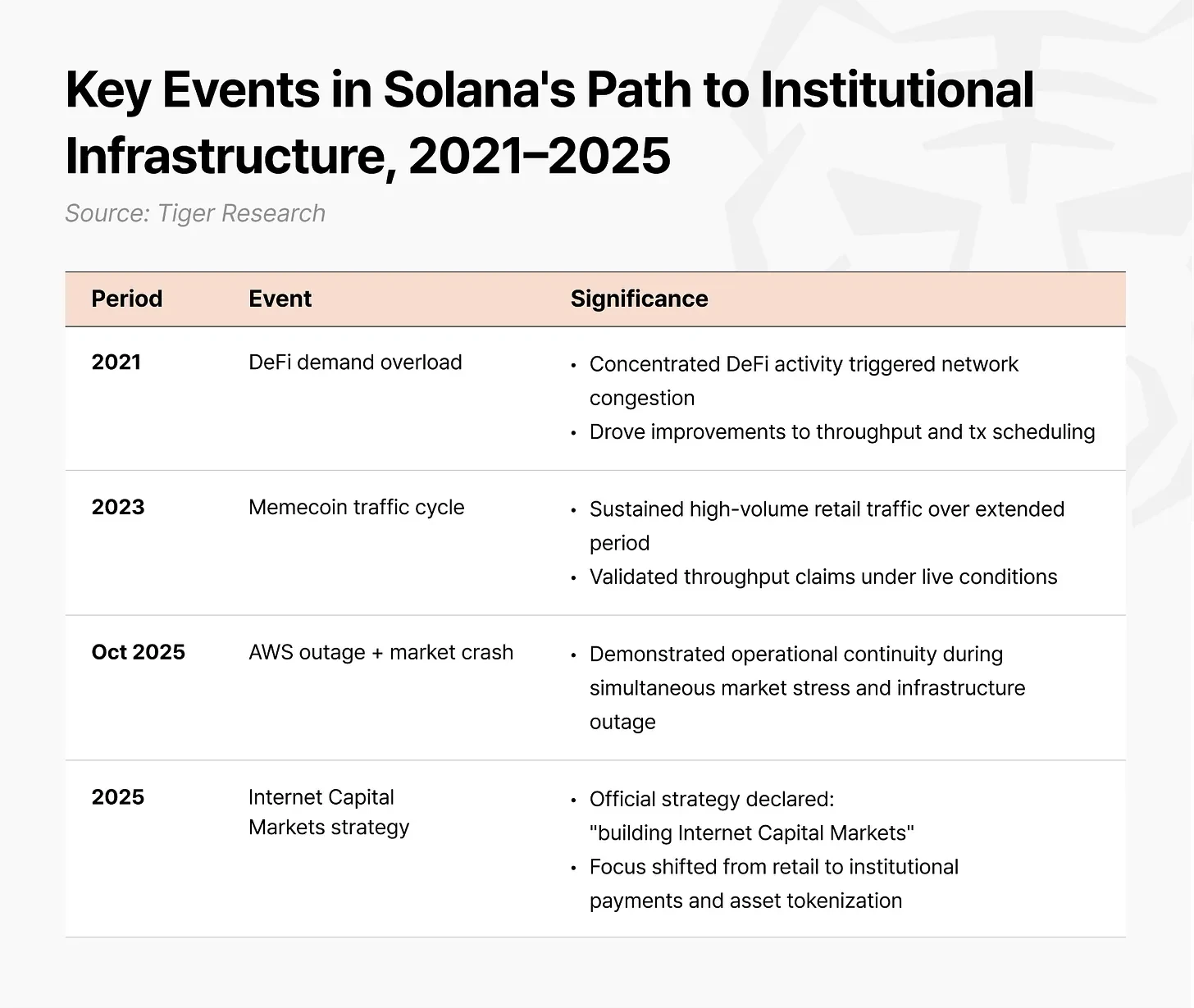
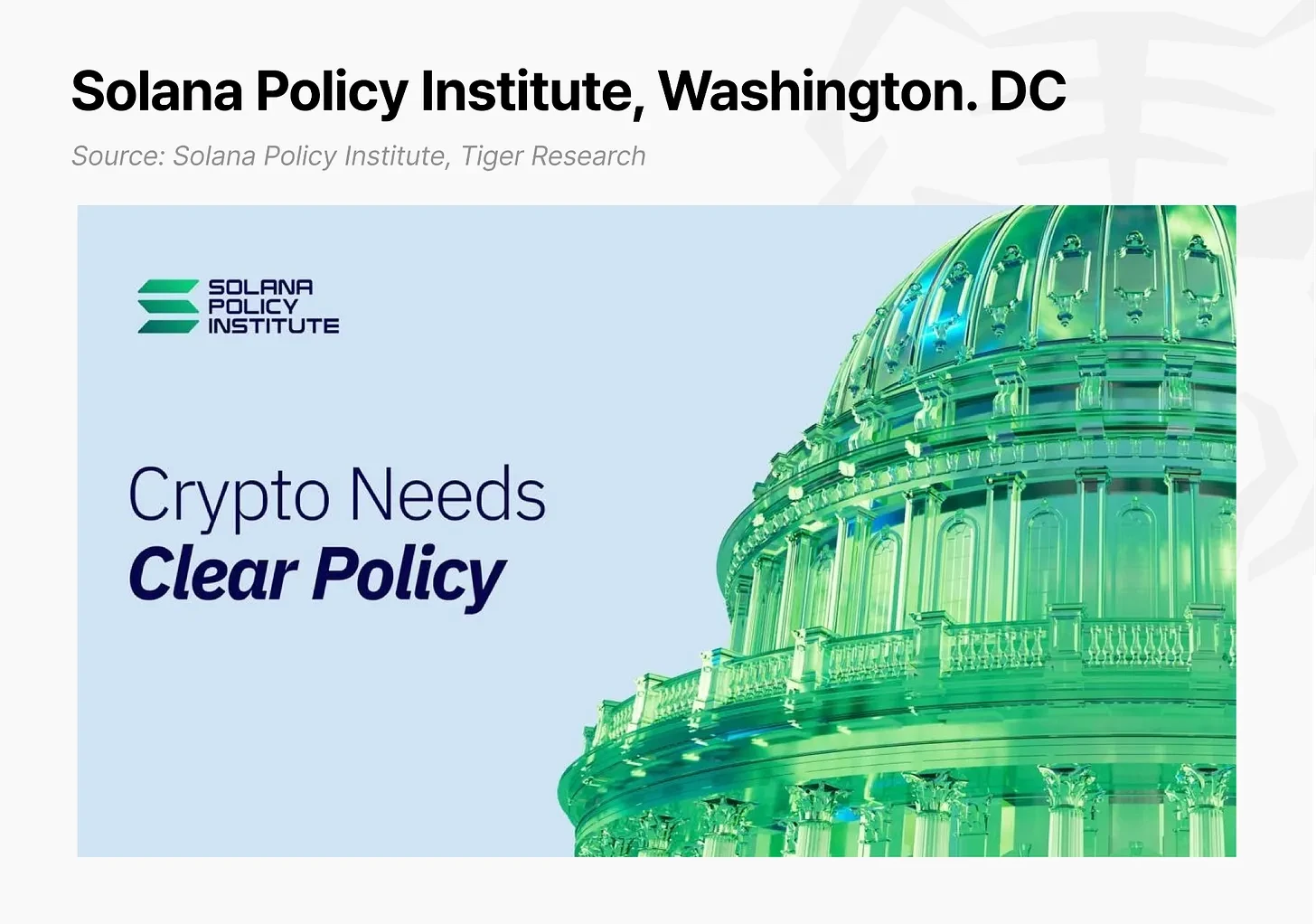
In this transformation, Solana has become the core public chain for US ICM. Solana established its official strategy as 'building Internet Capital Markets' in 2025, shifting focus to institutional payments and asset tokenization. It launched the Token-2022 standard, embedding freeze, freeze authority, whitelist management, and confidential balance functions directly into tokens, solving compliance at the protocol layer. Seven major financial institutions have completed proof-of-concepts or actual transactions on Solana: J.P. Morgan, State Street, Citi, Franklin Templeton, Visa, PayPal, and Western Union. The Solana Policy Institute (SPI) was founded in Washington, D.C. in spring 2025, actively submitting the 'Project Open' pilot framework to the SEC to establish regulatory precedents.
Eight Institutional Use Cases: From On-Chain Cash Management to Private Credit Leverage
According to Tiger Research estimates, idle capital opportunity costs from settlement delays in the US Treasury market alone amount to approximately $32 billion annually, and over $45 billion across the entire US fixed income market. ICM's atomic settlement can eliminate these costs. Key cases include:
- State Street × Galaxy: SWEEP on-chain cash management — Launched on Solana in May 2026, accepting stablecoins or fiat deposits, investing in short-term US Treasuries. Ondo Finance's flagship fund OUSG made an anchor investment of ~$200 million, representing 26% of its TVL.
- J.P. Morgan × Galaxy: USCP commercial paper issuance — $50 million US commercial paper issued in December 2025 on Solana, one of the first real debt security transactions on a public blockchain, compressing settlement from T+2 to real-time.
- Citi × PwC: Trade finance tokenization — Traditional bills of lading converted to tokenized digital assets, settlement reduced from days to minutes with zero manual reconciliation costs.
- Western Union: USDPT global remittances — Issued USD Payment Token USDPT, enabling real-time on-demand settlement instead of pre-funded correspondent balances. Plans to extend stablecoin payment services to over 40 countries in 2026.
- Fiserv: FIUSD white-label stablecoin platform — Launching July 2026 on Solana, covering ~10,000 financial institution clients and 6 million merchants. The Bank of North Dakota will issue 'Roughrider Coin'.
- Apollo: ACRED private credit tokenization — Issued tokenized tranche fund based on its diversified credit fund, achieving ~2.5x leverage via Solana lending protocols, amplifying base yield from 7.4% to 12%-16%.
- Figure Technology: HELOC liquidity expansion — Bridged loan income rights from Provenance to Solana via Chainlink CCIP, using Kamino lending protocol for up to 9x leverage, improving capital turnover.
- Orca × Streamex: Compliant RWA distribution (GLDY) — Permissionless AMM infrastructure for gold yield token GLDY, with token-level freeze/unfreeze control enabling 24/7 trading.
Regulatory Framework: Covered Areas and Frontier Gaps
Established regulatory frameworks cover: bank crypto custody (SAB 121 rescission, BNY Mellon and State Street offering digital asset trust); digital commodity status (16 assets including SOL, protocol staking exempt from securities law); stablecoins (GENIUS Act federal licensing standards); tokenized securities (SEC approval for Nasdaq to trade tokenized securities, DTCC pilot starting July with full launch in October covering Russell 1000, major ETFs, and US Treasuries); perpetual futures (CFTC first approval of Kalshi's bitcoin perpetual futures, bringing offshore liquidity to the US).
Unresolved frontiers include: public blockchain stock trading limited to non-US residents (Reg S) or accredited investors (Reg D); DEX AML/KYC obligations and order handling responsibility gaps; stablecoin interest payments prohibited by the GENIUS Act. The CLARITY Act, critical for comprehensive digital asset market structure, faces ~50% or lower passage odds in 2026 due to partisan disagreements over ethics clauses. The legislative window around July to early August is essentially the final deadline; missing it pushes to the midterm election period.
Strategic Window for Asian Institutions: Executable, Transitional, and Exploratory Stages
Solana meets institutional technical requirements: ~0.5 second finality, $0.0013 average transaction fee, Token-2022 programmable compliance, institutional-grade stability, and the Contra sovereign network option. Asian financial institutions' practical path is as fast followers. The decision to enter depends on whether execution is truly possible: clear laws, guidelines, and licensing regimes, and synchronized market infrastructure (custody, settlement, disclosure).
- Executable stage (Singapore MAS, Hong Kong SFC/HKMA, Japan FSA, UAE ADGM/VARA): Clear licensing and infrastructure ready for immediate commercialization (stablecoin payments, spot ETFs). First movers lock in operational track records and liquidity partners.
- Transitional stage (South Korea FSC/FSS, Thailand SEC, Malaysia SC, parts of India): Policy direction clear but detailed rules pending. Need to build structures that can convert upon regulatory confirmation. Offshore paths (Singapore, UAE) allow pilots while domestic regulations develop.
- Exploratory stage (Indonesia, Vietnam, Philippines, others): Legal definitions and asset classifications unclear. Small-scale experiments to accumulate data and maintain scalability.
Internet Capital Markets are no longer a concept—J.P. Morgan, State Street, Franklin Templeton, and others chose Solana not out of preference but because it meets their technical and structural needs: compliance embedded in assets, throughput proven under extreme traffic, and a complete ecosystem from Washington policy participation to real-time settlement. The variable for Asian institutions is no longer 'whether to enter' but the sequence and entry point. The window where validation is complete but standards have not yet solidified is the fast follower's opportunity.