

Crypto Industry at the Intersection of Regulation and Industrial Formation
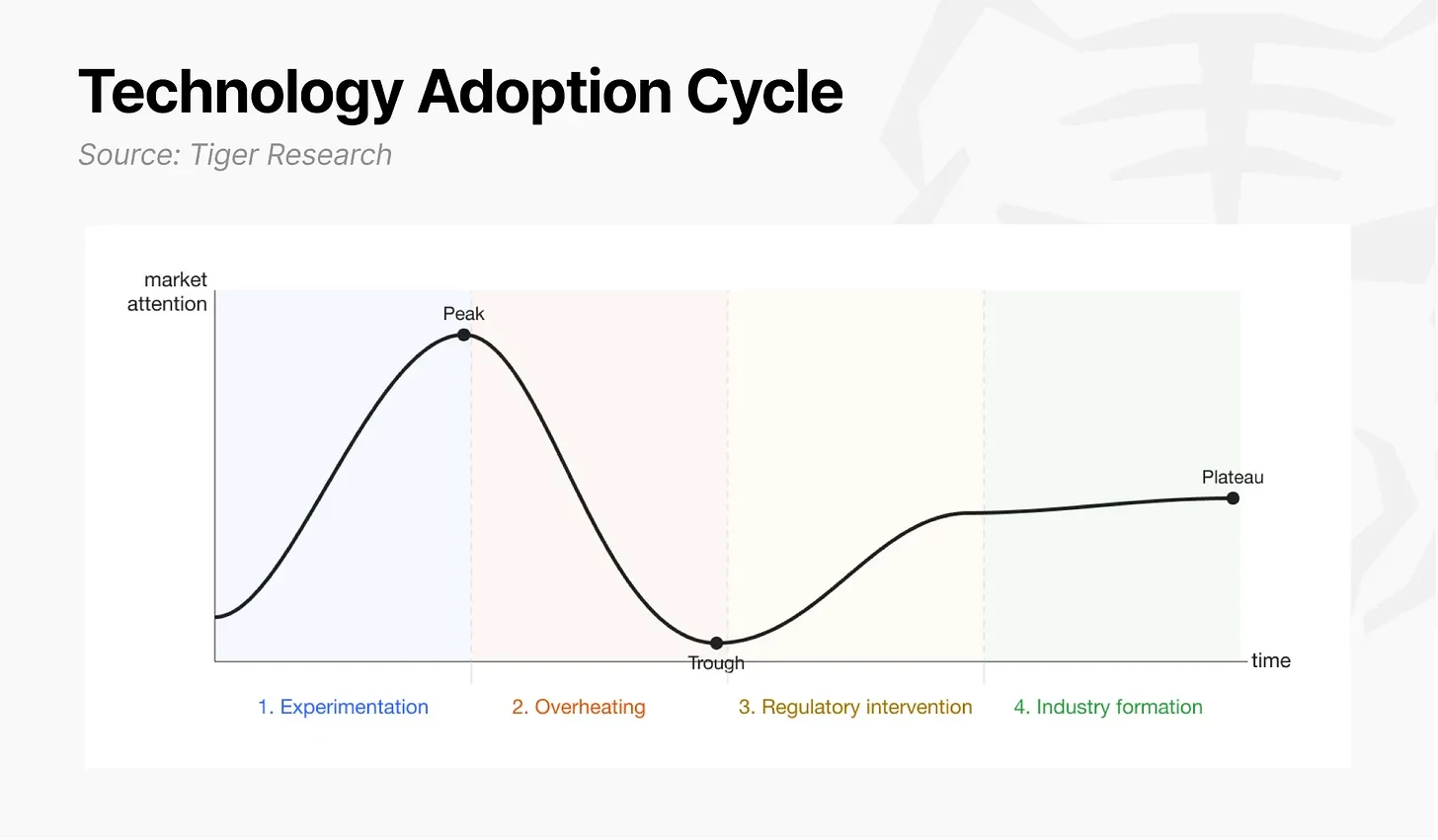
New technologies typically pass through four stages: experimentation, hype, regulatory intervention, and industrial formation. Crypto began with Bitcoin's proof-of-concept for payments (experimentation), endured the 2017 ICO and 2021 DeFi booms (hype), and hit a turning point with FTX's collapse in 2022. U.S. regulators are now shifting toward formalization, placing the industry at the intersection of regulation and formation.
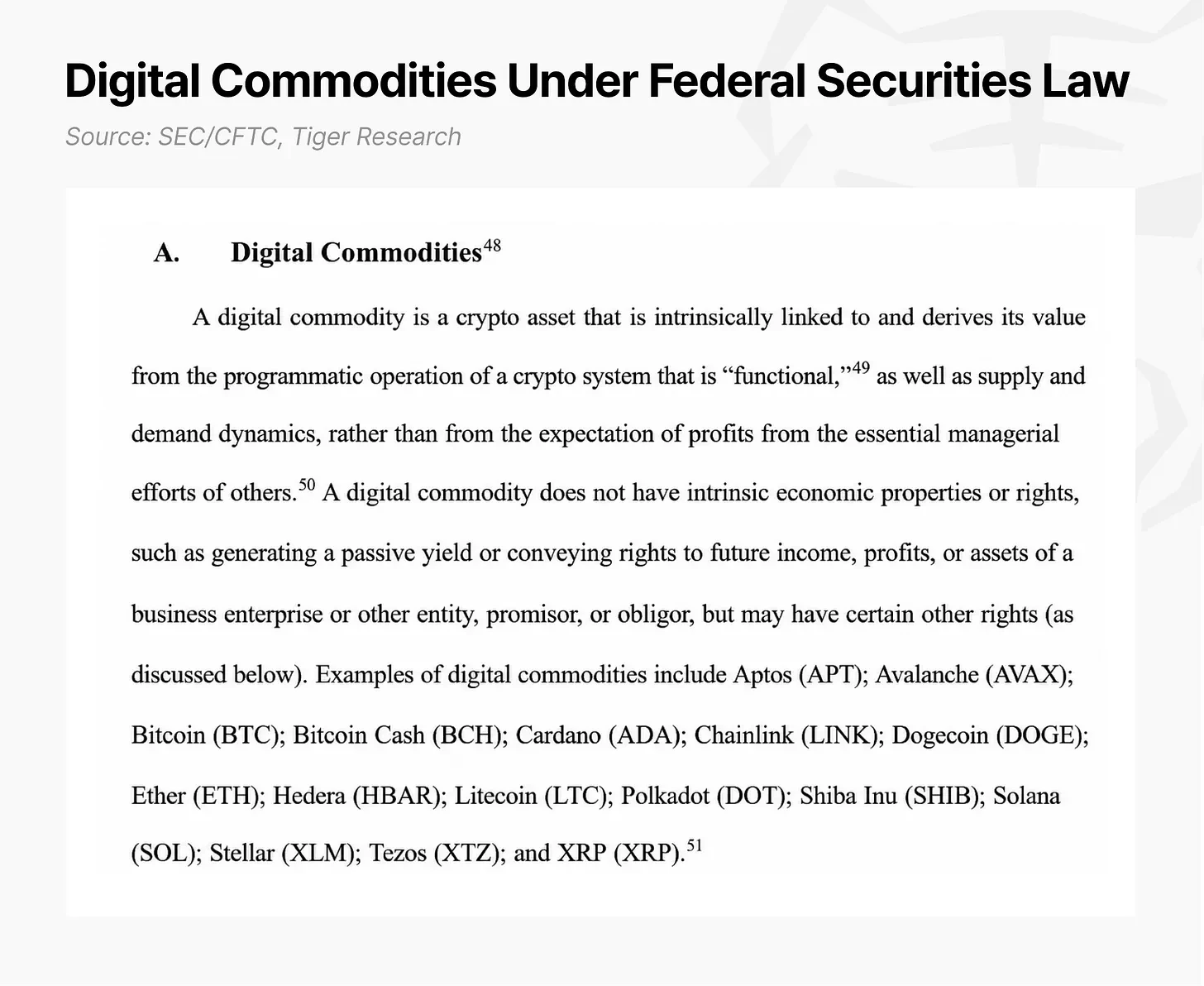
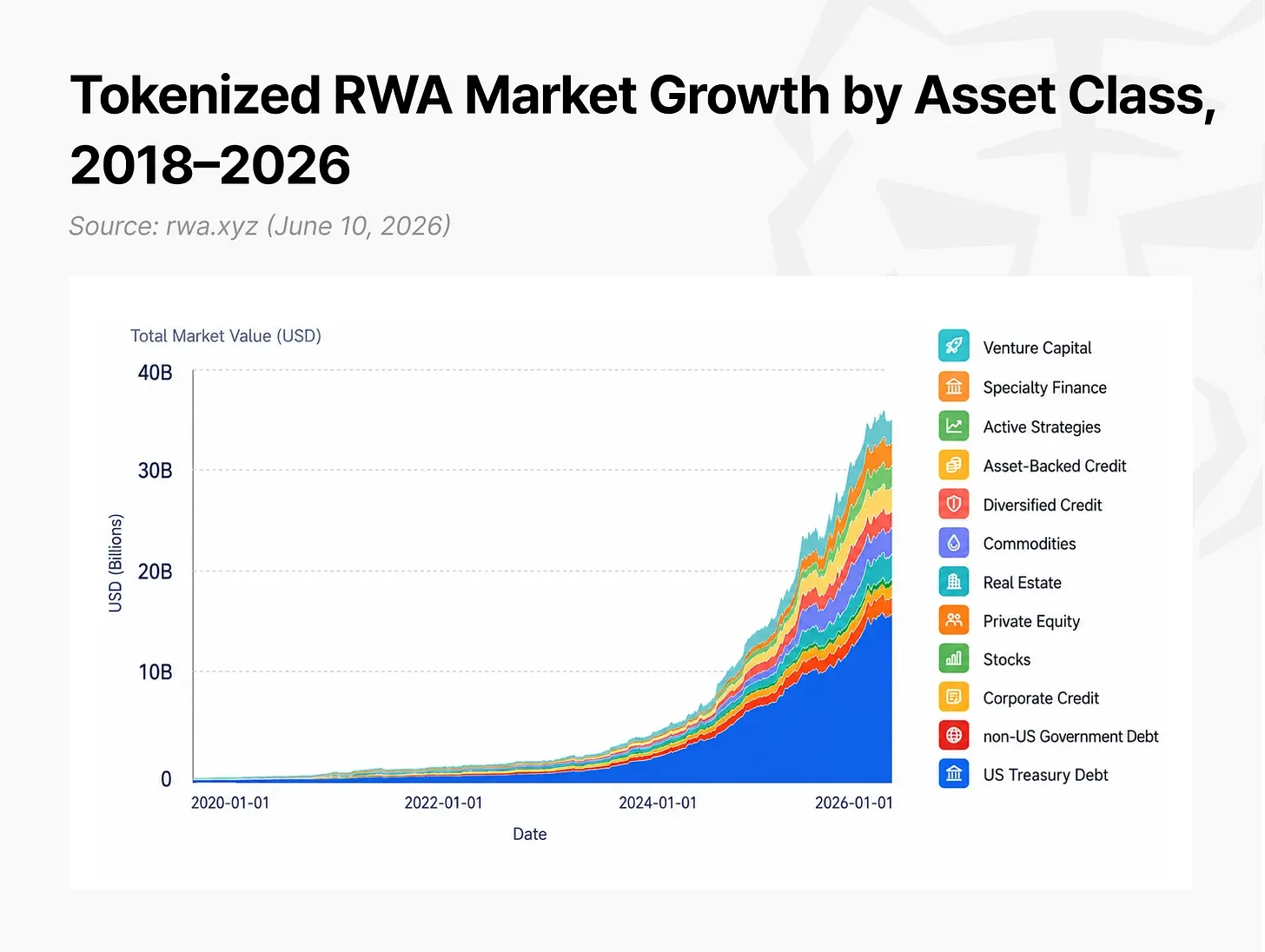
Key regulatory milestones include the U.S. Congress passing the GENIUS Act to clarify stablecoin legal status, and a joint SEC/CFTC interpretive guidance in March 2026 classifying 16 assets (including Solana) as digital commodities, replacing the binary security/non-security framework and excluding protocol staking from securities law. Institutional adoption is accelerating: the tokenized real-world asset (RWA) market grew approximately 257% from $5.4B in early 2025 to $19.3B by end of March 2026, and including stablecoins, total on-chain assets approach $300B.
Internet Capital Markets Take Shape in the U.S.
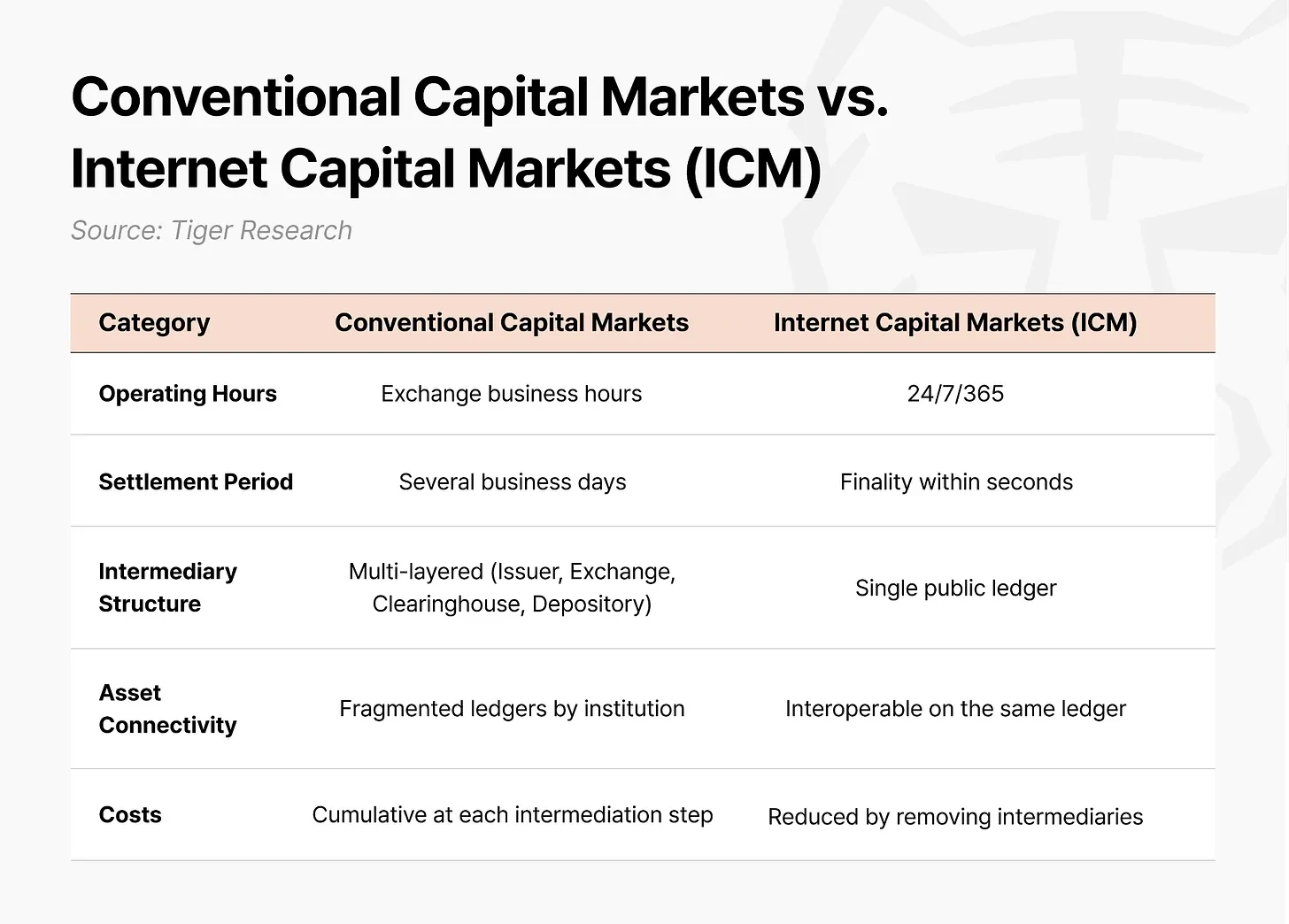
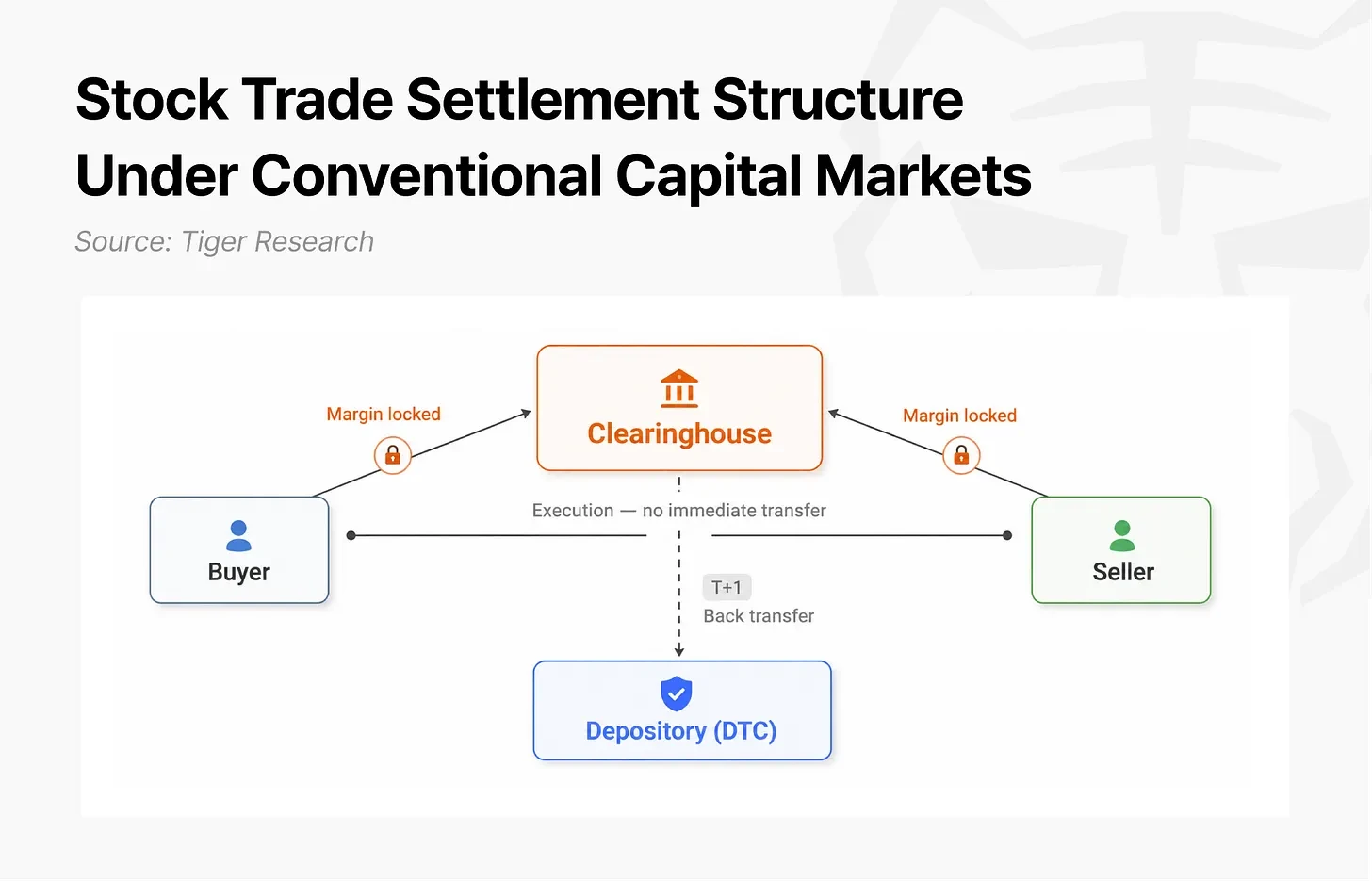
Internet Capital Markets (ICM) envision asset issuance, trading, and settlement all on a single public blockchain, with smart contracts replacing clearinghouses to enable atomic settlement in seconds. The U.S. leads due to the dollar's reserve currency status, the world's largest financial market, and existing stablecoin infrastructure.
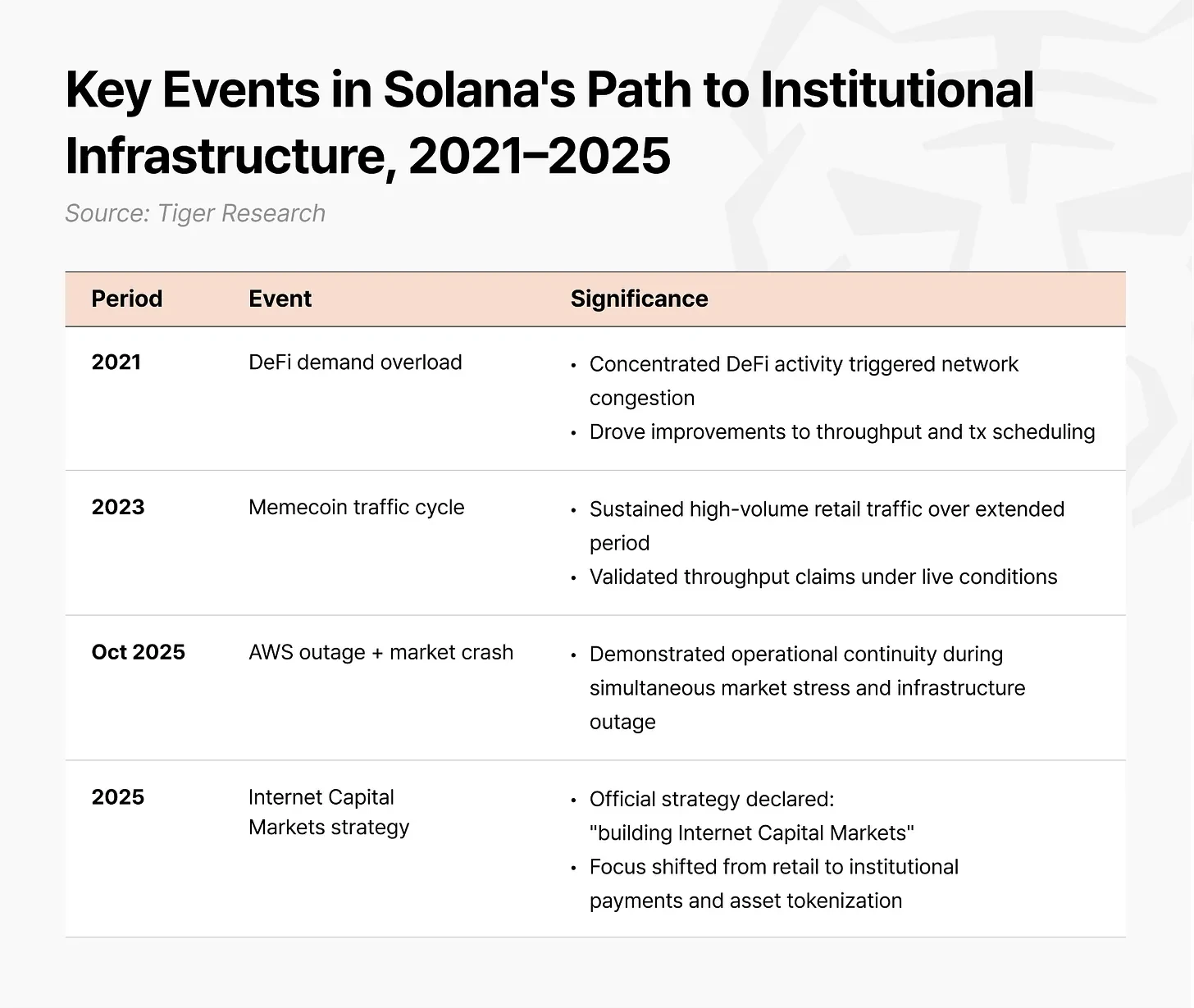
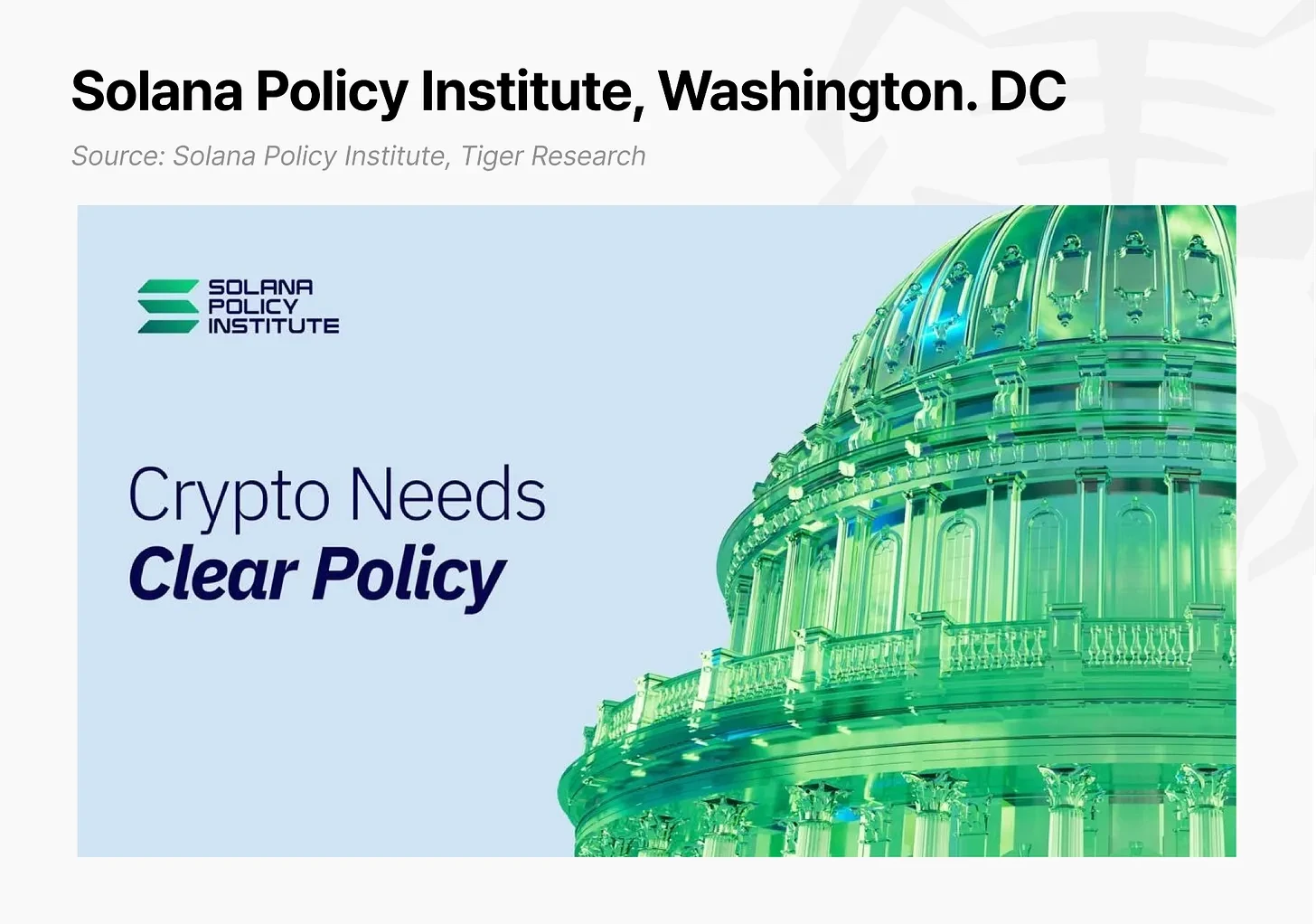
Solana has adopted "Building the Internet Capital Markets" as its official strategy, launching the Token-2022 standard that embeds freeze, clawback, whitelist management, and confidential balance functions directly into tokens. Seven major financial institutions — J.P. Morgan, State Street, Citi, Franklin Templeton, Visa, PayPal, and Western Union — have conducted proofs of concept or real transactions on Solana, three of which are U.S. G-SIBs. The Solana Policy Institute (SPI) was founded in Washington D.C. in spring 2025 and proactively submitted the "Project Open" pilot framework to the SEC to establish regulatory precedent.
On-Chain Practices in Banking and Capital Markets: Eight Cases
State Street × Galaxy: On-Chain Treasury Management (SWEEP). Launched May 2026, a chain-based fund accepting stablecoins or fiat to invest in short-term U.S. Treasuries. Ondo Finance's OUSG made an anchor investment of ~$200M, representing about 26% of its TVL.
J.P. Morgan × Galaxy: Commercial Paper Issuance (USCP). In December 2025, J.P. Morgan arranged a $50M U.S. commercial paper issuance on Solana, with Coinbase and Franklin Templeton as buyers using USDC. The corporate financing cycle compressed from T+1/T+2 to real-time.
Citi × PwC: Trade Finance Tokenization (Drafts). A proof of concept on Solana automating the full lifecycle of trade drafts via smart contracts, reducing settlement from days to minutes and eliminating manual reconciliation costs. Highly relevant for Asian trade hubs.
Western Union: Global Remittances (USDPT). Issued the USD Payment Token (USDPT) in May 2026, shifting from pre-funded reserves to real-time on-demand settlement. With Solana's 0.4-second block time, final settlement occurs instantly, including weekends and holidays. Plans to expand the "Stable by Western Union" consumer stablecoin service to 40+ countries.
Fiserv: White-Label Stablecoin for Financial Institutions (FIUSD). Fiserv announced the FIUSD platform launching July 2026 on Solana, covering ~10,000 FI clients and 6 million merchants processing 90B transactions annually. The Bank of North Dakota will issue "Roughrider Coin." The white-label model offers a replicable path for Asian jurisdictions like Korea.
Orca × Streamex: Compliant RWA Distribution (GLDY). Orca launched permissionless AMM infrastructure allowing issuers to create customizable permissioned pools. Streamex uses it for its gold yield token GLDY, with token-level freeze/unfreeze controls enabling compliance. Applicable to any regulated asset including Treasuries and corporate bonds.
Apollo: Private Credit Tokenization (ACRED). Apollo issued a tokenized tranche fund based on its diversified credit fund with a $50K minimum. On Solana, investors use a wrapped version (sACRED) as collateral in lending pools, achieving ~2.5x leverage and amplifying base yield from ~7.4% to 12-16%, enabled by sub-$0.001 fees and near-instant collateral operations.
Figure Technology: HELOC Liquidity Expansion. Figure has over $19B in cumulative on-chain loans. It launched the PRIME token to bridge loan revenue rights from its Provenance chain to Solana, using Kamino lending (up to 9x leverage) and Orca AMM. The choice of Solana was driven by capital efficiency: sub-$0.001 fees and sub-second collateral management make the strategy viable.
Infrastructure Diffusion: Three Layers of Issuance, Settlement, and Touchpoints
On the issuance layer, PayPal, Fiserv, Circle, and Tether operate stablecoin issuance or infrastructure on Solana, with multiple competitive issuers coexisting. On settlement, Visa has expanded stablecoin settlement to Solana, Worldpay migrated merchant settlement, and YouTube uses PYUSD for U.S. creator payments. On touchpoints, SoFi enables 14.7M clients to buy SOL directly from bank accounts and operates its own stablecoin SoFiUSD; Bullish uses Solana stablecoins as its primary settlement rail in 50+ jurisdictions, processing $1.15B in IPO financing.
When issuance, settlement, and touchpoints run on the same network, network effects create a closed loop: tokens issued by banks are settled by payment companies and held by consumers in banking apps. The more participants, the greater the utility for each.
Regulatory Map: Resolved Areas and Frontier Challenges
Areas now within the regulatory framework include: bank crypto custody (SAB 121 reversal classifying crypto as off-balance-sheet); digital commodity status (16 assets confirmed, protocol staking excluded); stablecoins (GENIUS Act defining them as an independent asset type); tokenized securities (SEC approves Nasdaq to trade certain securities in tokenized form, DTCC pilot in July and full launch in October covering Russell 1000, major ETFs, and U.S. Treasuries); and perpetual futures (CFTC approves Kalshi's Bitcoin perpetual contract, bringing offshore liquidity into the U.S. regulated system).
Unresolved frontiers: public blockchain stock trading is currently limited to non-U.S. persons (Reg S) or accredited investors (Reg D); the SEC has discussed innovation exemptions but faces strong opposition from Nasdaq and SIFMA over fragmentation concerns. DEXs received temporary SEC guidance with a five-year sunset clause, but AML obligations remain undefined. Stablecoin interest payments are strictly prohibited by the GENIUS Act. The CLARITY Act, which would address these gaps, has a roughly 50% or lower chance of passage in 2026, with a critical window in mid-July to early August.
Why Solana Became the Preferred Infrastructure for Institutions
Solana meets institutional requirements: finality time of ~0.5 seconds and average transaction fee of $0.0013 make leverage strategies economically feasible. Token-2022 embeds freeze, clawback, whitelist, and zero-knowledge proof encrypted balances, ensuring both auditability and confidentiality. The network is evolving toward multi-validator client architectures to reduce finality to 150ms and introduce pre-execution identity verification.
For institutions requiring private operations, Solana offers Contra — a separate instance from the public mainnet that uses the same proven performance foundation but restructured operational conditions to meet institutional needs. These features explain why J.P. Morgan, State Street, and Franklin Templeton all selected Solana not out of preference but because it satisfies their respective technical and structural requirements.
Three Strategic Windows for Asian Institutions
The pragmatic path for Asian institutions is to act as fast followers, adopting U.S.-validated infrastructure and regulatory references to minimize trial costs. The key differentiator is whether regulations are truly executable: whether clear laws, guidelines, and licensing regimes exist, and whether market infrastructure (custody, settlement, disclosure) is being built concurrently.
Executable stage (Singapore MAS, Japan FSA, Hong Kong SFC/HKMA, UAE ADGM/VARA): Clear licensing and infrastructure exist. Representative areas include licensed stablecoin payments and spot ETFs. First movers can lock in operational track records and liquidity partners; latecomers will pay a penalty. Transitional stage (Korea FSC/FSS, Thailand SEC, Malaysia SC, parts of India): Policy direction is clear but detailed rules and licensing are pending. Areas include tokenized stocks, stablecoins, STO secondary markets, and digital asset market structure laws. Institutions must prepare structures that can immediately activate upon regulatory confirmation. For those facing slow domestic progress, an offshore path via Singapore or the UAE allows pilots to build compliance systems and counterparty networks. Exploratory stage (Indonesia, Vietnam, parts of Philippines and other emerging markets): Legal definitions, asset classification, and investor protection standards are unclear. Small-scale experiments should accumulate technical and market data while retaining the ability to scale once standards and regulatory direction are confirmed.
Internet capital markets are no longer a concept but a running reality. The variable for Asian institutions is no longer "whether to enter" but the order and entry point. Reference cases are validated; standards are not yet frozen. This interval between validation and standardization is precisely the window available to fast followers. How long it remains open is uncertain.