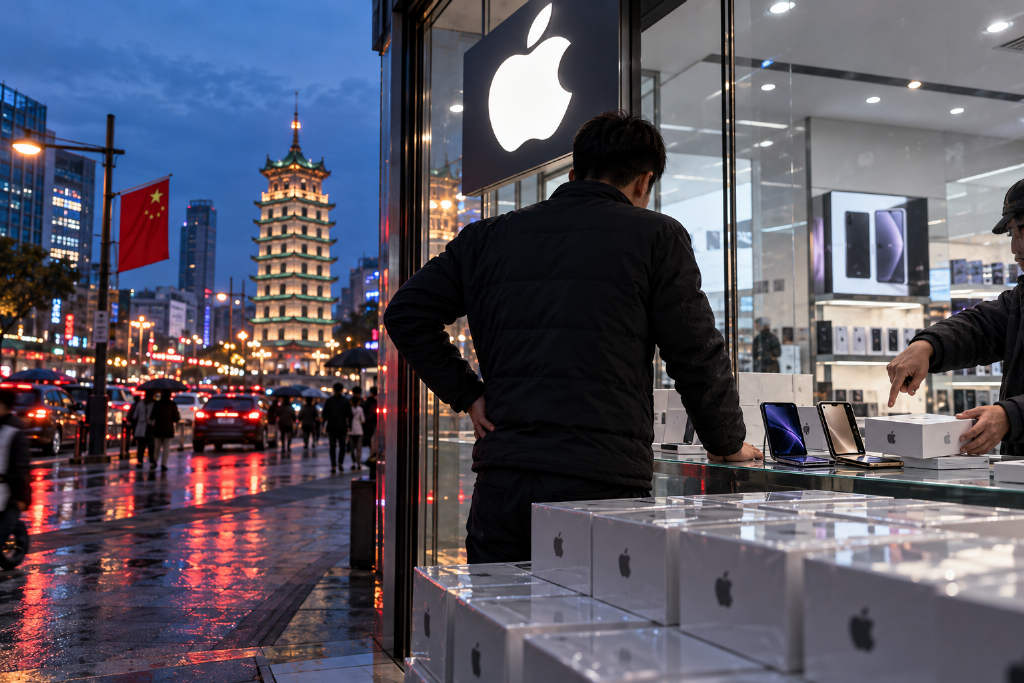
iPhone Duo resale premium cools quickly after presale, leaving stockpiling sellers under pressure

iPhone Duo resale premium cools quickly after presale, leaving stockpiling sellers under pressure

N
News Editor
2026-10-19 03:46:12
Apple’s first foldable phone, the iPhone Duo, saw its initial resale premium fade quickly after presales opened, according to a report cited by ChainCatcher from Fast Technology on Oct. 19. One Zhengzhou-based handset distributor, Xu Shan, had locked in 50 units from the first batch with a total order value of 999,950 yuan and had already paid a 25,000 yuan deposit upstream. He had planned to flip the phones to peers for a profit of 2,000 yuan per unit, or 100,000 yuan in total. That plan unraveled after the intended buyer cut its offer twice overnight. A quote given on the morning of Oct. 17 at 3,500 yuan was already below Xu’s procurement cost, described as the original price plus 4,000 yuan. Based on the latest offer, selling the entire batch would result in a direct loss of 25,000 yuan. Xu has now paused receipt of the goods, stopped paying the remaining balance, and split the order to seek new buyers among long-time clients. The report also said retail buyers hoping to resell the device saw premiums shrink, with one consumer expecting a 6,000 yuan markup but receiving bids of only up to 3,000 yuan from second-hand buyers. Apple opened presales for the iPhone Duo at 8 p.m. on Oct. 16. In-store pickup inventory for launch day sold out, while some online orders were pushed back to late January next year. The report cited industry sources as saying production ramped faster than expected, sharply shortening the premium window.

Apple’s first foldable phone, the iPhone Duo, saw its launch-day resale premium cool rapidly after presales opened, according to a Fast Technology report cited by ChainCatcher on Oct. 19. Sellers who stocked up early are now facing lower bids from buyers.

A 50-unit order turned from expected profit to potential loss

One handset distributor in Zhengzhou, identified as Xu Shan, secured 50 units from the first batch, with a total order value of 999,950 yuan. He had already paid a 25,000 yuan deposit to his upstream supplier.

Xu had planned to resell the phones to other traders. Under the original arrangement, he expected to make 2,000 yuan on each unit, which would have brought total profit on the 50 phones to 100,000 yuan.

That changed after the downstream buyer cut its pickup price twice in a single night. A quote given on the morning of Oct. 17 at 3,500 yuan was already below Xu’s procurement cost, which the report described as the original price plus 4,000 yuan. At the latest quoted level, selling the full batch would leave him with a direct loss of 25,000 yuan.

Xu has since paused receipt of the goods and decided not to pay the remaining balance. He is also breaking up the order and asking multiple long-time clients for quotes in an effort to find new buyers in smaller batches.

Retail flippers also saw premiums shrink

The report said ordinary buyers trying to flip the device also faced a narrower resale spread. One consumer had planned to sell at a 6,000 yuan markup, but second-hand buyers were offering no more than a 3,000 yuan premium.

Sold-out launch inventory did not keep the premium elevated

Apple opened iPhone Duo presales at 8 p.m. on Oct. 16. Launch-day inventory for in-store pickup sold out, and delivery times for some online orders were pushed back to late January next year.

The report cited industry sources as saying the production ramp for the new foldable model moved faster than expected, sharply shortening the market window for resale premiums.

This article was originally published by Bit.Fan. For more cryptocurrency news and market insights, visit www.bit.fan.
6400

Disclaimer:

The market information, project data, and third-party content displayed on this platform are for industry information sharing only and do not constitute any form of investment advice or return commitment.

Cryptocurrency trading carries high risks. Users should fully assess their risk tolerance and make independent decisions. All profits, losses, and legal responsibilities are borne by the users themselves.