
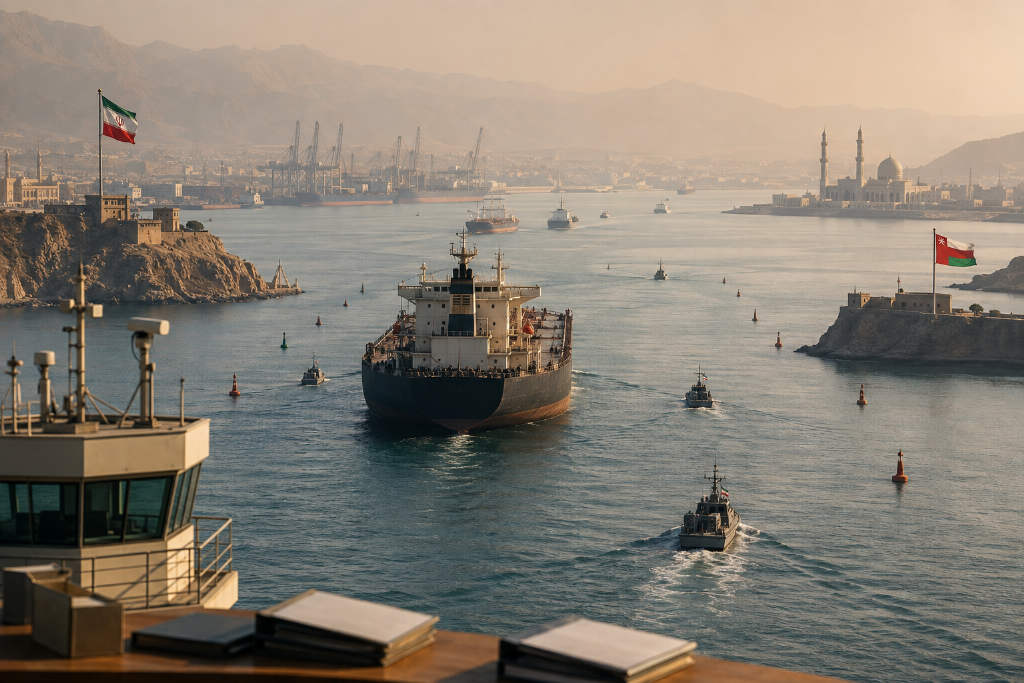
Iran on Thursday said it is nearing a deal with Oman to manage shipping traffic in the strategic Strait of Hormuz, a move that nudged international oil prices lower and stirred cautious optimism for restoring flows through the world's most critical oil chokepoint.
Foreign ministry spokesman Esmail Baghaei told a regular press conference in Tehran that the two countries had concluded final-stage negotiations on a "temporary safe corridor" for vessels transiting the strait, and a formal agreement could be signed within days. The understanding, as described by Baghaei, will be submitted to the International Maritime Organization (IMO) for registration.
The strait has seen sharply reduced traffic since the outbreak of war in 2026. Before the conflict, roughly one-fifth of the world's oil and liquefied natural gas passed through the waterway. Under the proposed arrangement, ships entering the Persian Gulf would mostly transit Iranian waters, while departing vessels would partially pass through Omani waters.
The announcement triggered a slight retreat in oil prices. Brent crude futures, which had earlier climbed to $97.93 per barrel, eased 0.1% to $96.15.
Despite the diplomatic breakthrough, analysts warn that a full reopening of the strait remains conditional on U.S. actions. Iran has repeatedly stated it will not fully reopen the strait unless Washington lifts its naval blockade, eases sanctions, and unfreezes Iranian assets. U.S. officials are unlikely to accept Iran deciding which ships can pass, leaving global energy supply stability still facing challenges.
Earlier this year, former U.S. President Donald Trump claimed the U.S. had taken over Iran, sending oil above $95 per barrel. U.S. airstrikes on three Iranian oil tankers subsequently pushed prices toward $93 and dragged Bitcoin below $80,000.
Related Coverage
- U.S. military strikes Iranian IRGC targets in retaliation for tanker attacks
- Trump accuses Iran of hypocrisy as talks begin; U.S. 'Steel Wall' controls Strait of Hormuz
- Middle East tensions ease: U.S. halts airstrikes on Iran, Trump pivots to Hormuz ceasefire talks
- U.S. strikes Iran for 13th night; Brent crude breaches $100, Bitcoin pushed back to $64,000